Coffee Chats rethinks how student advising works
Proactive advising program helps engineering students feel comfortable asking questions in a casual environment.

 Supplied
Coffee Chats, a new proactive student advising program, looks to change the formal nature of advising sessions and foster an open environment where engineering students feel comfortable.
Jessica Stevens, the manager of Undergraduate Student Services in the faculty of engineering at the University of Alberta, helped bring Coffee Chats to life.
A 2025 survey showed that “students were looking for a more personalized connection to advising,” Stevens explained. Students wanted greater accessibility to advising services, and more communication on how to contact advisors.
Traditionally, students make an appointment with an advisor online and book ahead to meet one-on-one. Queues to see advisors can be long, especially at the beginning of the year and at other times when students need help the most.
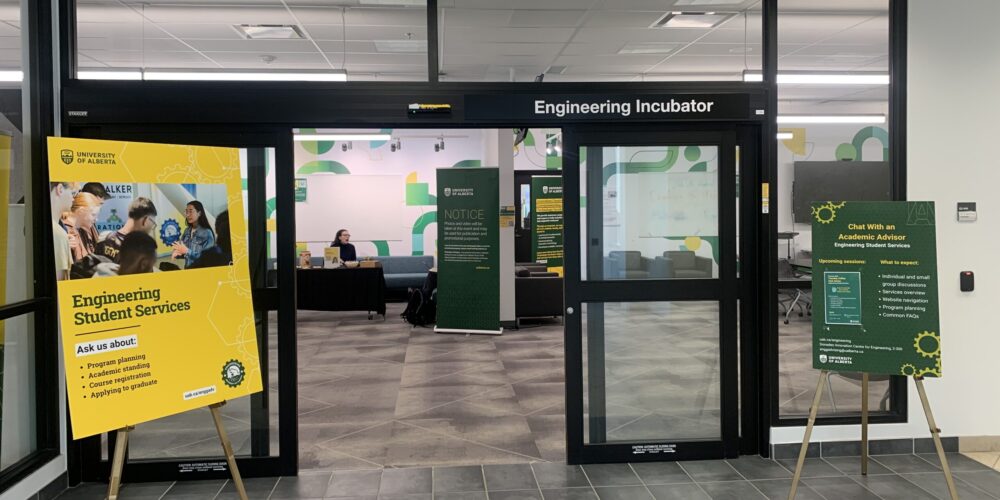
Coffee Chats take place in the Engineering Incubator, a place where students already meet to socialize and study.
“We have couches set up in a semi-circle,” explained Stevens. “You come grab a snack … and then just sit down and chat with whoever’s available.” The sessions are drop-in, and advertised on the engineering Instagram page before they are held.
With Coffee Chats, students sit in groups and can even come in with friends. Instead of only hearing answers to their own questions, students also hear advice directed towards their peers.
Free coffee and tea is included, as well as more opportunities for human connection.
“They were happy to speak to a human and not have to submit a ticket,” Stevens says
Coffee Chats yielded a great amount of positive feedback. Some students expressed their preference for the informal advising sessions, noting that they feel more comfortable and open-minded about asking questions.
“Very friendly, would go there again,” a student who participated in Coffee Chats remarked.
It’s not meant to replace traditional advising, according to Stevens. The faculty of engineering still offers one-on-one drop-in advising, and a traditional option is still available. But this type of advising may not be the best fit for every student.
Sometimes students only have one quick question and don’t want to book an entire advising appointment for a problem that can be solved in mere minutes.
“We are definitely having interactions with more students,” said Stevens. The number of students who come in for traditional advising has stayed the same. However, Coffee Chats offers another avenue for students who may never have come in for advising without Coffee Chats.
Students still ask similar questions no matter what type of advising session they attend. Stevens noted however, that students feel more comfortable opening up and getting personal when sharing their worries or concerns for the upcoming semester during Coffee Chats.
Common questions involve program and graduation requirements, GPA calculations, exceptions for certain courses, and adding a minor degree.
The sessions are unstructured on purpose, and offer handouts and other resources to support students and help answer questions. Advisors also give information on mental health resources on campus.
“We also get things we wouldn’t get in a one-on-one session,” said Stevens. A huge difference through Coffee Chats is that students have the opportunity to connect with their peers. Questions transition into conversations between students about hobbies and personal interests. Some even stay after they receive advice to hang out and relax.
Students impart what student clubs they are part of, said Stevens, and help others find opportunities within engineering that may interest them.
Coffee Chats will take place every week for the fall and winter semesters
Originally, Coffee Chats took place every week in the fall and every second week in the winter term. Now, the program will be happening every week the entire academic year.
“If we have more advisors, we would be able to offer more sessions.” Stevens is also looking to offer the sessions at different times to be more accessible, and available for more students.
She hopes to hold a graduation check session for final year students to ensure they meet all their graduation requirements. Talking about life post-graduation will also take place during this session.
Currently, Coffee Chats for the upcoming year will take place from 11:00 a.m. to 1:00 p.m. and its September sessions will be on September 22 and 29 in the Engineering Incubator on the second floor of the Engineering Teaching and Learning Complex (ETLC).