 Supplied
 The cold should be the last thing on any athlete’s mind.
Diedre Hackman, a master’s student in the department of human ecology, realized this and made it the key idea behind her newest design.
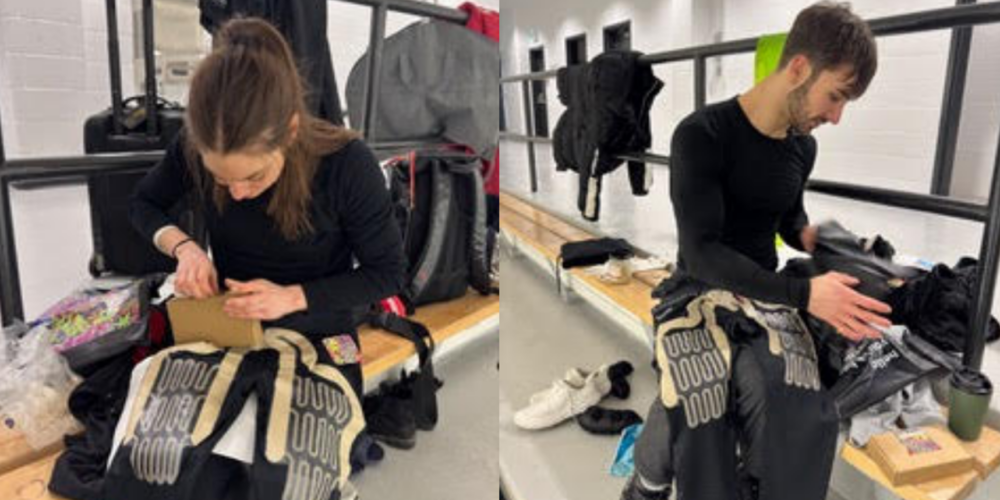
Her garments keep athletes warm and focused while performing outdoor sports like skiing, bobsledding, and luge. They use a thermal heating gear as a heat source alongside conductive ink.
When wearing the heated gear, athletes’ muscles stay warm and supple. For an alpine skier, this means staying warm the whole journey up the chairlift, while also being protected once they’re back at the bottom of the hill.
Hackman found through her research that it’s critical for athletes to be warm after completing their performance. She explained that because the sweat has nowhere to go, athletes are at risk of hypothermia.
Her technology combats this. “We’ve developed a base layer that wicks the sweat away from the skin,” Hackman said. “Not only does it keep [the athletes] warm, but it helps keep them dry.”
The heated garments are also critical during the actual athletic performance itself.
“What I found in the research was that [the cold] distracts,” Hackman explained. “It was that distraction that could take their focus off … and change the end result.” With so much on their minds already, knowing they will be warm increases athletes’ confidence and leads to better athletic performance.
Hackman ensured that athletes felt not only physically warmer, but also mentally secure in their performances. Because the garments do not have any wires, athletes can move freely in the cold without limitations and perform ideally.
The future of heated garments
The technology is also plug-and-play and can be incorporated into other garments. It was important to Hackman that it be compatible with as many different product types and silos as possible.
She realized quickly that the product must also be durable. Performance garments have to go through at least 20 washes. Hackman is targeting that her design can withstand 50.
Currently, Hackman is working with the highest-end seamless factories and fabricators to make her design into a well-known brand.
“We’re starting to talk with some of the brands that are interested in working with us,” she said.
“The beauty of being here in Alberta is that there is no other place in the world that has the kind of energy and the kind of people we can tap into.”