Jasmine Colette of Blue Moon Marquee talks the blues, new music, and touring
A conversation on Blue Moon Marquee's influences, Indigenous influence on blues music, and today's streaming-centred world.

 Ian Webster
A few days before their show at the Starlite Room, I chatted with Jasmine Colette of Blue Moon Marquee. In 2024, Blue Moon Marquee won a Juno Award for best Blues Album of the Year. They’ve been touring and releasing music for over a decade.
Blue Moon Marquee, despite primarily being a blues and swing band, finds its roots in punk rock. Jasmine Colette and A.W. Cardinal, who make up the band, “are both originally Alberta kids, and … both grew up in central Alberta playing punk and metal music.”
In 2012, Colette and Cardinal reconnected in Vancouver. “We found out we had a deep … mutual love and respect for a lot of old, obscure blues and jazz, and we just really resonated with each other musically. So that’s where it … started, and then we started writing as Blue Moon marquee together,” Colette told me.
“It’s like you don’t exist … if it’s not on streaming” Colette says
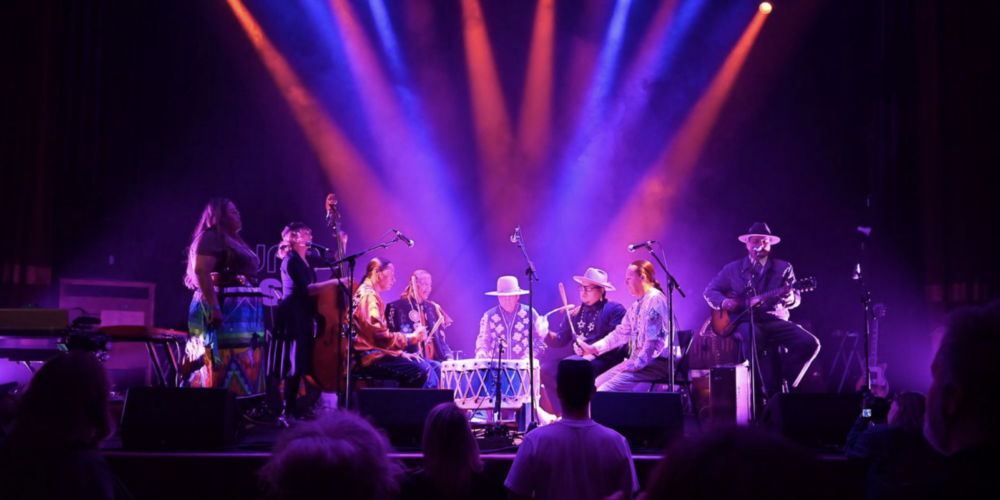
In the years since their formation, Blue Moon Marquee has released five albums, including one with Northern Cree, and have won two Juno awards. However, like many artists, they have found the music streaming model of today difficult. When speaking about Blue Moon Marquee’s most recent album with Northern Cree, Get Your Feathers Ready, Colette told me about their decision to not release it on Spotify. “We were trying to get people to go to the website and actually buy the album instead of putting it all on streaming … it’s like you don’t exist … if it’s not on streaming. And we were just really frustrated with that.”
Blue Moon Marquee is known for their fusion of Indigenous culture and music with African-American musical traditions, such as blues, jazz, and swing. Referring to this combination, Colette said, “We watched this documentary called Rumble the Indians Who Rocked the World. And it’s all about the … untold story of Indigenous and native influence on popular American music, blues, and jazz and all that.” Speaking to this connection, she noted, “The native people were there helping out black slaves … they were allies, and those cultures lived together and loved each other for many years. So of course, there’s that sound in there.” Colette cited Charlie Patton as an example: “He was half Choctaw so that was really inspiring.”
Blue Moon Marquee is in for a big, busy 2026. “We have a full year of touring ahead of us …we’re writing the next album, and the hope is to release it next year.”
In terms of what is fueling their next record, Colette told me that they are “very influenced by kind of obscure 50s R&B … psych R&B, and … rare field recordings and doo-wop.” Blue Moon Marquee isn’t slowing down. Fans of blues, jazz, swing, and folk should keep an eye and an ear out for them.