Book Review: ‘At Ends We Rest’ by Samantha Erron Gibbon
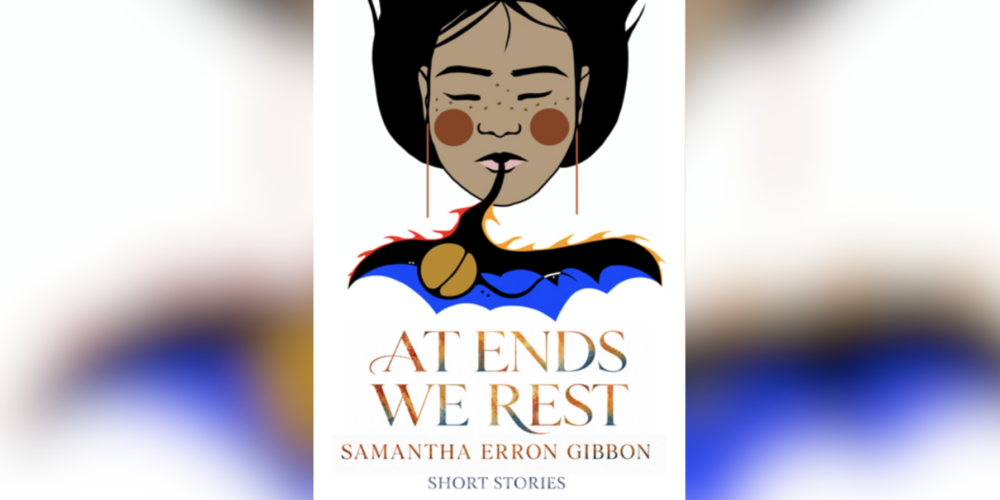
Métis poet and physician, Samantha Erron Gibbon, released her debut collection of short stories.

 Supplied
In her debut short story collection, At Ends We Rest, Samantha Erron Gibbon presents a patchwork of stories reflecting the lived experience of young Indigenous girls. Her prose is effortlessly poetic and a delight to read. Though this book is intended for the same youth it represents, the beauty of Gibbon’s prose makes the text appealing to older audiences. The protagonists are dealing with the realities of their lives and balancing the weights of tradition and grief.
All of the stories are situated in real space and time, beginning at Holy Angel Residential School, moving through downtown Edmonton, Whitemud Creek, and eventually ending with Athabasca Bay. With the mention of familiar places, Gibbon keeps the stories immediate and local. Her heroines are not distant characters in a short story, but someone you might walk past on Whyte Avenue.
In her work as a physician, Gibbon works alongside urban Indigenous youth. Gibbon’s love for the community and the individuals she works with is evident, as she renders them with such complexity and attention to detail. Gibbon’s background and talent as a poet cannot go unnoticed — she has a true talent for writing a beautiful and melodic sentence.
The collection of short stories also includes Gibbon’s illustrations. All of the illustrations have a wonderful sense of movement and complement the text they sit beside. Even though Gibbon’s heroines may be separated from their culture due to the effects of residential schools and colonization, with her illustrations, Gibbon gives them rest.
The first story of the collection, “Holy Angels,” describes Louise Piche’s escape from the Holy Angels Residential School. The text moves between Louise’s real-time escape from the school and her memories of life before coming up to Fort Chipewyan. Louise is clever and stubborn, determined to make it home. Between the two time periods, Louise moves between the traditional knowledge that she still retains and the catholic teachings she has been surrounded by. She tries very hard to hold onto what she has been taught by her uncle, but even as she escapes from the school, the Catholic teachings overwhelm her and become the framework through which she understands her experiences.
By beginning her collection here, in a residential school, Gibbon centres the intergenerational trauma of residential schools and the separation of families. In order to understand the rest of the collection, you must first pass through this gate.
For the third text in the collection, “Garbage Guts,” Gibbon uses an unconventional form to unroll the narrative. The text is centred on the page, and all of the lines are kept short. “Garbage Guts” details Noa’s struggle to support her three younger sisters and the effect of addiction on her family. The legacy of Holy Angels continues through Noa’s life. A seemingly cheerful educational visit to the Royal Alberta Museum turns solemn as Noa and her sisters gaze at pictures of students at Holy Angels and see faces just like their own reflected back to them. Like the other stories in the collection, the details and the locales were highly specific to the Edmonton area, but I still found myself longing for Gibbon to conjure the image in further detail.
At Ends We Rest presents the immediate lived experience of the urban Indigenous youth, and does so with great care. Though the individual narratives may often deal with troubling and traumatizing experiences, the collection’s title makes a promise to heroines that even though they may be struggling at this moment, at ends we rest.