YouthWrite celebrates 30 years of fostering creativity
Gail Sidonie Šobat, Youthwrite founder, reflects on the impact of the camp on Canadian youth.

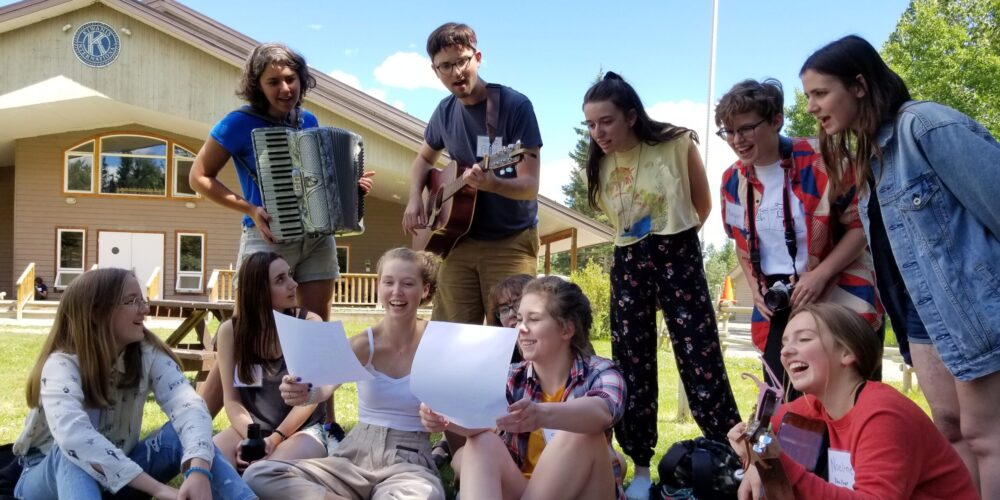 Supplied
YouthWrite started in 1996 under the Writers’ Guild of Alberta. Gail Sidonie Šobat was given a budget of $1,200 and 12 weeks to bring the camp to life. A multi-hyphenate writer, actor, and artist herself, she “sought out [her] people” and turned to her friends in the arts community to join her as instructors for the camp.
The first year they managed to find 35 kids to attend, and the camp has only grown from there. 30 years later, the camp now offers not only the classic YouthWrite experience for young writers, but also JustWrite for adult writers and Write2Film for youth to gain experience in filmmaking. I myself was an attendee of YouthWrite for four summers, and I credit the camp’s influence and support with my continued love of writing. Still to this day, I am friends with the very same writers I met at camp when I was ten years old.
Šobat’s desire to create YouthWrite came from the provincial government’s decision to remove creative writing from the English language arts curriculum in favour of spending more time on the classic five-paragraph essay. As an English teacher, she knew firsthand the positive impact that encouraging creative expression would have on her students. When offered the chance to create the camp, she thought it “could be a way to enrich what had become a very boring way to approach English language arts.”
Her experience as a teacher was essential to the camp’s success — she knew how to create a curriculum and design a day with a good balance between learning and fun.
She also cites her own camp experience at ArtsTrek, a theatre camp, as influential to the design of the camp. The drama camps she attended provided a multidisciplinary approach to the arts, bringing in experts from many different avenues to provide a well-rounded experience in theatre.
“Mozart didn’t write his operas alone,” Šobat says.
Rather than treating writing as a solitary task, Šobat invited a variety of artistic mediums as a way into storytelling. She joked that even “Mozart didn’t write his operas alone.” That collaboration in the arts is not only essential to the creative field but also important to the kids who attended the camp.
Since the first year, Šobat has “watched these young people grow into these more self-assured, confident writers by week’s end.” From all the years running the camp, she has seen this every year and has seen many YouthWriters grow into adult writers and continue to all sorts of professions. Šobat has created a community of people who continue to “hold YouthWrite in a dear place, [and] feel that YouthWrite was instrumental to their growth.”
Despite boasting 30 years of YouthWrite, Šobat still feels that the camp needs more recognition. Of all the teachers and librarians across Alberta, “there are so many folks who don’t know us, and consequently, [the] kids don’t know us.” Each year it is still a battle to fill up all of the spots in the camp, but each year they manage to continue because of the community of people who believe in YouthWrite’s impact.
Going forward with the camp, Šobat hopes to continue to reach young people across the prairies, and possibly beyond. Šobat notes that writing is often a lonely job, “so to have a place where we can come together, and remember each other, and connect, and talk and kibitz and laugh and sometimes cry” is essential to the maintenance of a connected and healthy art community.