U of A student plays a part in Canada’s Paralympic gold medal
A virtual reality tool developed by students helped Canada's wheelchair curling team secure gold in the recent Paralympics.

 Red Deer Polytechnic
Dylan Rusnak, a fourth-year kinesiology student at the University of Alberta, helped Canada’s wheelchair curling team win gold at the Milano Cortina Paralympic Winter Games. This was Canada’s first Paralympic gold in the event since 2014.
To Rusnak, the win was not just about achieving a gold medal. It was about opening Canada, and the field of adapted physical activity to greater accessibility for wheelchair athletes.
VR training tool used to mimic on-ice conditions
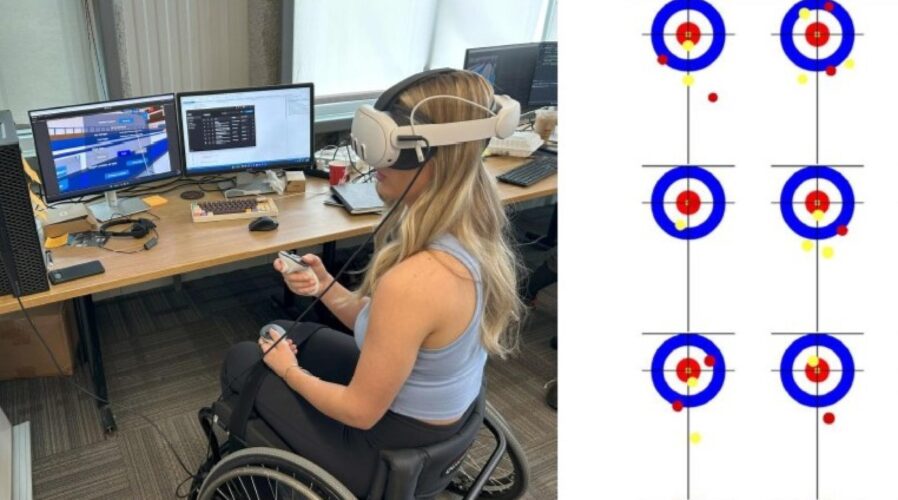
Rusnak and students from animation and computer science developed a virtual reality (VR) training tool. The tool mimics ice conditions as closely as possible to help athletes train for the Paralympics. The Red Deer Polytechnic project was especially important considering the barriers that wheelchair curling athletes face regarding training.
“The main part was allowing them to train in Milano’s arena without actually being there,” Rusnak said.
She added that the VR environment helped give the athletes a depth advantage and feel fully immersed in the experience. When considering the future of the VR game, according to Rusnak, a multiplayer feature in future iterations would help combat limited coaching resources since it would eliminate the need for a coach in that specific environment altogether.
Collaboration was also an important aspect of the project. “In kinesiology, it’s very black and white,” said Rusnak. The field does not require the same level of open-mindedness that computer science and animation do.
It was essential that students from the different faculties put their skills together and worked creatively to produce the best product. Rusnak specifically focused on making the VR tool practical, while her team brought it to life via animation.
Rusnak commented that a frequent thought process while working on the VR game was how transferability would apply, and how the athletes could directly apply their time in the VR environment to real life.
“I wanted [them] to go into this and have a practice that meant something,” she said.
Rusnak discussed how she provided guidance on how the hand grip would look when the delivery stick was held to ensure accuracy. She was able to directly test out different theories she learnt in a skill acquisition class at the U of A to determine what worked best for the VR tool.
The best fit proved to be random practice theory, which is the practice of skills in a random order. Using random practice theory, athletes can plan strategically what the second and third play would look like on ice.
Challenges and the future of VR technology in promoting accessibility
Developing the VR game was no easy task. The project involved everything from ensuring the correct wheelchair, to delicate bug fixes. Additionally, according to Rusnak there are no other seated virtual reality games that the team could use as a guide. “Honestly, the whole thing was trial and error,” she said.
An important part of the process was making sure the environment catered to the actual wheelchairs used by the athletes. This meant sitting oin the wheelchair for hours. The hand grip and torso alignment were the two most significant factors she and her team tried to perfect so anyone experiencing the simulation could truly feel like they were in the game.
“They test it to break it,” Rusnal said when discussing how the project was continuously modified. Trying to “break the game” was critical to ensure no bugs were present, and the tool was ready for the athletes.
Moving forward, Rusnak hopes that the societal perception towards paralympic athletes will change in order to remove barriers. The disability they have does not come from them, she said, but from social stigma causing elements like the cost of equipment and access to adequate training.
“I’m hoping the world becomes a better place for those who just want to do what they love to do,” she said.
Ultimately, Rusnak believes that more VR games in other areas, such as sledge hockey or basketball, would help broaden accessibility for athletes in the realm of adapted sport.