EPS conducts training on U of A’s North Campus
Some U of A community members raise concerns about using the U of A’s campus for training police officers.

 Cody Shimizu
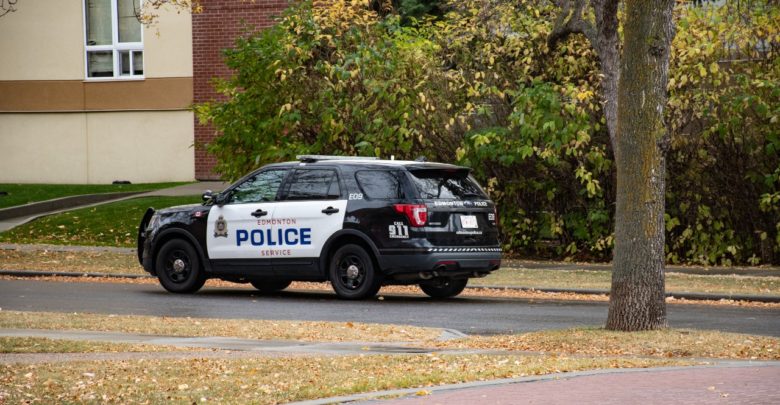
Patrick Nickleson was walking on campus on the morning of October 30 when he saw a large group of men unload from three unmarked vans. This struck him as odd. The assistant professor in the music department approached one of the vehicles and an Edmonton Police Service (EPS) officer confirmed they were at the University of Alberta for training.
“I’ve studied or worked at six, maybe eight, university campuses around Canada and internationally,” he explained. “I’ve just never encountered that before. There’s typically an assumption that police are only called on university campuses … if they’re invited or needed.”
The U of A and EPS confirmed that on the morning of October 30, EPS conducted training at the U of A’s North Campus. The U of A Protective Services (UAPS) pre-approved the training.
EPS was conducting tactical advisor training, along with several other police services in western Canada.
“The training assists police in learning to manage crowd events peacefully and professionally in order to keep everyone safe,” an EPS media relations person told The Gateway.
“As part of the training, officers visited several locations in Edmonton where major events have taken place to survey environmental features such as critical infrastructure, access, and egress routes.”
The U of A hosted another training exercise on its North Campus on November 14. The U of A sent notice of this exercise to U of A community members.
According to the U of A’s media relations office, the training involved a simulated mass casualty event in the Research Transition Facility (RFT).
University community should have a say in activities happening on campus, Nickleson says
U of A media relations told The Gateway that “the [U of A] regularly partners with the [EPS] and other first responders to conduct training exercises on campus as part of our ongoing emergency preparedness efforts.”
According to the statement, the U of A has hosted more than 500 hours of training for police and fire departments. U of A media relations also said that the training is co-ordinated to ensure minimal disruption to university activities.
“Hosting first responders helps improve response times and familiarity with our buildings and community,” U of A media relations said. “The complexity and variety of our campus environments provide valuable opportunities for first responders to practice a wide range of scenarios.”
For Nickleson, the argument that police officer training on campus helps improve emergency responses doesn’t make sense. Especially as UAPS is on campus.
He said it’s also about what campus is for, and the context of recent events is important. On May 11 2024, EPS removed a Palestine solidarity encampment from the Main Quad.
Part of the discourse that followed was whether university property is public or private. For Nickleson, it’s public property as a public institution.
“We, as the university community, should hopefully have some say in what kind of activities happen on campus, and if we’re told that student gatherings and student protests [are] invalid by the administration, I think there’s a good reason for students and faculty, anybody, to say that police training is invalid.”
Groups call for EPS training not to be allowed on campus
A group called No Cops On Campus reacted online to the news of EPS training on campus on November 14. It posted a story asking why the U of A was “allowing rabid dogs of the EPS to shut down our campus for a ‘training exercise.’”
No Cops On Campus and Students for Justice in Palestine also posted on Instagram encouraging community members to write an email to Bill Flanagan, president and vice-chancellor at the U of A, and Verna Yiu, provost and vice-president (academic), to “let them know you don’t want EPS ‘training’ on our campus.”
The email template provided by the groups states that “allowing the EPS to take over our campus runs counter to the university’s commitment to creating an environment that promotes access, community, and belonging.”
The email template also mentioned EPS’s removal of the pro-Palestine encampment in 2024, as well as other concerns regarding police violence against Black and Indigenous people in Edmonton.
“We call on the administration to keep the EPS out of our campus spaces to ensure an accessible and safe environment for all members of our campus community,” the template reads.