 Supplied
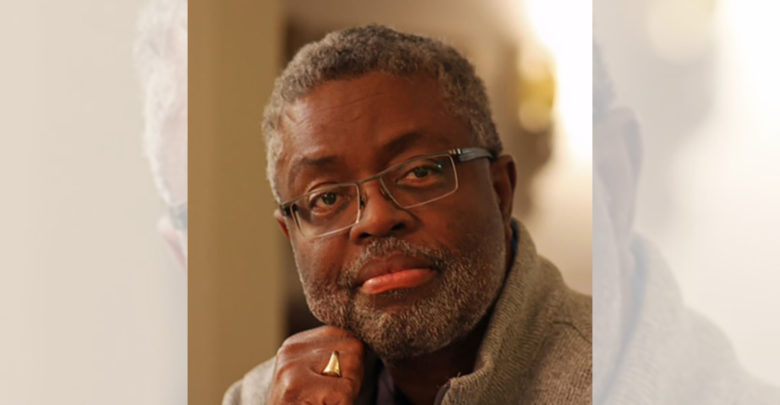
Andy Knight, a University of Alberta professor in the department of political science, has spent the last few years researching xeno-racism in the Canadian Armed Forces. Now, after four years, he’s bringing that research to life in a documentary, Trusted to Serve, directed by his daughter.
The Department of National Defence’s (DND) supported his research through the Mobilizing Insights in Defence and Security (MINDS) grant. When he applied for the funding, Knight was clear that he didn’t want his research to be confined to textbooks and classrooms.
“I wanted to do a film because I think film has the ability, much better than some of the academic writing, to attract many more eyes to it and disseminate this information to the wider public,” he said.
It just so happens that Knight’s daughter, Nauzanin Knight, is a filmmaker. Nauzanin owns 1844 Studios based in Edmonton, so when it came time to put Knight’s research into a different medium, he trusted his daughter.
“They have to translate what it considers to be very complex institutional issues, which normally academics tend to deal with, into stories that an audience, a regular audience, can engage with,” Knight said.
He let his daughter take the lead on the filmmaking and storytelling aspect, and served as the lead researcher on the project.
Translating the research into film
One of the challenges was getting people to talk. Some people who were working within the Armed Forces or had retired were eager to tell their stories. But others feared retribution.
Nauzanin was able to look at the interviews her father had already done and identify who she wanted as her lead characters.
“That made it very compelling,” Knight said. “You’re talking about actual cases of xenoracism, actual cases of racism, actual cases of marginalization of individuals who came into the military with the intention of serving the Canadian public, but then got pushed out.”
While Knight had convinced some of them to talk with him for his report and upcoming book, he trusted Nauzanin to convince them to take part in the film.
“My daughter did a very good job in terms of convincing these individuals that we finally chose,” Knight said. “It wasn’t easy to get them to say yes, but she managed to get them to say yes.”
Some of the individuals had their voices altered and their faces obscured to protect their identity. Others outright said no to taking part.
“There ought to be some accountability structure in place,” Knight says
The 2022 Freedom Convoy, and the involvement of some members of the Armed Forces, sparked Knight’s interest in researching the Armed Forces.
“[The convoy] was mostly about COVID-19 … but some of the people that were involved in the actual organization of that closing down of Ottawa were from the Canadian military,” he explained. Intertwined in some of the convoy protests was beliefs of white supremacy.
“I was really questioning why is it that the military, as an institution that’s supposed to be trusted to serve Canadians, were allowing individuals within the military to be involved in this extremist activity?”
Knight noted that white supremacy and xenoracism appeared in small pockets of the Armed Forces, rather than being a widespread issue. However, leadership in the military tended to sweep these issues under the rug.
“It felt that if we didn’t deal with this concern right now, it could fester and become more dangerous later on,” he said.
The DND embraced Knight’s recommendations to work towards addressing xenoracism and white supremacy within the Armed Forces.
And while a report and an academic book are important, a film takes it further. “Sometimes we need to expose this to the public, let the public know this is happening,” he said. “At the end of the day, as the film says, the Canadian Armed Forces are trusted to serve Canadians.”
“There ought to be some accountability structure put in place to make sure that this kind of thing doesn’t fester and become a problem for this very important institution.”
The U of A’s Office of International Enrolment and Education is screening the documentary, with a conversation with Knight and his daughter, on November 6. The film will also be available through the U of A library.
Knight hopes that young people can push for institutions, including but not limited to the Armed Forces, to address issues of racism and extremism.