 Supplied
Epishelf lakes are a unique structure that forms in freezing climates. The last epishelf lake remaining in Canada has now disappeared, a loss that has caused a significant blow to environmental diversity.
This issue has been studied by Andrew Hamilton, a University of Alberta research scientist in the department of Earth and atmospheric sciences.
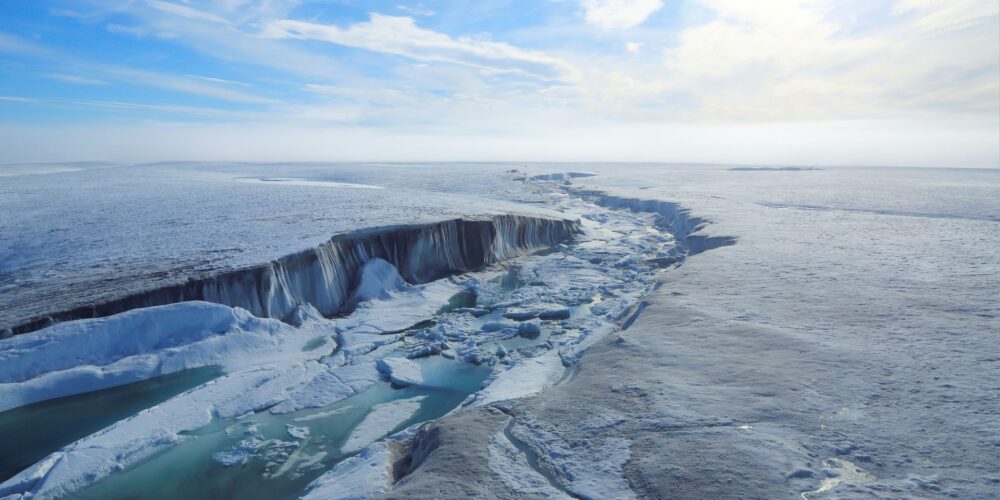
Epishelf lakes are a thick shelf of ice that forms at the mouth of certain fjords. As this ice shelf stretches alongside the fjord, Hamilton explains that it “acts like a floating dam.” Fresh water becomes trapped behind this dam and floats over the top of the salt water to create the epishelf lake.
Concern over these epishelf lakes have existed for the past few decades. An increasing number of the ice shelves in Canada have broken down as a result of global warming. These ice shelves are a necessary component of epishelf lakes. Without them, epishelf lakes cannot properly form and remain structured.
Canada’s last epishelf lake was in Northern Ellesmere Island, Nunavut, at the Milne Fjord. Hamilton began research at this site in 2011. At the time, he predicted that the ice shelf would be lost around 2025. It ultimately disappeared even earlier. In 2020, the shelf broke in half and caused the lake to drain into the ocean.
Impacts and causes of the epishelf lake’s loss
The loss of the epishelf lake is significant for Canada. Hamilton added that it is “basically a small-scale extinction event.” Many species of plankton and zooplankton previously inhabited the lake.
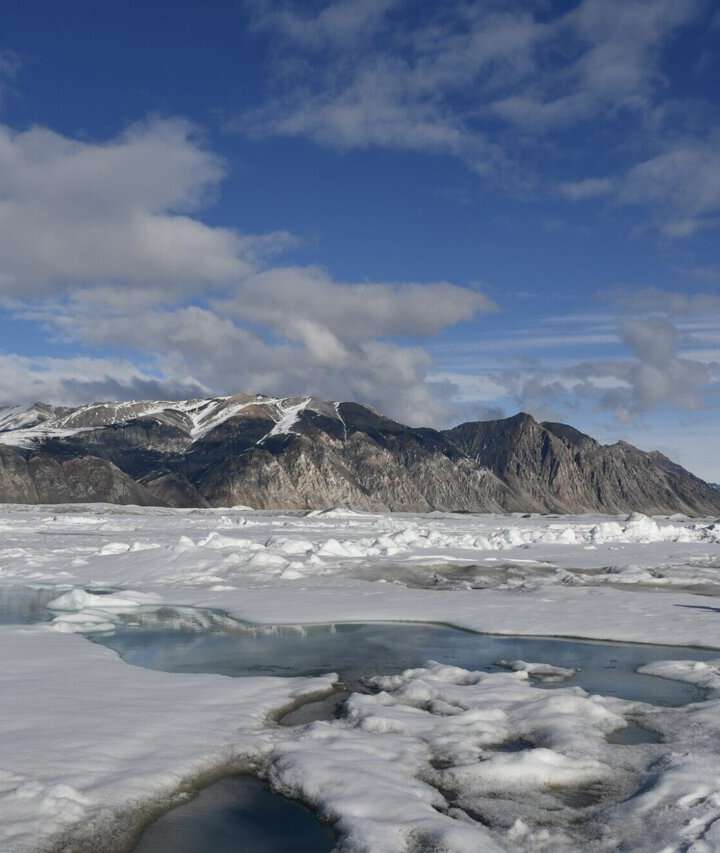
The disappearance of the epishelf lake will cause a shift in the ecosystem. There will be a switch from a unique freshwater system to a usual saltwater ecosystem, and other marine creatures will likely move in and adapt to the environment.
The disappearance of Canada’s last epishelf lake is a loss of a visually beautiful, unique, and environmentally important structure. Unfortunately, nothing can be done to reverse the damage done. These systems are unlikely to regenerate in the near future, especially as Arctic systems change and melt.
The root cause of this deterioration is global warming.
“There’s certainly natural variability in their global climate and the Arctic climate, in general, but the acceleration of change that we’ve seen, certainly in the last 20 years that I’ve been working up there, is very much aligned with anthropogenic climate warming,” Hamilton explained.
There are still hopes to limit the impact and future changes, through swift action against climate warming.
“It’s a big, big change for that particular fjord and a signal of what’s happening on a much larger scale across the Arctic, as far as loss of sea ice and melting glaciers,” Hamilton stated. “I’m continually motivated to understand how our planet works, so that we can maybe do a better job of how we coexist on this planet, with the natural world.”