U of A professor wins national award for book on Jesuit “Relations”
U of A professor Micah True awarded the 2026 CHA Best Scholarly Book in Canadian History Prize for 'The Jesuit 'Relations': A Biography.'

 Supplied
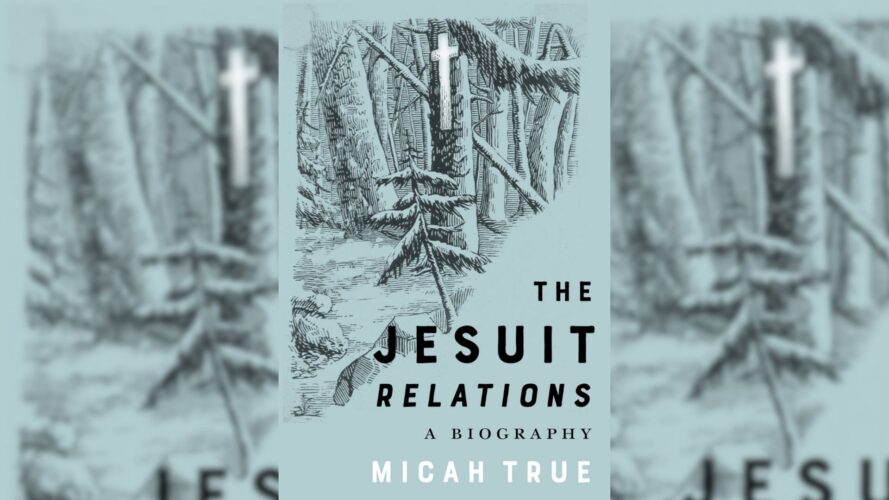
Micah True, a professor of French and folklore in the department of modern languages and cultural studies, won the 2026 Canadian Historical Association (CHA) Best Scholarly Book in Canadian History award for his book The Jesuit “Relations”: A Biography. He said the award was an unexpected recognition of years of research.
The book examines the Jesuit “Relations,” a collection of annual reports written by Jesuit missionaries in Eastern Canada during the 17th century. True considers these reports to be one of the most important historical sources for understanding early Canadian history.
True spent more than five years researching and writing his book. The project began as a conference paper in 2019 before developing into a full-length scholarly work.
“Prizes are not necessarily easy to win and you certainly don’t expect to win one when you write a book,” True said. “It’s not the reason why you write a book, but it is a nice thing when it does happen.”
Exploring the Jesuit “Relations”
Members of the Society of Jesus wrote the Jesuit “Relations” to document their experiences and observations in what they called New France. Jesuits produced similar reports around the world. However, True argues that the Canadian Relations are unique because France published them yearly for nearly four decades.
“They are the single richest source of information on that period in the 17th century,” True said.
The documents have allowed historians to study a wide range of topics. Events recorded during the period included daily life in New France, relationships between Indigenous Peoples and European settlers, and even eclipses.
True examines not only who wrote the Relations, but also their creation, reception, and interpretation throughout history. He explained that giving the Relations a “biography” came from looking at a book through its broader historical context.
“A book has a life in a certain sense,” he said. “It arises in a particular context. It’s shaped by the political or social context in which it is produced.”
The book follows how the Relations changed in meaning over time. From their original publication in the 17th century, to their rediscovery by historians and continued use today.
Challenging traditional narratives
Inspiration for The Jesuit “Relations” came after reading a 2017 article about Justin Trudeau presenting a copy of the Relations to Pope Francis. While the gift highlighted the historical connections between the Jesuits and Canada, True said the way the texts were described raised questions about whose perspectives were represented.
“It made me wonder if there’s more to say about these texts … and what they can tell us about Indigenous cultures,” he said.
Through his research, True found that many groups beyond Jesuit missionaries shaped the Relations. Indigenous Peoples, settlers, editors in France, and women involved in religious communities all had an influence.
“The dominant ideas about these texts for decades is that they were written by Jesuits, reflecting Jesuit points of view,” he explained. “I was able to show that a lot of people had input … into what their Relations ended up looking like.”
True mentioned that European missionaries were not simply documenting Indigenous Peoples. The Indigenous Peoples were active participants who influenced what appeared in the texts.
“What my book really does is provide another way of thinking about those interactions,” he added. “Indigenous people were intentionally shaping Jesuit writing practices and shaping the way the Relations ended up looking.
He said this perspective is important when considering the relationship between Indigenous people, European settlers, and colonial institutions. “They were participating in ways that left a clear mark on the text,” True said.
Why history of the Relations matters today
True highlighted that documents like the Relations remain important in conversations of truth and reconciliation. “They’re right at the beginning of the relationship between settlers and Indigenous people,” he said.
After years of studying the Relations, True said the biggest lesson he took away was that history is rarely simple.
For readers without a background in history, he hopes The Jesuit “Relations” shows that historical documents are more complex than they may first appear.
“Historical encounters are always far more complicated than you ever expected,” he said.