Sixth annual residential school memorial marked by stories of harm and hope
Students, faculty, and community members gathered to commemorate the history of residential schools and the harm it caused.
 Leah Hennig
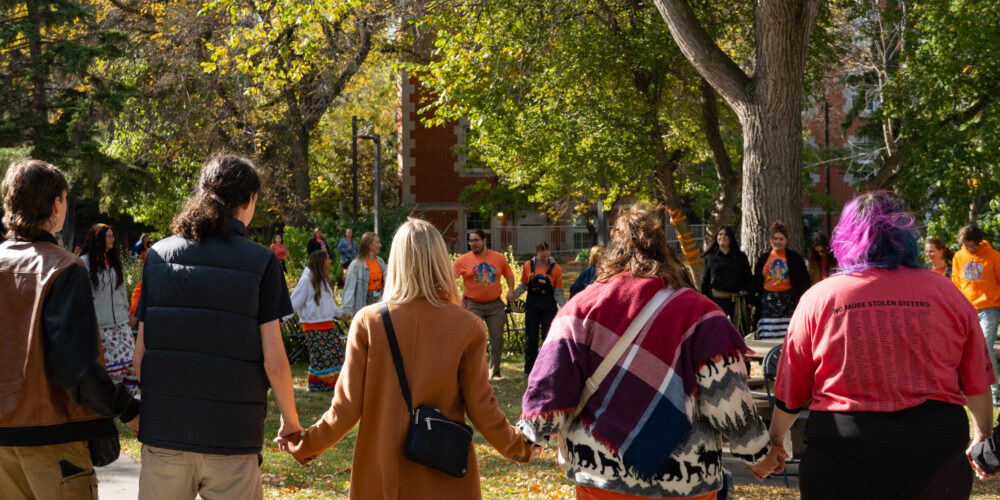
 On September 29, the Indigenous Students’ Union (ISU) and University of Alberta Students’ Union (UASU) held the sixth annual residential schools memorial. People gathered in the U of A’s Main Quad near the Sweetgrass Bear.
Students, Elders, and university members spoke, sharing stories of the impacts of residential schools and other efforts to assimilate Indigenous Peoples. Elders also shared stories of perseverance and hope in the younger generation of Indigenous Peoples.
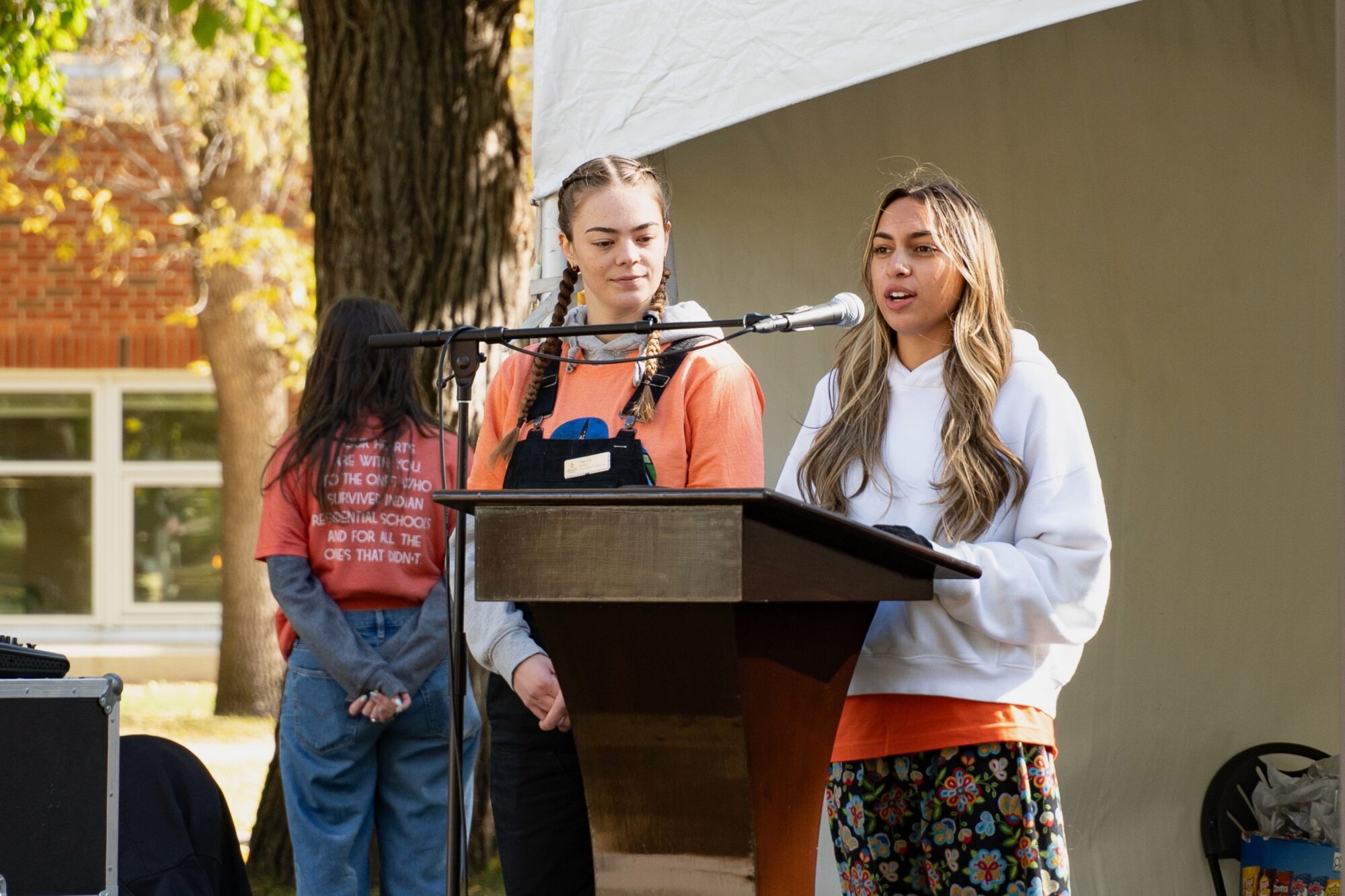
Isabella Seneviratne, a member of the St’at’imc Nation and president of the ISU, opened the memorial with a land acknowledgement.
“Our relationship with the land honours those who came before us, who we are today, and those who are yet to come,” she said. “A land acknowledgement is not complete without recognizing that colonialism is ongoing, and I encourage us all to reflect on our present participation in it here on Turtle Island and on the stolen Indigenous lands around the world.”
She noted that this year marks the 150th anniversary of the signing of Treaty 6 in Fort Carlton.
“Further signings took place in subsequent years, including First Nation leaders in the present-day Edmonton area where the University of Alberta is located,” Seneviratne said.
She said that the treaty is still a living, breathing agreement that carries with it ongoing commitments, promises, and obligations.
“In fact, by sitting here today in this institutional space, many of us are living out a piece of that treaty promise,” Seneviratne said. “For some of us, being the first in our families to attend post-secondary means that we are honouring the relatives who signed those treaties so future generations could learn and grow.”
She added that it’s important to celebrate the progress made, but also to remember how much work remains.
Uncovering the stories of residential schools
Elder Karen MacKenzie started with reflecting on the legacy of enfranchisement. “When I graduated from the university, many, many, many years ago, if I had been status at the time, I couldn’t be an Indian anymore.”
She herself did not go to residential school, but her mother attended the Grouard Residential School, the second largest in Alberta. Her grandmother Ethel did not go to residential school, but Ethel’s parents did.
“My kôhkom, my grandmother, she said because she hadn’t gone [to residential school], she wasn’t afraid to stand up to the Indian agent,” MacKenzie said. “She took three of the six [children] out of the residential school and the RCMP went after her to put them back. She eventually moved to High Prairie so that it was too far away for the RCMP to come.”
As a result, the government struck her grandmother from the band registry. It was her brother-in-law, who was an Indian agent, that struck her name from the registry.
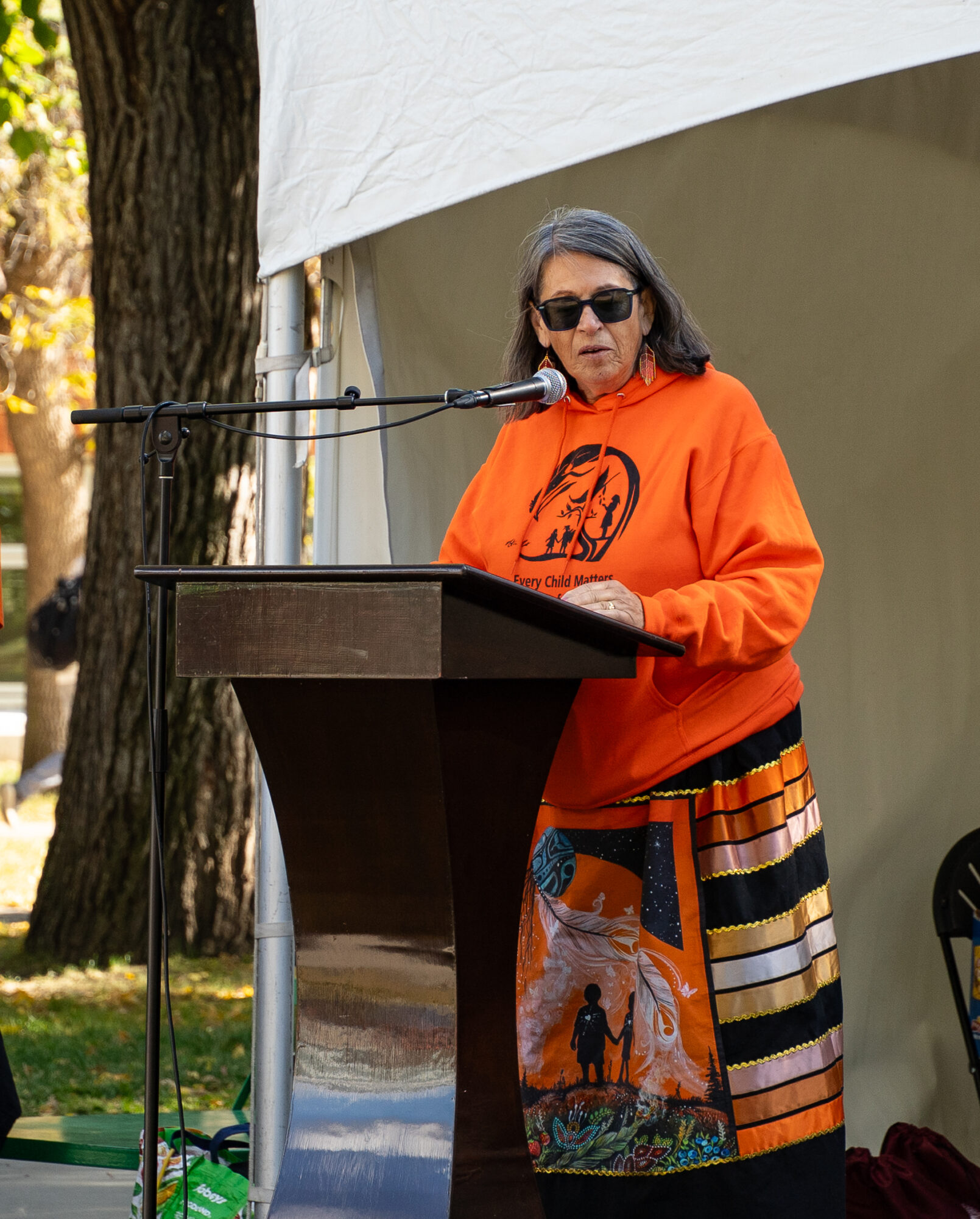
“When that happened, they were not allowed to visit family, so they were cut off from all those relatives,” she explained.
MacKenzie also recalled the time that she visited the Gallery of Aboriginal People with her kôhkom. “We went through, she’s looking at all the sewing and the beadwork and so on, but as we came to the end, we came onto a boardwalk and we start to come into colonization.”
They came across a schoolhouse display with two children in bowl cuts, sitting at a desk, and a Grey Nun standing behind them.
“My grandmother undoes the velvet rope, and I’m watching her, and I’m thinking ‘we’re going to get in trouble,’” she said. “Little did I know, she doesn’t care. And she goes into the schoolhouse, and … she walks over to the mannequin of the nun and spits on it.”
That’s when MacKenzie realized there was a story there that she didn’t know, but was determined to learn. She began talking with her grandmother and piecing the story together.
“When I ask people to introduce themselves, they don’t know who they are,” MacKenzie said. “They don’t know where they come from, but they know there’s a story, and so we’re encouraging people to start learning their stories.”
Making the journey from head to heart
She learned from Elders that the hardest journey people have to make is from their head to their heart, getting out of their heads and letting go of fear.
“The journey that leads us to our heart says, ‘my spirit is alive, I do things with love, with kindness, from gratitude,” she said.
Another teaching she learned is to be a good relative. “These are all your relatives,” she said, gesturing to the attendees. “They’re all so proud of you. They’re the ones who have kept the space for you to learn. And there are so many of us … who have that intergenerational story to carry forward.”
MacKenzie also said she wanted to honour the children who never came home from the Kamloops Residential School, “whose memory, whose spirit was dishonoured yesterday with that white supremacist group who marched defiantly on someone else’s home.”
She encouraged everyone to reflect on what they can do with what they learned today. For MacKenzie, it is to tell stories and help others on their healing journey.
“We will not let Alberta go,” Lightning says
Elder Rick Lightning comes from the Maskwacis, which had the largest residential school in Canada. Lightning is a third-generation residential school survivor.
Lightning said that there were moments of good at residential schools. “We used to have the greatest snowball fights, and we had 50 kids fighting each other. We’d build these amazing forts and have incredible snowball fights, despite the misery we lived in and the food we had.”
But harm was very real. Lightning’s father attended the Red Deer Industrial School, which was shut down because of too many deaths, he said. Then, Ermineskin Residential School was created. Lightning wore a shirt with the school’s name and an illustration by one of the students.
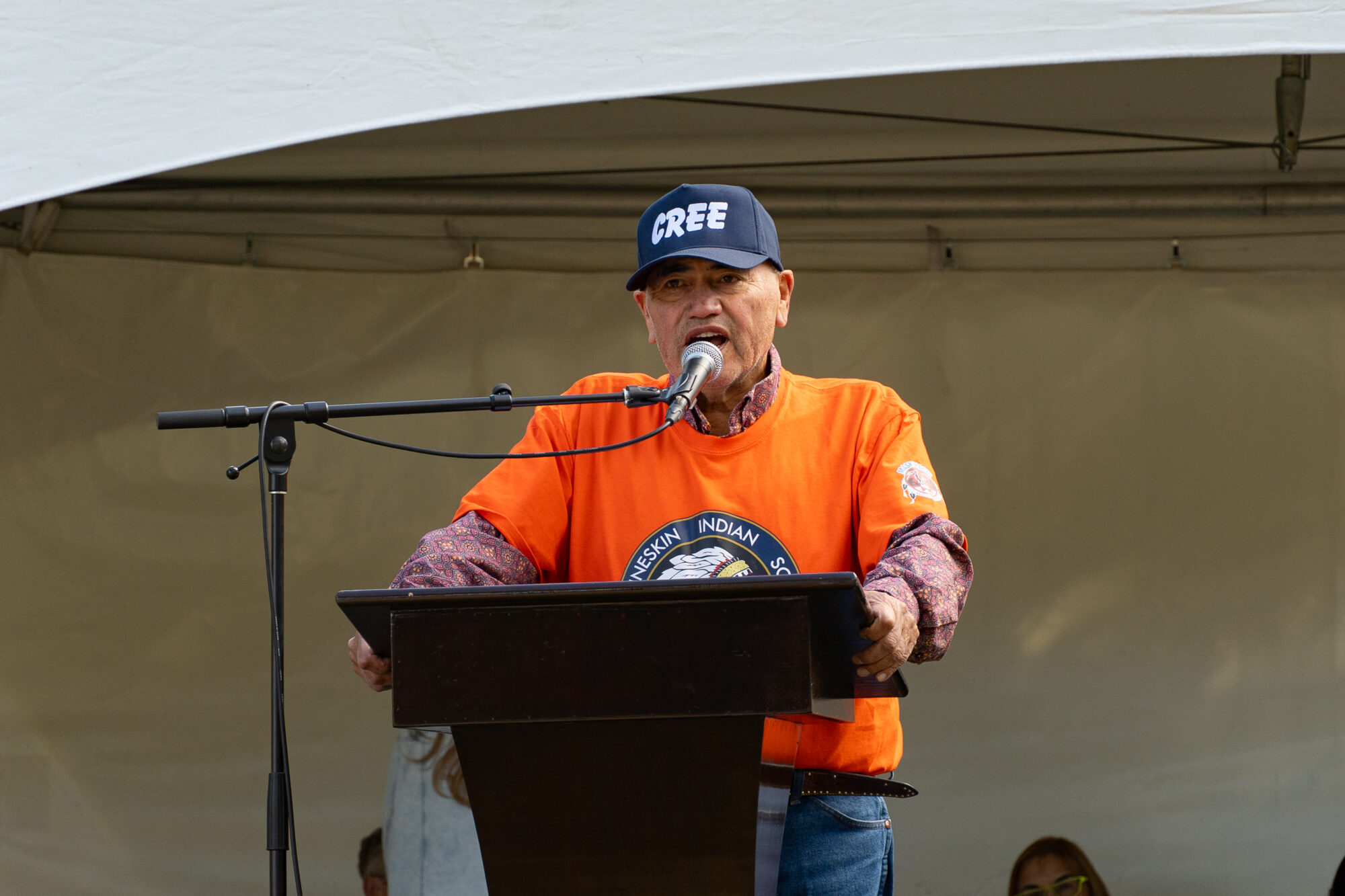
“How residential schools was created, John A. Macdonald said, ‘kill the Indian and save the child.’ And that echoed out throughout eternity, to today, still is out there,” Lightning said. “We are now in fourth-generation child welfare. That’s all based on intergenerational trauma, it’s carried on through generations.”
He called the white supremacists who went to Kamloops cowards and chickens for covering their faces. Lightning added that residential school deniers and white supremacists are here in Alberta too. He urged people to be careful and to defend against white supremacy.
In regards to separation, he added that “we will not let Alberta go. Alberta is our people. The Treaty 6, 7, and 8, the chiefs[,] and the people,” he said. “[Premier Danielle Smith] will have to deal with us, as well as the rest of Albertans that are waking up and realizing what this lady is doing.”
“You’ve beaten the odds,” Lightning says
The U of A was based on white privilege and racism, he said.
“I’ve been here eight years. I work in the faculty of medicine. Maybe I’ll get fired today, but that’s okay, I’m old,” he laughed. “But the point is that we’ve come a long way in eight years.”
Lightning recalled that when he was sitting on a board for anti-racism, they were told they had six weeks to talk about racism. He started laughing.
“The chair said, ‘Mr. Lightning, what’s so funny?’ I said, ‘you do realize this whole place is based on racism, the pillars of this institution. I said, ‘Once you open that door, it’s going to be Pandora’s box, and you’re not going to like what you’re going to find out.”
He said that Indigenous Peoples weren’t allowed to come to the U of A or other universities. If they did, they lost their Indian status.
“They didn’t want us to have education,” he said. “We have education now. We have people that have PhDs, we have people that have master’s.”
He said that young people are shedding the ugliness that residential schools and the governments of Canada created for Indigenous Peoples through its policies. “We’re so proud of all you young people, whether you’re Métis, you’re treaty, or anyone, because you’ve beaten the odds.”
“We are here,” Glanfield says
Florence Glanfield, the vice-provost (Indigenous programming and research), said that part of her job is to invite the U of A community to remember the people who were taken to residential schools.
“For those of us who identify as First Nation, Inuit, or Métis, in each of our families, there are stories of who went to residential schools or to day school,” Glanfield said. “We carry those stories within us in some way. They’re in our blood.”
She explained that for many, the Truth and Reconciliation Commission’s work was the first time some Indigenous people had heard the stories of residential schools. Family members often didn’t share.
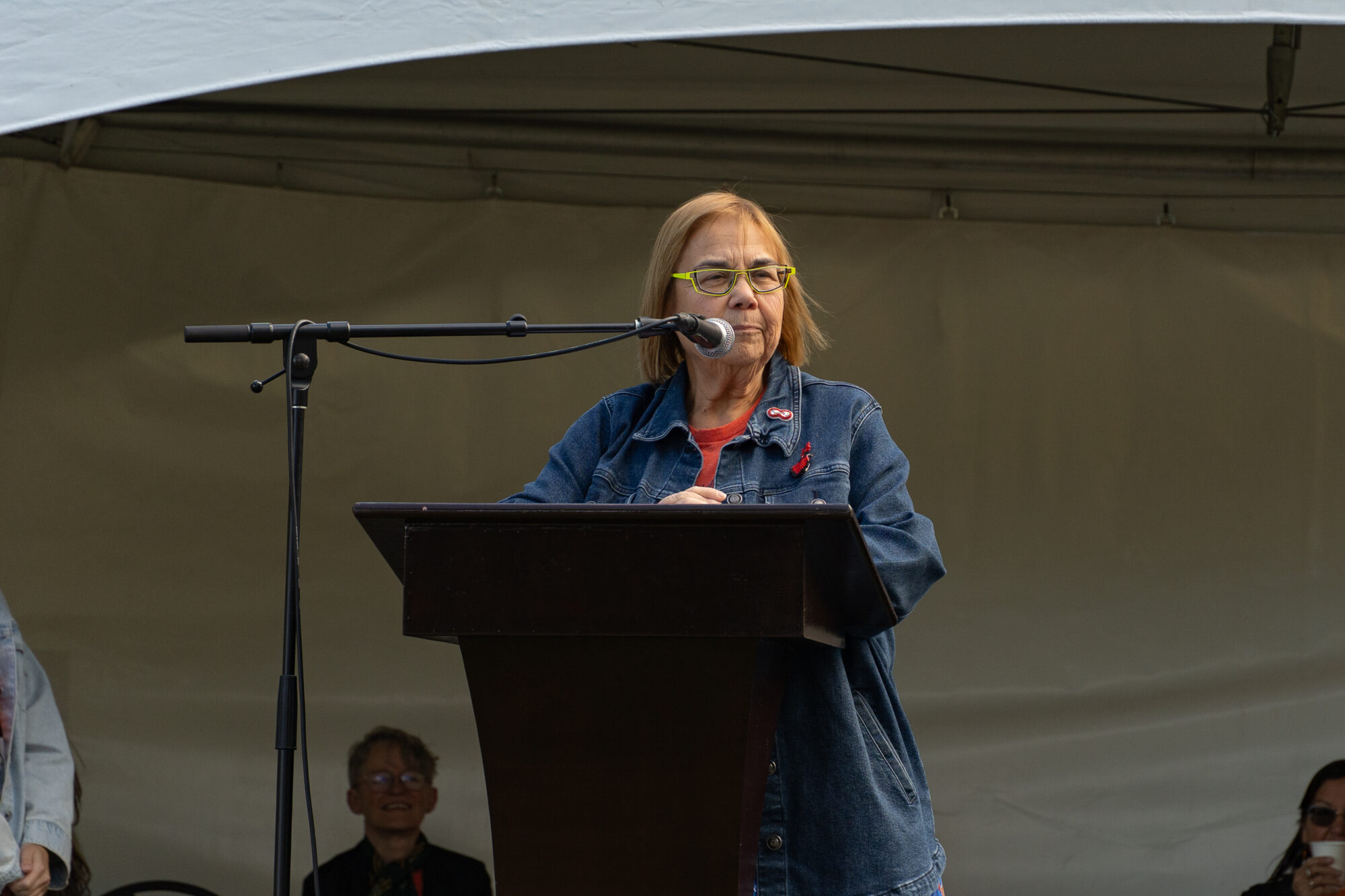
“One of the knowledge holders that I got to work with said it was the hardest thing that they ever did when they were invited to start telling their stories,” Glanfield said.
She added that universities contributed to the residential school system. The U of A trained some of the teachers at residential schools and some of the policymakers who contributed to the harm. In other cases, researchers used children at residential schools for research, including the Canadian Food Guide.
“The University of Alberta did not imagine First Nations, Inuit, Métis humans here when it first started,” she said. “But you can imagine we are here and we have our ancestors who came to this place long before they were supposed to be here and started to plant seeds.”
Glanfield also noted the work of students, who organize gatherings like the residential school day memorial and encourage integrating Indigenous worldviews into curriculums.
Closing with dancing
Ian Crate drummed and sang as the Elders and organizers walked the grand entry and during the fancy dances. The event also featured Kenton Alook, a Métis jigger, and Danni Okemaw and Jennifer Whitehead who did a fancy dance.
Okemaw spoke before she danced with Whitehead. She said her father attended the Assiniboia Residential School as a teenager alongside her auntie.
“I’m so grateful for their strength, I’m grateful for their bravery, and I’m grateful for them passing on that kind heart,” she said.
“Me, and Ian wouldn’t be here singing and dancing, even Jennifer, without these beautiful, strong survivors.”
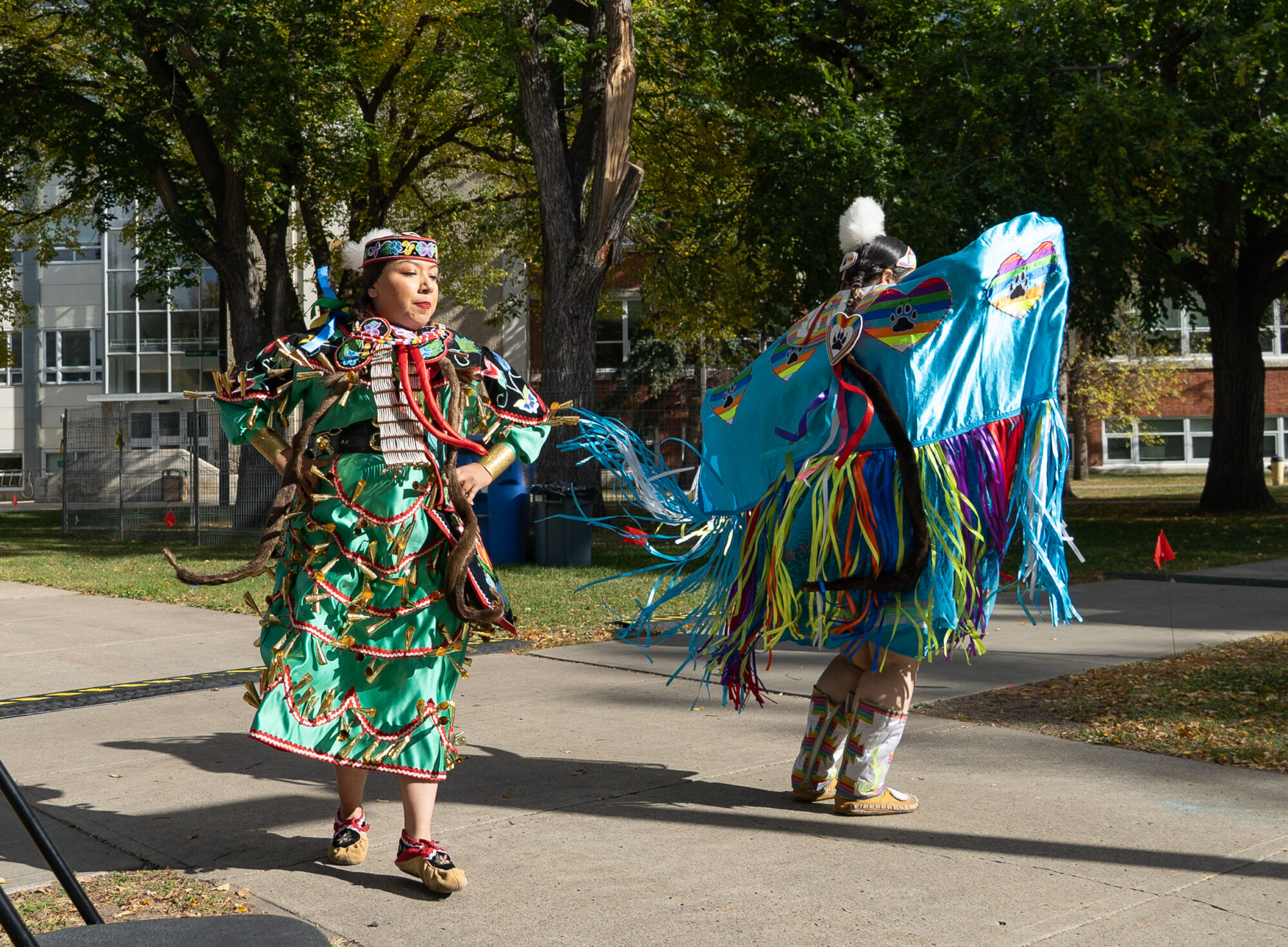
She said that often at powwows, they speak about the victory song. One of the MCs, Hal Eagletail, said that the victory is that Indigenous Peoples’ and their languages are still here.
“The fact that we’re dancing on these grounds is a victory,” she said.
The event ended with people joining hands to form a round dance.