Book Review: ‘Crohnic’ by Jason Purcell
Life with chronic illness is painted with imagery of nuthatches and aspen trees in Jason Purcell’s new book of poems.

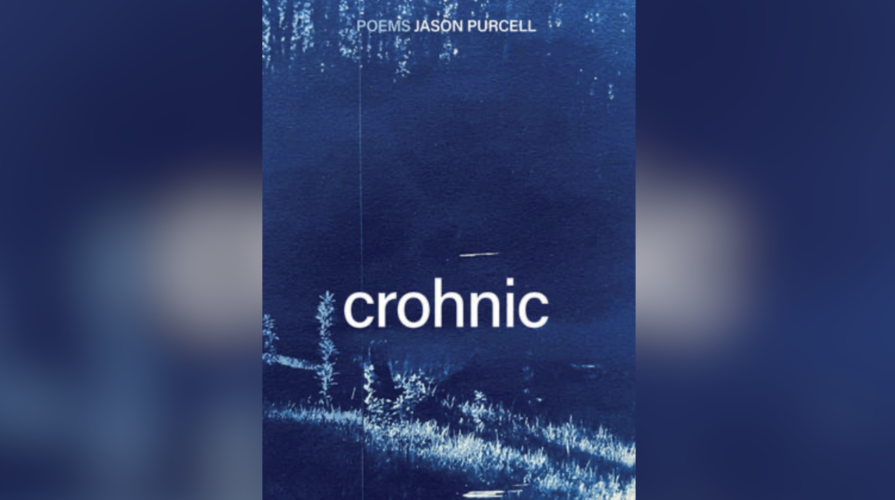 Supplied
In April 2026, I had the privilege of listening to Jason Purcell read and speak about his new book, Crohnic, at an Edmonton Poetry Festival event. That night, I bought his book and am so glad I did.
Crohnic, Jason Purcell’s second book of poems, was published in 2025 by Arsenal Pulp Press. Jason Purcell is a poet living in Edmonton, and a current PhD student in the department of English and film studies at the University of Alberta. Chronic shares his journey through the Albertan health system while battling Crohn’s disease, and how that connects to Alberta’s ecology.
Crohnic was a treat to read. It has a softness that is hard to describe. Purcell found a way to write about the frustration and grief that come with chronic illness with the gentleness of nature.
The whole book felt like Purcell was telling stories while sitting on a park bench in the River Valley with a hospital bracelet still around his wrist from his morning infusion. Purcell uses metaphors about winter and nature’s rest to share how chronic illness forces a person to slow down in our busy world.
Throughout the book, there are little moments of nature in between stories of hospital visits. For example, seeing nuthatches in the rafters. The book shares the dichotomy of happy days playing by the North Saskatchewan River and the dreariness of a hospital room.
Purcell proves that his failing body is a product of nature. He compares his twisted bowels to black knots, clogged streams, roots, and rot. He shares how illness is as common as seeing a conifer on a walk in the River Valley.
Purcell makes grief from illness and climate grief the same. He shows how universal grief is and how people fighting chronic illness can see their pain reflected in climate change and the changing body. He also found a way to make the terrifying, frustrating stories from a failing body as simple and everyday as an aspen growing.
The book is tragic, but it paints a great picture of what it means to live with chronic illness. The final couplet, “is a place to stop resting temporarily // the body holds our weight as long as it can,” encapsulates the pain and the hope the book shares.
I was a little skeptical about the idea of comparing Crohn’s disease to the North Saskatchewan River, but I am so glad I picked up this book. Purcell played with imagery and metaphor as if writing were as easy as walking down the street.