‘Science at the Fifty-Third Degree’ humanizes research advancements through conversation
Episodes highlight the collaborative nature of science, and expand accessibility of discoveries happening at the university.

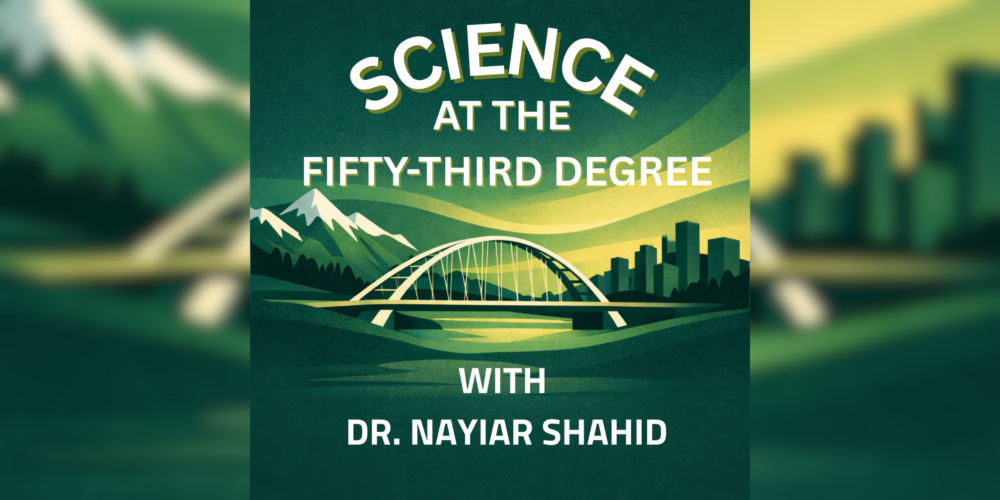 Supplied
After finishing her PhD in pharmacology, Nayiar Shahid, a research and education co-ordinator at the University of Alberta, wanted to step away from the table and tell the human stories behind experiments.
She is the co-founder and host of Science at the Fifty-Third Degree. The podcast sheds light on scientific breakthroughs that happen at the university and explains science in an accessible way.
It debuted on May 5, and the latest episode, “The Sound of Science,” features graduate student Mitch Prostebby. Together, the two discuss what the brain’s electrical waves sound like when they’re converted directly into sound waves.
What’s unique about this episode — and the podcast overall — is its unique way of linking discoveries to everyday life. Unlike research papers, which can be difficult to understand and contain unfamiliar jargon, Shahid humanizes science through conversations. The discussions make research accessible by introducing the personalities behind the results and explaining the big picture.
“Whether hosting a podcast or teaching in the lab, my goal is always to connect scientific theory directly to the real world,” Shahid said.
Her work as a podcast host is a natural extension of her role as a voice for science graduate students during her PhD at the university. After leading a scientific community for students, she also wanted to serve as a voice for the entire scientific community.
“The conversations via podcast create a completely different way of engaging with science,” says Shahid
She realized that when the university publishes new research, people often miss out on the behind-the-scenes action that made that discovery possible. The final result often receives the most emphasis.
“You miss out on the human engine behind [research] and the curiosity and daily struggles of the people who drove that discovery,” Shahid added.
Research papers are important. But they are written for specialists and strictly focus on results and methods, Shahid explained. They can often be inaccessible and restricted behind paywalls. They also often focus on hyper-specific niches.
During her time studying drugs, Shahid spent a lot of time zooming in on the little details. She wanted to step back and look at the entire, greater picture of scientific discoveries, and how they connect to day-to-day life.
One way the podcast does this is by humanizing research. Investigating the personal lives of scientists and asking them about their passions grounds the research journey behind breakthroughs. Talking about discoveries in a conversational manner makes science less intimidating, and highlights why specific discoveries are important.
“I focus on three different areas: what’s the big question? why does this matter? and how does it connect to people’s everyday lives,” she said.
Shahid explained that the podcast highlights aspects of research that traditional media and journal papers leave out. The episodes reference the entire team of scientists behind a research discovery, and discuss science in relatable ways. Shahid noted that media outlets often only focus on the lead researcher or professor of a discovery. However, Science at the Fifty-Third Degree stresses the collaborative nature of science, which features the participation of various experts.
Audiences can also directly experience scientific discoveries. In Shahid’s latest episode with Prostebby, listeners can hear the brain waves themselves. Other episodes interview students to gain insight on their experience with research, and help listeners navigate scientific literature.
Scientists share raw, unedited passion for their work
A podcast episode creates a natural, comfortable environment for scientists to share their work, according to Shahid. Experts “drop their steep lecture voice,” and share personal anecdotes and experiences. Featuring local breakthroughs celebrates the local Edmonton community, and pays homage to the city’s location at the 53rd parallel.
The podcast also showcases Edmonton’s diversity. Shahid herself started her academic journey in Bangladesh, and wants listeners to meet the diverse backgrounds behind science discoveries.
Season two launches early this fall and will focus on themes such as women and children’s health, and neuroscience.
“Whether you are a student figuring out your career path, or simply someone curious about the world, there’s a story for you in this podcast.”