SU Elections 2026: Indigenous Students’ Union forum recap
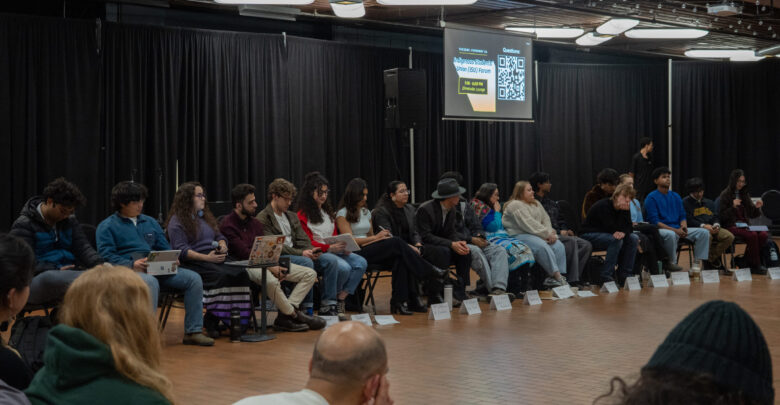
The first University of Alberta Students' Union 2026 elections forum was hosted by the Indigenous Students' Union.




 Leah Hennig
The first forum of the University of Alberta Students’ Union (SU) 2026 elections was hosted by the Indigenous Students’ Union (ISU) on February 24. The event was offered in-person.
June Moon, ISU vice-president (internal), moderated the event. Kookum Hazel McKennitt gave opening remarks and led a prayer. Attendees were given the opportunity to smudge and grab some stew and bannock before the forum began.
Candidates were given 90 seconds each for opening statements. Each race was then asked a question by Moon, which were prepared by ISU members. Afterwards, audience members had the opportunity to ask questions directed to specific races. Finally, candidates were given 30 seconds for closing statements.
Here is the TL;DR version of this forum:
- President: candidates address equity, diversity, and inclusion (EDI), building a relationship with the ISU, and accountability.
- Vice-president (operations and finance) (VPOF): transparency, including Indigenous voices in decisions, improving accessibility in ISU spaces, and follow-through.
- Vice-president (academic) (VPA): aims to implement plans to change structures so that concerns are made into outcomes.
- Vice-president (student life) (VPSL): improving advocacy and support for Indigenous groups and students.
- Vice-president (external) (VPX): plans to consult with ISU and work with external organizations.
- Board of Governors (BoG) representative: consultation with students, defending EDI, and transparency for BoG.
Presidential candidates
In his opening statement, presidential candidate Abdul Abbasi said that over his two years as VPX, his focus has been “building relationships that deliver results.” He discussed his involvement with the transit coalition that current SU President Pedro Almeida started, as well as his advocacy for the Post-Secondary Student Support Program. Moving forward, his goal is to “build on that momentum.”
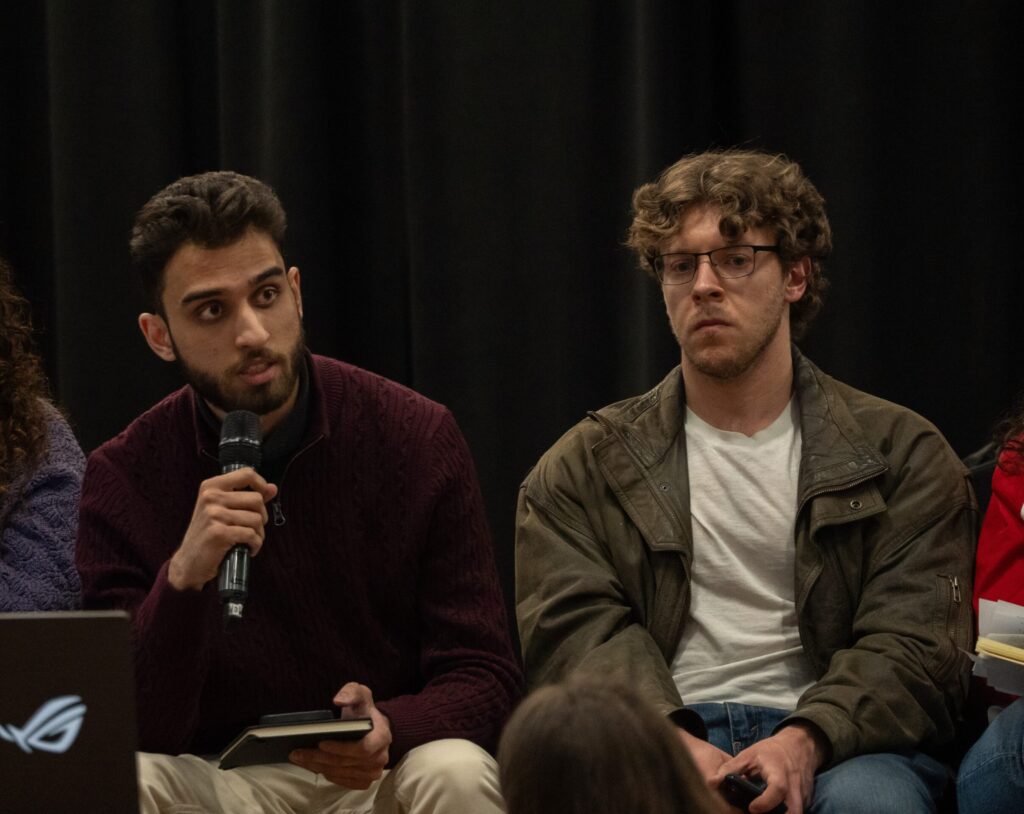
Presidential candidate Joseph Sesek began his opening statement by stating that “it’s time for structural change” when it comes to Indigenous student consultation. He emphasized that he is the only presidential candidate who is “promising a permanent seat and a permanent vote on the Students’ Council.”
“We need to change Bylaw 100 to include a permanent councilor position to represent all Indigenous students at the U of A,” he said.
Moon asked the presidential candidates how they plan to “meaningfully protect and advance EDI initiatives on campus to meet the specific needs and rights of Indigenous students and instructors.”
Abbasi said that he does not see equity as a label but rather “a responsibility institutions have to make sure opportunity is genuinely accessible and systems are fair.” He emphasized that “language alone does not create equity” and that policies should be evaluated based on their outcomes and their ability to remove barriers.
When it comes to addressing equity concerns, Sesek said that it is something he needs others’ insight on, which is why he wants “another member on the Students’ Council.”
He said Indigenous students “need some tangible power, so they could help people like me understand problems and actually act on them.”
Moon also asked the presidential candidates how they will work to “address imbalanced power dynamics and colonial governance structures that affect the relationships between the ISU and the SU.”
For Abbasi, the key is collaboration. He emphasized his efforts to build relationships with students during his time as VPX. Abbasi added that he would ensure that the ISU is supported by the SU in their advocacy and events.
Sesek stated that there has been “interesting tensions between the SU and the ISU” and, if elected, he would work to fix these tensions by giving Indigenous students “a lot more power.”
ISU executive Alex First Charger asked Sesek how he plans to keep himself accountable to carrying out the promises he has made to the Indigenous community on campus.
Sesek said he hopes his vice-presidents would keep him accountable, along with himself.
“I made a promise. I made a commitment. I’m going to stick to it and see through it to the end,” he said.
Abbasi also answered the question, emphasizing his efforts to deliver on his promises as VPX.
“I have delivered in making sure we’re keeping that line of communication open, and at the end of the day, you can come to council and please keep me accountable on the things I run on,” he added.
—Kathryn Johnson
VPX candidates discuss plans to consult the ISU and work with external organizations
VPX candidate Arman Chauhan said she plans to maintain and fundraise for the Elder Grant and fight for affordable housing with both the city and the federal government. Chauhan said she will push for “open educational resources” and wants to “partner with the city to expand Indigenous mentorship programs” and order to ensure international students learn the history of this land during their orientation.
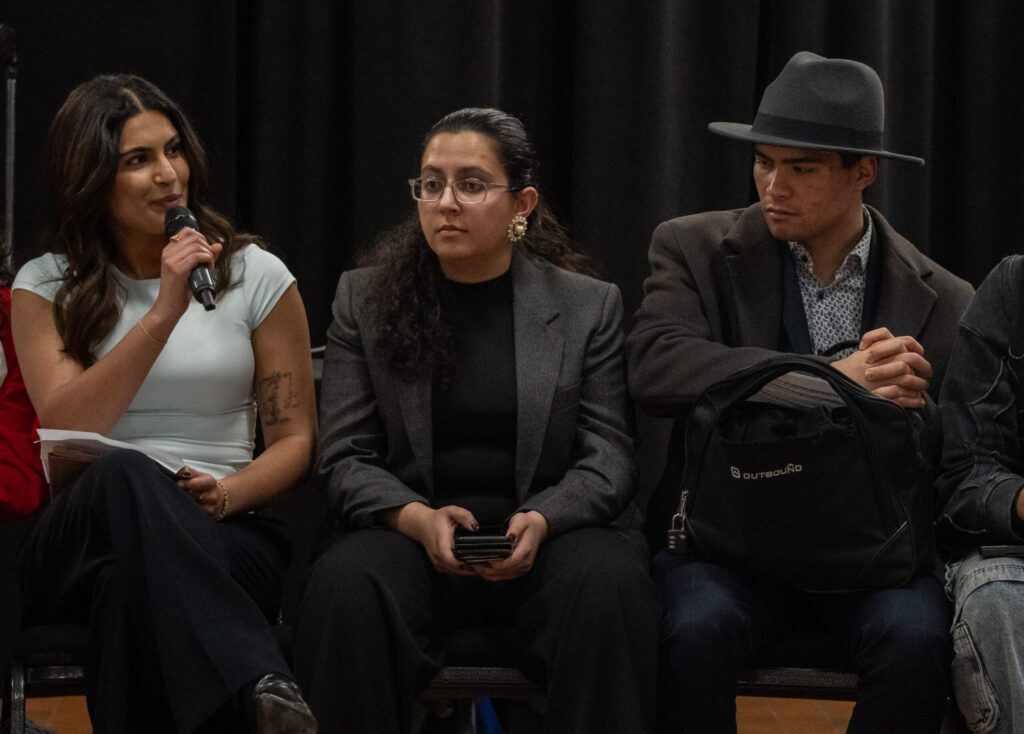
VPX candidate Angel Raina said she would “ensure [the ISU] has their own seat at the table when it comes to key Indigenous student issues.” Raina would like to “collaborate with the city on a Missing and Murdered Indigenous Women, Girls, and Two-Spirited (MMIWG2S) action plan.”
She highlighted that advocacy needs to be continued to “pair peace officers on transit with social workers” and that there is “appropriate training to aid distressed individuals and de-escalate dangerous encounters.”
The third VPX candidate, Dustin Rodenbush, said he is here to stand up for students who feel unheard. He intends to “advocate for better support and putting students first.” He will “heavily advocate to the provincial government to bring in more support for students who are graduating” by joining forces with the Council of Alberta University Students (CAUS).
The Students’ Council voted to support the dissolution of CAUS and joined Alberta Students Executive Council (ASEC) on December 16. The SU announced on January 12 that CAUS would be officially dissolved within a few weeks.
Moon asked the VPX candidates what “actions they will take to ensure that Indigenous students’ voices are heard at all levels in government that extend beyond campus.”
Raina said her priority is strengthening the SU’s relationship with the ISU. She would like to take further steps to institutionalize the relationship and make sure Indigenous students are present for decision making regarding Indigenous issues.
Chauhan said consulting the ISU is vital. She highlighted the importance of working with the Canadian Alliance of Student Associations (CASA) and the National Indigenous Advocacy Committee (NIAC) “on federal levels, so we can ensure that these concerns are brought to higher powers.”
Next, Rodenbush said he often observes Indigenous voices going unheard. He said we need to “make Indigenous concerns easier for the VPX to hear.” He intends to work with CASA and ASEC to “advocate for Indigenous students’ concerns, wants, and needs” at all levels of government.
Additionally, Moon asked the VPX candidates how they plan to “work with First Nations, Métis, and Inuit governments to forge meaningful relationships that better support Indigenous students’ success.”
Chauhan aims to expand Indigenous mentorship programs and collaborate with the ISU to strengthen the SU’s relationship with them.
Raina said one of her platform’s key points is community building. She said it is important to recognize that communities have boundaries, meaning that “not everyone is included.” Raina highlighted that Indigenous governance is often “de-validated.” She also intends to build connections with organizations, including Indigenous governments, the SU has not worked with before.
Rodenbush’s first action will be to establish relations with tribal councils and reservations and ask what their youth need. He said it is important to look beyond the university regarding safety and food security.
First Charger asked the VPX candidates how they will “engage with students in a way that does not result in the emotional, mental, and physical labour to fall on Indigenous students and leaders.”
Raina highlighted the importance of “educating [herself] as a candidate on what it means to interact with Indigenous communities” positively. She highlighted the importance of having both formal and friendship-based relationships.
Rodenbush said he intends to diversify the ways in which they interact with Indigenous students. For example, providing anonymous methods to voice concerns, or talking to him directly if individuals prefer.
Chauhan reiterated her intention to maintain the Elder Grant.
—Lucy Stuckey
VPOF candidates discuss transparency and follow through
Vice-president (operations and finance) candidate Armaan Singh opened by emphasizing transparency around how students’ roughly $700 annual fees are spent.
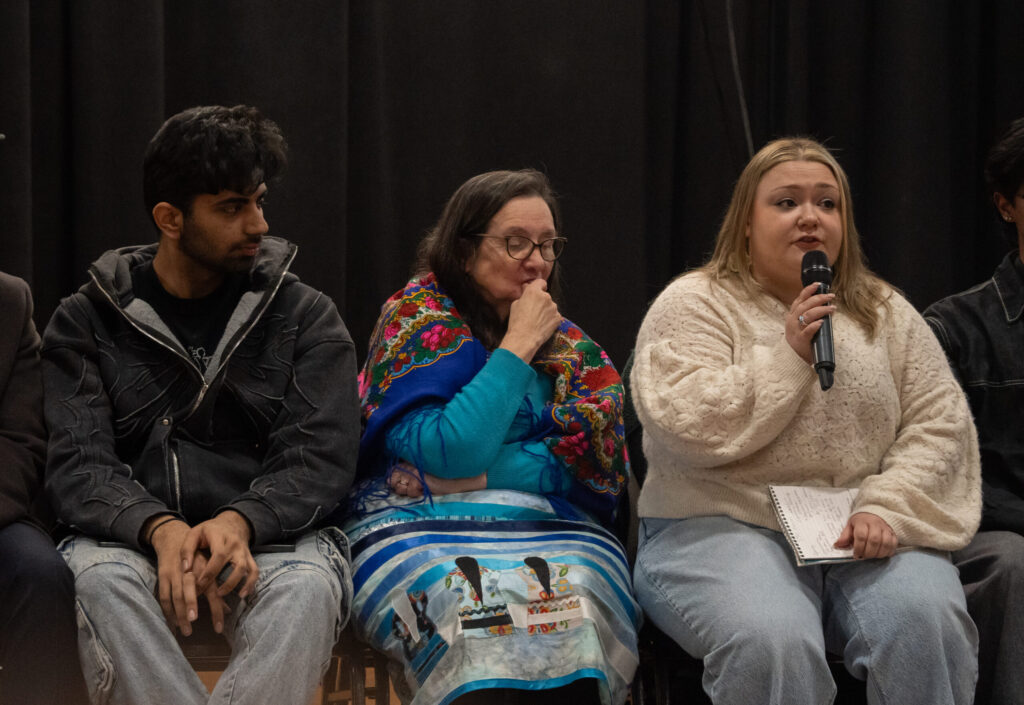
“You deserve to know exactly where your money goes,” Singh said.
Singh highlighted transparency, addressing food insecurity, generating more non-student revenue, and introducing anonymous sexual assault reporting as key priorities. He pointed to his experience as co-vice-president (communications) with the International Students’ Association (ISA), saying it gave him insight into how financial decisions affect students.
Current SU VPSL and VPOF candidate Logan West emphasized her relationship with the ISU as a priority. She said she has built strong feedback channels with Indigenous students in her current role and has acted quickly on concerns. West also referenced her experience as a SU representative to the ISU.
West said she would focus on institutionalizing support for Indigenous student groups through strategic planning and pointed to upcoming renovations to Dewey’s that would affect ISU spaces, including the addition of accessible washrooms.
When asked by Moon how they would ensure adequate physical space and accessible facilities as the Indigenous student population grows, both candidates pointed to campus space planning and the need for renovations to the ISU lounge.
Singh criticized past VPOFs, saying they had not pushed hard enough to secure improved spaces.
West said ISU representatives must be present at meetings with architects and designers when changes affect the ISU lounge and the North Power Plant.
Candidates were also later asked by Moon how they would use the operations and finance portfolio to build partnerships for subsidized food options.
Singh returned to food insecurity, saying he wants to work closely with the Campus Food Bank. According to Singh, only $20,000 of the $90,000 sustainability fund is currently being used and argued the remaining funds should be reallocated.
West said she would expand grant programs to support food-focused community events, including updating grant frameworks to fund culturally significant food at events.
In closing, Singh reiterated themes of transparency, accountability, and responsible spending.
West said, “Trust is a privilege earned through actions, not just words.”
She pointed to securing the ISU a seat on the Sexual and Gender-Based Violence (SGBV) task force and organizing a land-based learning event on the quad during her term as VPSL.
—Evan Cruickshank
VPA candidate discusses implementing structural reworking to turn concerns into actionable results
In her opening statement, Huseynova said she believes it is the SU’s responsibility to create clear, supportive, and fair academic systems. She closed her statement by saying that, if elected, she hopes “to implement plans that make a … difference in structures that turn concerns into tracked action instead of just discussion.”
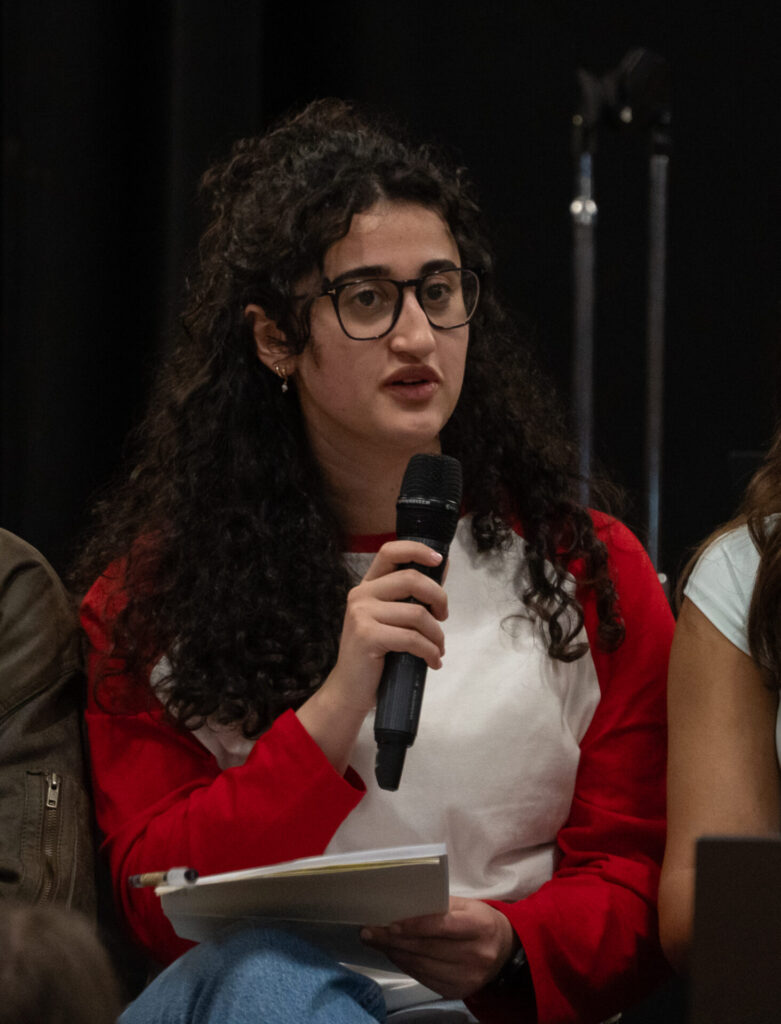
Moon asked Huseynova how she plans to have Indigenous voices “represented in academic decision making spaces” where there are various Indigenous student groups within faculties who all have “unique academic priorities.”
Huseynova said that a core project would be to upgrade the current structure of the Council of Faculty Associations (COFA) into a “student academic setting senate format” that ensures Indigenous concerns are actually acted on. She is aiming to implement a public action tracker with deadlines “so issues like harmful course delivery or barriers to support actually move.” She also mentioned addressing “the resource gap the ISU feels between different student associations” and the power imbalance that Indigenous student leaders feel.
Moon asked Huseynova how she will “advocate for Indigenous led guidelines or training … to prevent tokenization and create culturally safe classroom environments for Indigenous students.”
Huseynova said she wants to “co-design details with Indigenous … leadership and academic staff.” She is aiming to have any Indigenous course content and materials be Indigenous-led, or “co-created with Indigenous leaders” for credible information.
—Trystyn Rayko
VPSL candidates push for improving advocacy and community building with ISU
All four vice-president (student life) candidates started their opening statements with a land acknowledgement. In his opening statement, VPSL candidate Brish Goorimoorthee recognized himself as a student leader with “the opportunity and privilege of living on this ancestral land.”
“I am committed to listening, learning, and working towards meaningful action that supports Indigenous students and advances reconciliation in a tangible way,” Goorimoorthee said.
VPSL candidate Nolan Greenwood followed by introducing the three pillars of his campaign, which include: improving life in residence, implementing the 11 recommendations made by the SGBV task force, and improving advocacy through events and cultural outreach.
Following Greenwood, VPSL candidate Manyu Rathour stated that the ISU Lounge was “the first space where [he] felt genuinely safe and accepted.”
Rathour said he wants to ensure that Campus Community and Recreation (CCR) has more free classes based on Indigenous cultures and traditions. These include powwows, jingle dress, and fancy shawl dancing.
Following Rathour, VPSL candidate Paige Wall said, “I’ve been intentional about listening over the last few weeks, and what I’ve heard is clear, students want leadership that shows up, consistently, follows through, and doesn’t treat equity just as a talking point.”
Moon asked the VPSL candidates how they will ensure that their engagement with Indigenous students is based on genuine relationship building and ongoing learning, rather than one-time consultation.
Goorimoorthee stated that he is “coming to this position as someone [who] wants to learn and know more about the ISU. I want to continue supporting the students where they need … [and] continue to bring Elders to teach within the campus.”
Following Goorimoorthee, Greenwood said he will have continuous consultation with groups across campus, creating a space that really matters for students.
In his response, Rathour stated that it has always been a priority for him to not make it a consultation but about supporting each other without hierarchies.
Following Rathour, Wall said that “Indigenous students should have meaningful input in every decision that affects them, and that those contributions are not just acknowledged but acted upon.”
Moon asked candidates what steps they will take to ensure Indigenous student groups are equitably supported and not left to carry reconciliation efforts alone while respecting their capacity to meaningfully shape this work.
Goorimoorthee stated he “would love to see our team being able to put more effort into Indigenous-focused events.”
Greenwood said that he would reach out to Indigenous groups, not making them come to him, making it easy for consultation.
In his response, Rathour said he wants to ensure that the SU does more events with ISU, in terms of hosting many more things.
Wall stated that a Indigenous councillor role should be added to the Students’ Council. Additionally, she wants to push for more Indigenous students to be involved in higher positions where they can advocate for themselves.
The Gateway asked the candidates if there are any events they plan to do in collaboration with the ISU.
In his response, Goorimoorthee states that he wants to bring more Indigenous focus events within the SU Week of Welcome. Also displaying to new students that they do have a passion for Indigenous students and Indigenous culture.
Following, Greenwood said it “comes down to [him] working with groups like the ISU and other Indigenous groups on campus to know what they want.”
Rathour spoke about ensuring that people have the chance to come to the ISU, instead of having the ISU move towards the SU. Additionally, Rathour wants to “host a walk for our stolen sisters to honour the [MMIWG2S].”
Following, Wall said she plans to have a conversation with the ISU about events, if she becomes VPSL.
—Fernanda Campana Omori
BoG Representative candidates discuss consultation and maintaining equity
Amaan Khan, BoG representative candidate, began his opening statement by saying that many students feel that their voices are not “reaching the right rooms.” He said he wants to bring the ISU on his “journey of advocacy” while doing work with the Truth and Reconciliation Action Committee (TRAC).
Tala Mojarrad, BoG representative candidate acknowledged her position as an international student who has been welcomed into Indigenous circles. She said she wants to bridge the gap between students and the BoG, as well as improve accessibility to resources for students experiencing crisis.
Janardhun Alagarsamy Vignesh, BoG representative candidate, started his opening statement by acknowledging that even though there are over 2,000 Indigenous students enrolled at the U of A, many students still describe student governance as “gatekeeping” and as “performative inclusion.” He stated his three pillars, — oversight, sustainability, and advocacy — and explained that he plans to foster partnerships with Indigenous-led organizations.
Moon asked the candidates how they plan to use their vote on BoG to ensure that Indigenous priorities are protected and advanced.
Khan said he would approach this by being structured in his consultations and collaboration with the ISU. He said he will continue the work with the TRAC. He wants to make sure he delivers the message to BoG clearly and consistently.
Mojarrad said she would like to stay accountable, while also holding the BoG accountable for things that are discussed, with monthly update meetings with the faculty student associations, making sure voices are heard and “problems are coming into solutions.”
Alagarsamy Vignesh said the key “ultimately comes down to collaboration.” He said that “[Indigenous involvement] should be a fundamental aspect of what we address in terms of governance.”
He said he intends to do this through “direct meetings with the ISU and as well as other university partners to identify concerns and follow up on action items, and it should not be a one off consultation.”
Moon asked how the candidates plan to use their vote on the BoG to prevent financial decisions from disproportionately impacting Indigenous students’ ability to afford and attend university.
Khan said that collaboration will be key when addressing this role of the BoG representative, and it will not just be with the ISU, but also First People’s House and the Indigenous student community on campus. Using survey data, but also lived Indigenous students’ experiences to enhance BoG decision-making, he plans to formulate detailed reports of BoG decisions, using them to consult with student representative associations to enhance consultation.
Mojarrad said that she wants to make sure that students are understanding governance as well as making sure BoG understands students. She also wants to make resources more accessible to students.
Alagarsamy Vignesh acknowledged that U of A tuition has increased jumped by over 30 per cent since 2020 and that it is unsustainable for students. He wants to ask, before making any decisions about tuition with the BoG, “is this truly necessary?” He plans to be transparent about these discussions.
Giovanni Ursella asked the BoG candidates a question regarding BoG potentially passing a motion eliminating EDI from its hiring policy. The question asked the candidates how they plan to work in an environment where they are not making policy decisions, but represent people in governance.
Khan said that he will work to find all the data he can find to make sure that the work to advance equity and inclusivity is being done.
Mojarrad said that educational advocacy is a key part of her platform. She added that she wants to ensure that diverse student perspectives are being heard to provide evidence to the BoG through a documentation platform.
Alagarsamy Vignesh said that he believes that “institutional changes must not erode commitments to equity and representation in the university’s current situation.” He said that the removal of EDI would set a precedent for valuing the differences of students and upholding the hiring practices in order to show progress as an institution.
—Erin Widmark-Pickle