Commentary: Edmonton’s lack of arena space ripples into U of A’s hockey programs
The Bears and Pandas hockey teams have moved 20 kilometres south to Silent Ice as the Clare Drake Arena undergoes renovations.

 Leah Hennig
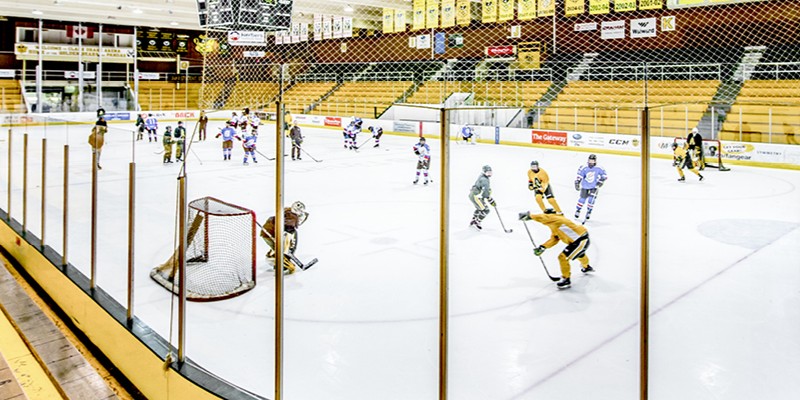
This season, the home of Bears and Pandas hockey has been closed for renovations. Instead of playing at the Clare Drake arena on campus, they found space in Nisku and will be playing at Silent Ice Arena. This will be the first season since the opening of Clare Drake in 1960 that they have had to play elsewhere.
In recent years, Clare Drake Arena has been dealing with plumbing issues. These issues have prompted necessary renovations to replace sanitary lines and the arena slab floor. The renovation is aimed for completion in December of this year, with a cost of $10.9 million.
The renovation means that the Bears and Pandas have to relocate. But what did the arena availability look like for an elite program in Edmonton?
Edmonton’s current state of arenas and arena availability
In Edmonton, there are 28 rinks between public and privately owned facilities. Of these rinks, there are only 10 National Hockey League (NHL)-sized single ice arenas and eight multi-pad centres.
Edmonton only has 31 ice pads across 22 city-operated rinks and six private arenas, creating limited space. In 2024, a report on the Arena Facilities Capital Development plan described that in Edmonton, there is one sheet of ice for every 39,000 residents.
In comparison, Calgary has 54 ice sheets across the city, and there is a sheet of ice per 23,000 residents. This is a stark difference in arena space, especially for cities that are comparable with major hockey teams and minor leagues.
The City of Edmonton completed an audit of their hockey arenas in 2007. They reported that some arenas needed replacing or shutting down due to their age and condition. Hockey Canada notes that the approximate life expectancy is 32 years for arenas. With Clare Drake being built in 1959, it has lasted twice as long as these types of facilities normally do.
Who uses the rinks?
Not only do the teams at Clare Drake need to relocate, but this also means more pressure on other rinks for arena space. The need in Edmonton has been skyrocketing as arena renovations take place, and more people enrol in programs. Between the 22 rinks and how many of the rinks are showing their age, there isn’t enough space for everyone to play. Hockey isn’t the only sport in arenas. Ringette, figure skating, speed skating, shinny, learn-how-to-skate programs and camps also use the space.
One of the associations using a large chunk of ice time is the Edmonton Minor Hockey League. They run 606 teams and over 10,000 players from ages seven to 7-18. Edmonton minor hockey is just one of many hockey associations in Edmonton, and through the Edmonton Oilers Community Foundation, hockey is available to more than 4,500 children and their families a year.
Professional hockey teams such as the Edmonton Oilers and the Edmonton Oil Kings are limited to playing at Rogers Place. There have been discussions of Edmonton getting a Professional Women’s Hockey League (PWHL) team. In recent years, they drew massive crowds of over 17,000 fans on the three occasions they played at Rogers Place. However, with limited ice time at Rogers Place, there is no room for a PWHL in Edmonton at the moment.
University of Alberta’s Varsity Hockey Programs: What happens now?
The Golden Bears and Pandas also use NHL-sized arenas, and they require a lot of ice time. Ice time is needed for practices as well as hosting home games for teams across Canada West. The arenas that elite teams use would have their facilities booked for a variety of programs. Different leagues such as community house-league teams, adult recreation leagues, tournaments, as well as public skating time. Due to how hard it is to find ice time, particularly during peak hours in the evenings, finding time and space for the varsity teams proved to be difficult.
The Silent Ice Arena in Nisku, which is located 27 minutes south of the city, is now the home to the Bears and Pandas for the 2026-27 academic year. This move will be difficult for students, as there is little public transit going out to Nisku. According to Google Maps, getting from North Campus to the Silent Ice Arena takes almost two hours. It consists of a train ride south, then taking a bus that goes past Nisku to Leduc and then switching buses to head back into Nisku. When the game is over on a Friday night, the next available transit to go back into Edmonton isn’t until 6:00 a.m. on Monday. This will make a large difference to the possibility of student attendance for those who don’t have an alternative mode of transportation.
Clare Drake Arena in comparison to the rest of Canada West
If you compare Clare Drake Arena to other arenas that Canada West hockey programs use, seven of the ten schools have new arenas from the last 20 years. This means that 70 per cent of them are around five decades newer than Clare Drake.
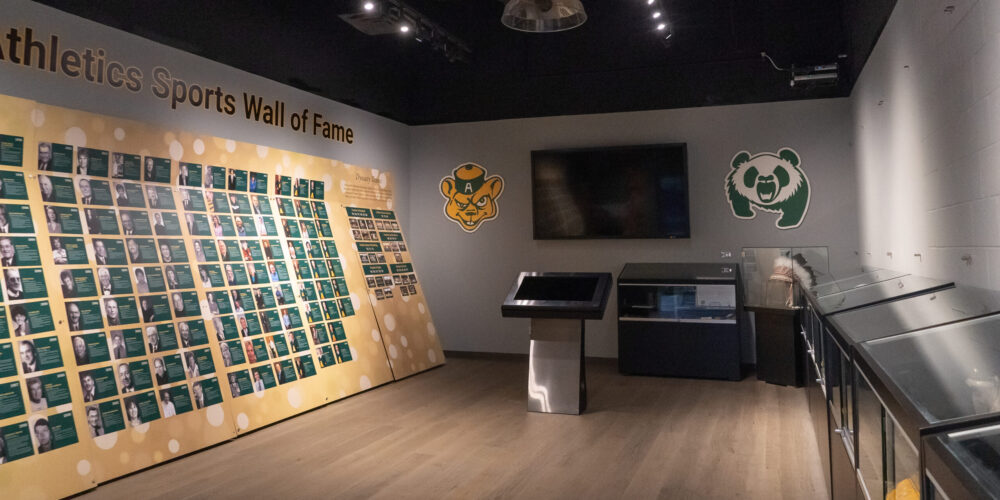
A new arena will serve the teams, as well as intramural teams, community members, and possibly new elite teams and programs. A new arena could have space for more showcases of hockey history that is vital to the program at Alberta.
Our arena is starting to show its age. With the current $10 million renovation, what will be the game changer for building a new arena? Clare Drake Arena’s minimal renovations this year mean it is holding up, but when will it need a complete makeover? For teams that have impressive records, with 16 national titles for the Bears and eight national titles for the Pandas, will they get a chance in a new facility on campus?