U of A museums team hosts public art and texture walk
An art and texture walk was held by the U of A's museums programming team for several works across North Campus.
 Trystyn Rayko
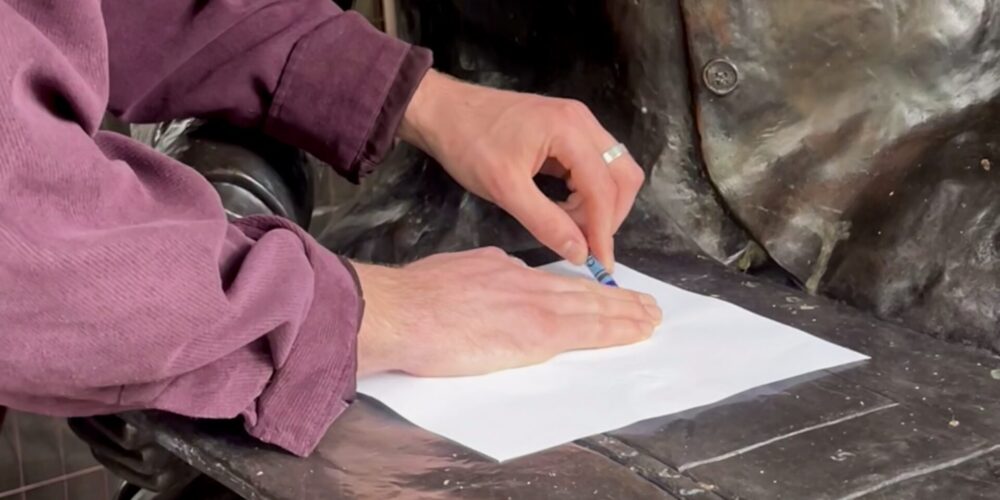
 On July 11, the University of Alberta’s museum team held an art and texture walk of six works across campus. This event was open to the public and explored the history behind each piece and intent of the artist. The walk was led by Max Quilliam and Jill Horbay, who are part of the university’s museum programming team. They also encouraged attendees to take texture rubbings as a way to interact with the art.
To achieve the texture rubbing, participants were provided with a sheet of paper and a crayon. By placing the paper over a textured area of the work and gliding the crayon over the area, participants get an imprint.
This unique experience allowed participants to interact with the art pieces in ways they otherwise may not have.
“The land that we share here on campus isn’t just neutral,” Quilliam said. “It’s imbued with histories and memories, with our public artworks across campus being a part of that story-making.”
Before the team revealed the intentions and history behind each piece, they prompted attendees to reflect on the art and share their views. Allowing participants the opportunity to physically interact and discuss the art created an experience unlike that of a typical art tour.
The Visionaries: Barbara Paterson
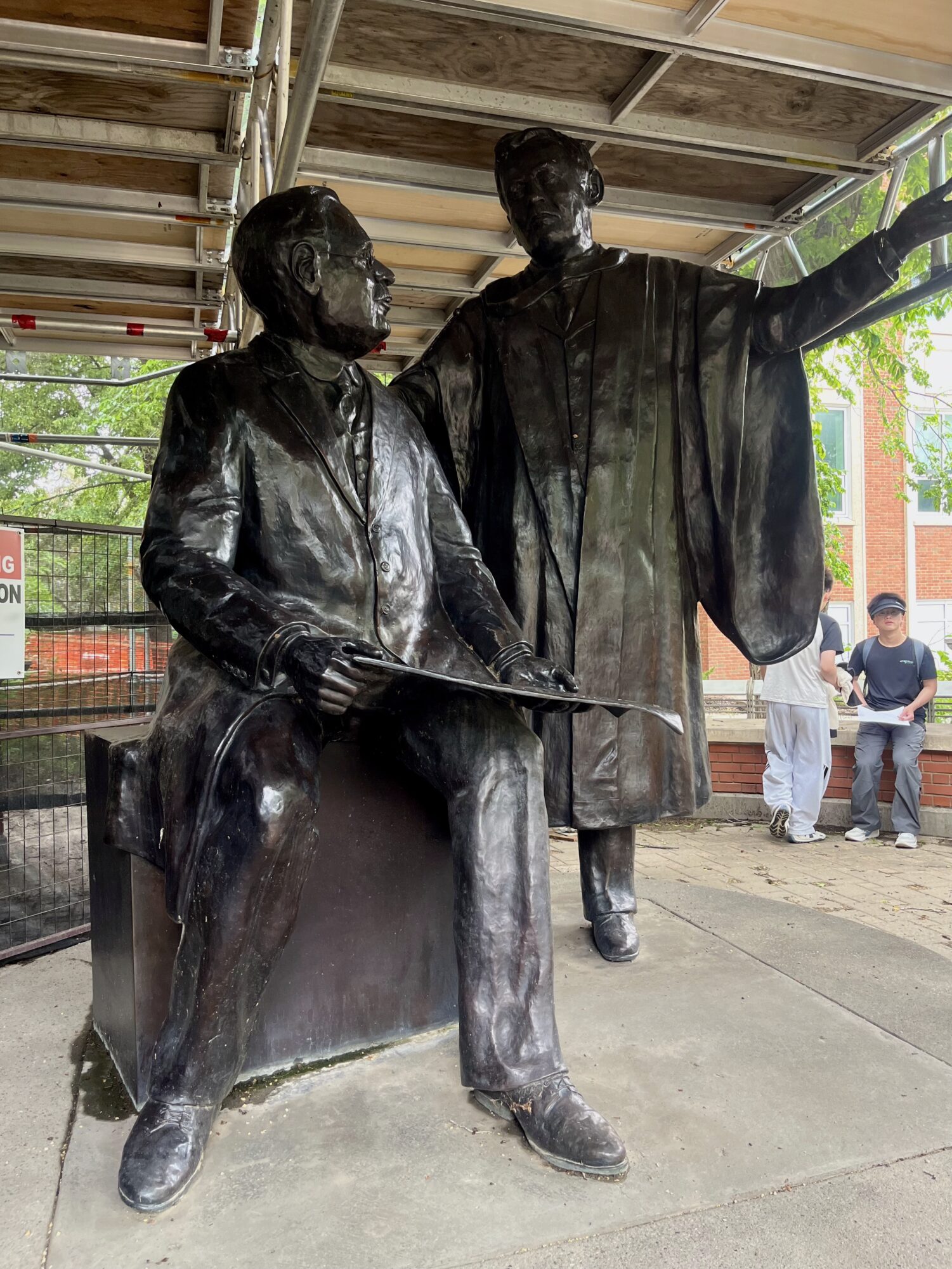
The first art piece visited is one that is most likely familiar to many U of A students. The Visionaries by Barbara Paterson depicts Alexander Cameron Rutherford and Henry Marshall Tory, two of the university’s founders. The museum team noted that pieces like The Visionaries provide a starting point for discussions around the importance of recognizing Indigenous peoples and land.
Treaty 6 Territory Marker: Spirit Bear by Stewart Steinhauer
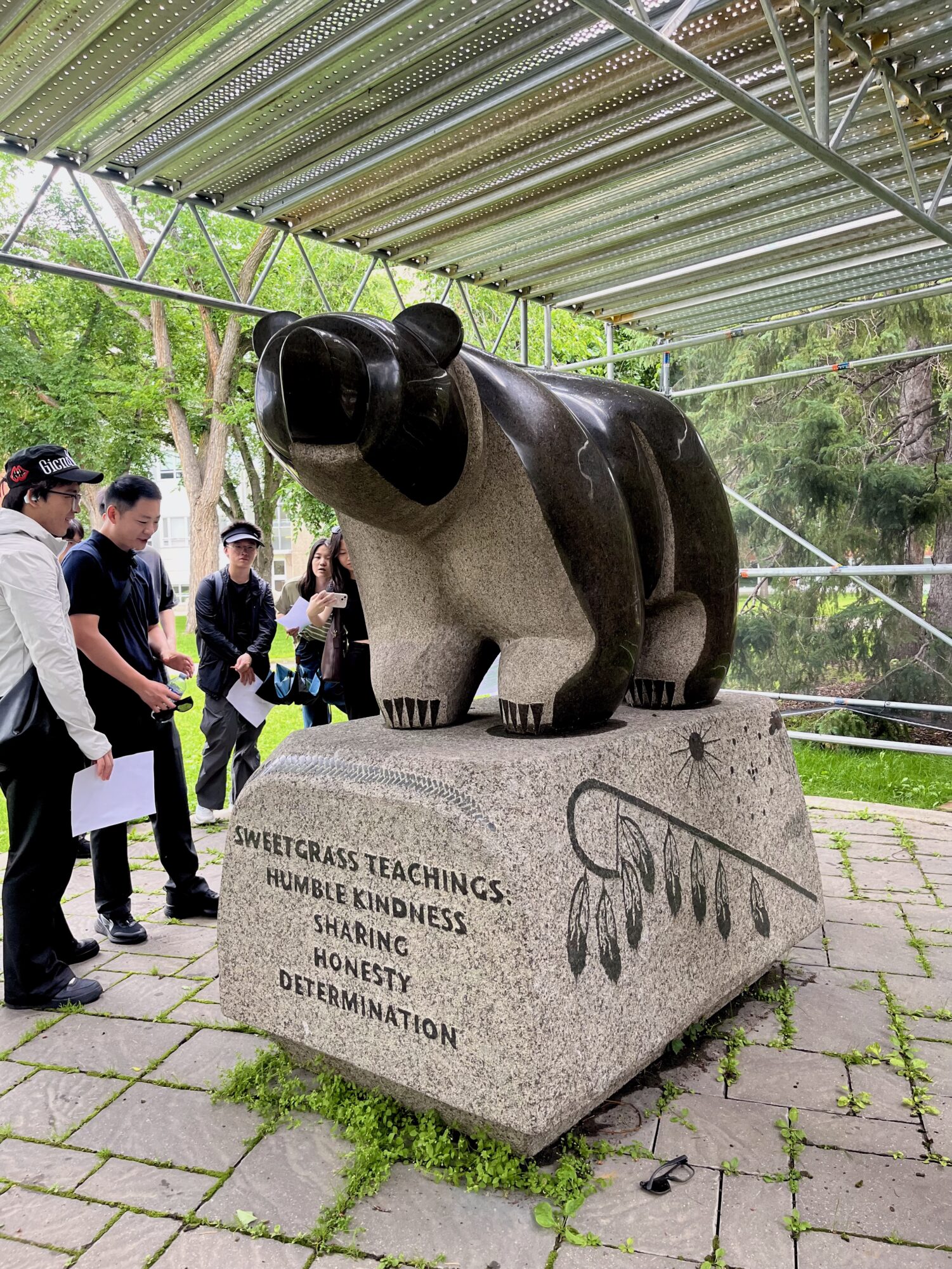
The next stop on the walk was the Treaty 6 Territory Marker: Spirit Bear, a granite sculpture by Stewart Steinhauer engraved with various symbols that hold importance to Indigenous Peoples.
Quilliam explained to participants what the engravings were after allowing attendees time to examine engage with the sculpture. Although texture rubbing were encouraged for the majority of the walk, participants were advised to be respectful of the Spirit Bear sculpture by choosing areas surrounding it to take rubbings of.
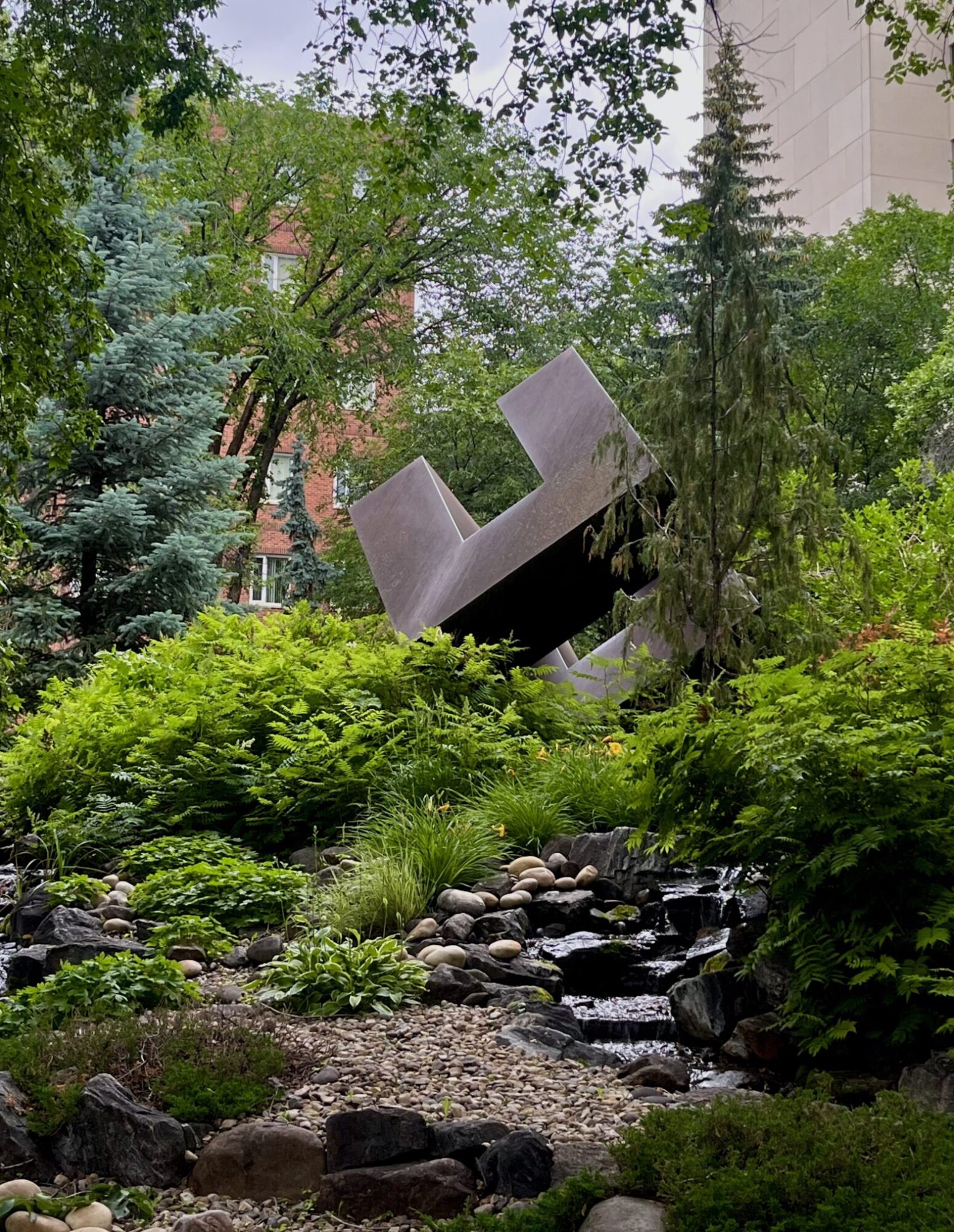
Kubos: William Gregory
The next piece, Kubos, is a corrugated steel sculpture located in the Education Building courtyard at North Campus. As part of the building’s construction, the university also commissioned the sculpture. Quilliam pointed out the complementary nature of the pieces as part of the intention behind the piece.
Participants were also told that in the 1980s, engineering students covered Kubos with plywood to resemble a giant Rubik’s Cube during a spirit week.
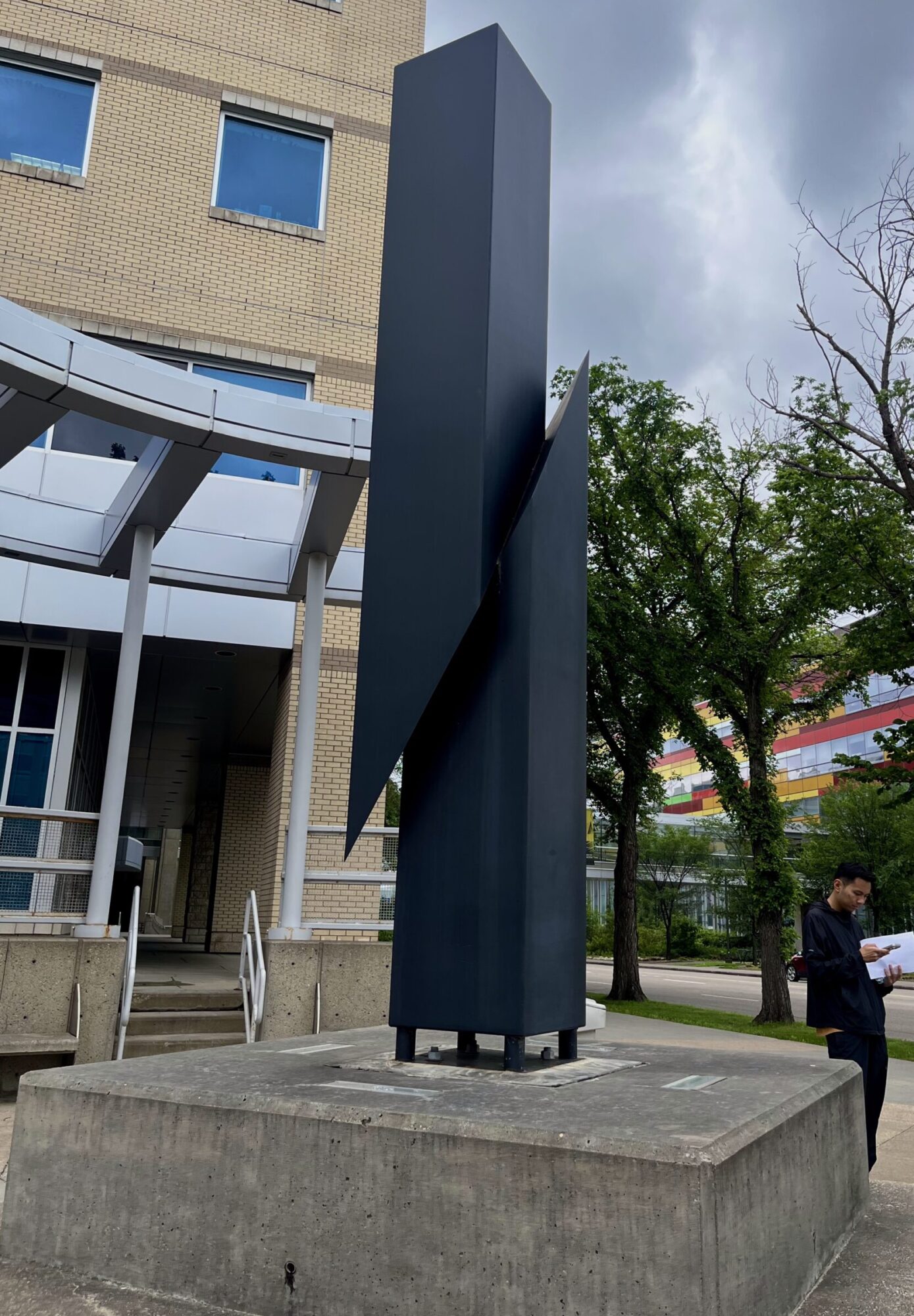
Signalos III: Kosso Eloul
The next piece of artwork has a unique backstory in how it ended up in university’s collection. Dr. Fawsy and Cornelia Morcos found Signalos III in their backyard, and later donated it to university’s Museums Art Collection.
Quilliam told the group that there are two other Signalos in existence. One is located in Mexico City, Mexico, and the other in Tucson, Arizona, with the third located outside the Katz Group Centre for Pharmacy and Health Research building.
Signalos has another unique aspect to it. Eloul created Signalos by finding the balancing point between the two halves where they remain fixed and stable. However, Quilliam pointed out that the two halves have been welded to help it maintain structural integrity.
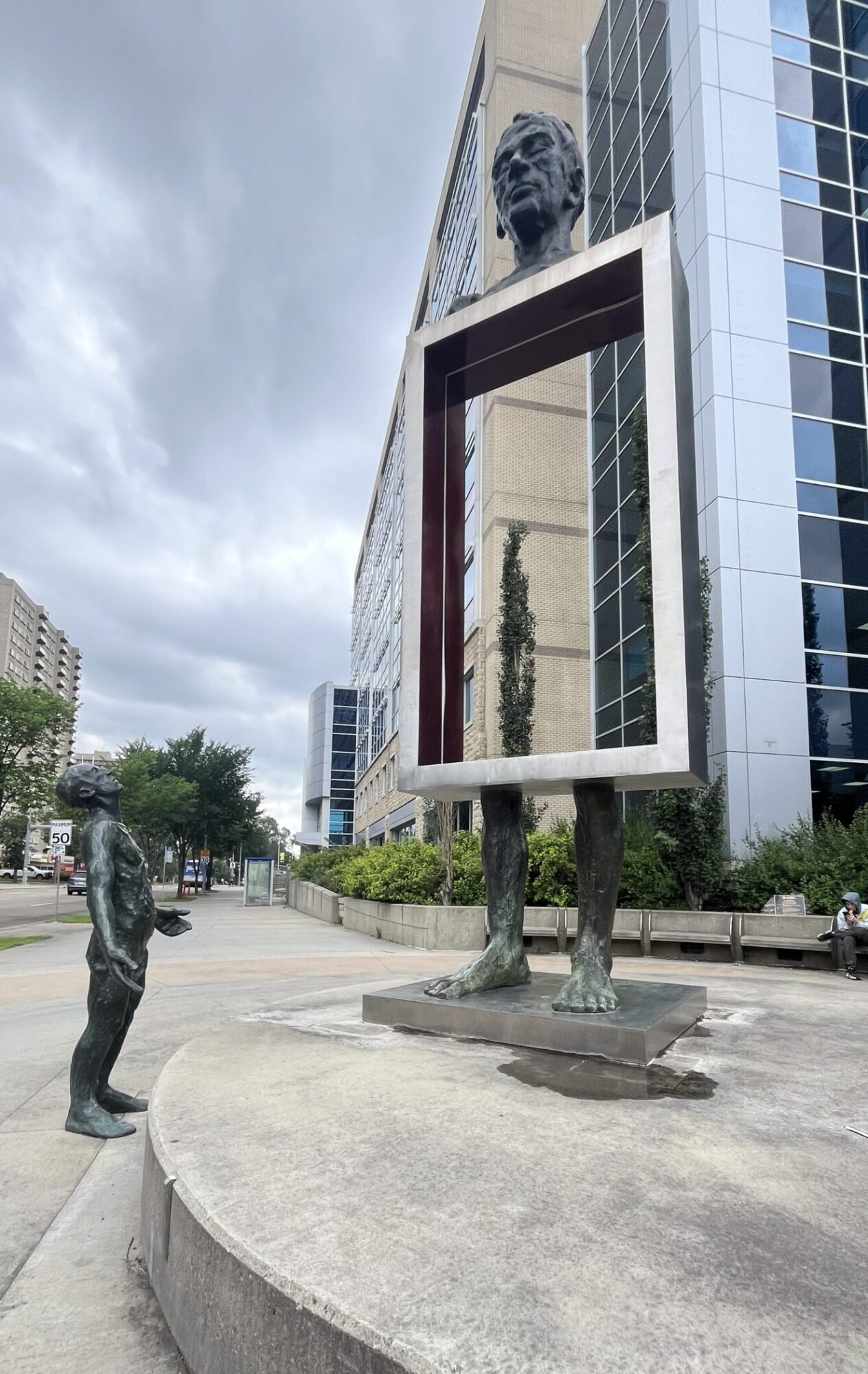
InScope: Dam de Nogales
Similar to Kubos, the next sculpture was created with the building and its use in mind. InScope by Dam de Nogales is another sculpture where part of the building’s budget went towards the creation of the piece.
Rather than matching the architecture of the building, Dam de Nogales reflected the purpose of the Li Ka Shing Centre for Health Research Innovation within the sculpture. Quilliam noted that the smaller figure looks into the larger figure’s “body,” which highlights the aspect of exploration and discovery.
West and North: Edward Norman Yates
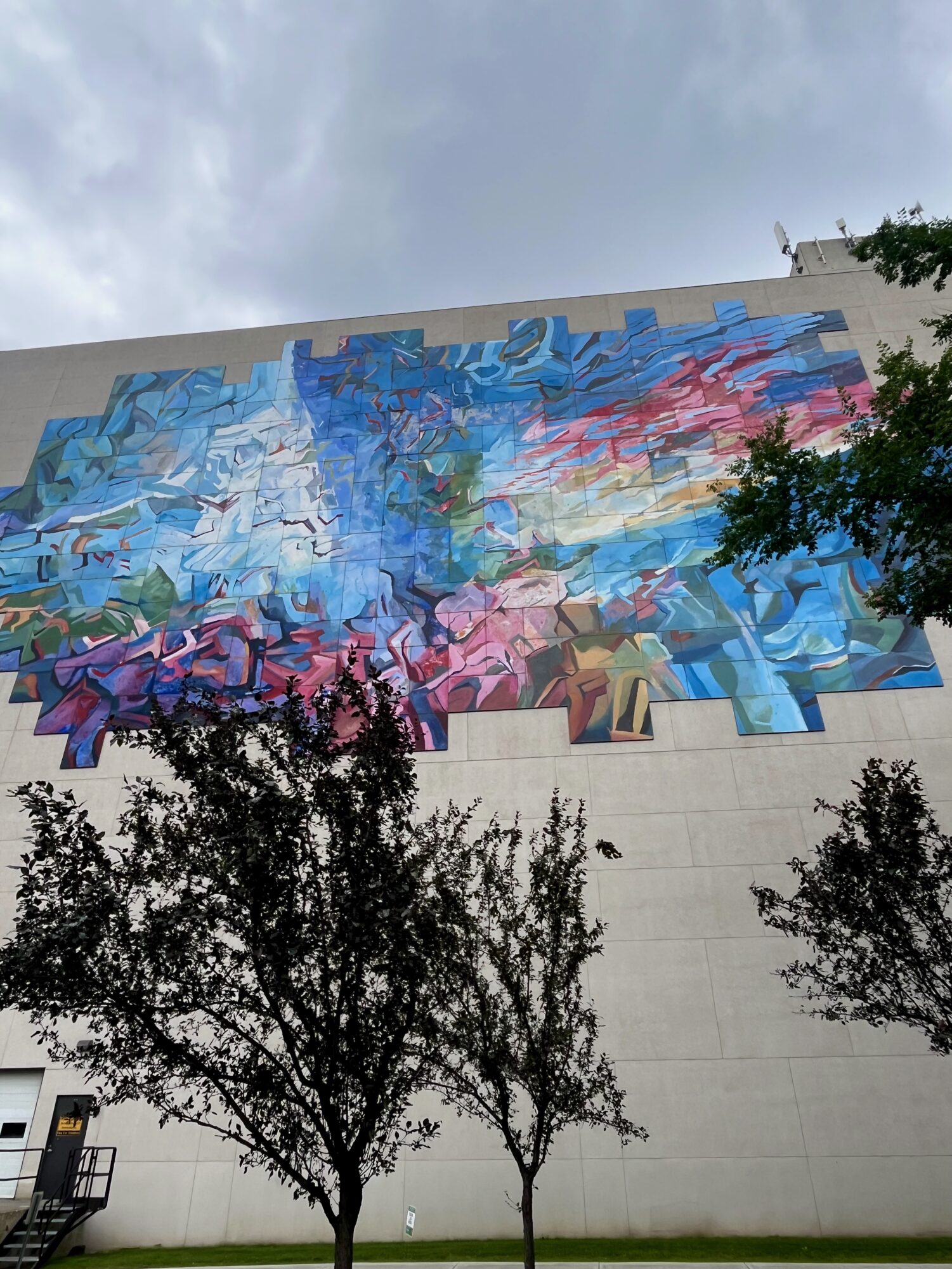
The last stop on the walk was a mural that many students may be familiar with. West and North, mounted on the Education building, is composed of 202 plywood boards. Originally, the mural was not intended to be a permanent fixture, Quilliam noted. The building’s wall and the piece were both meant to be temporary. However, since the late 1980s, West and North has become a staple piece on campus.
In West and North, Yates plays with the interaction between the land and sky. His experience as a radar tech in the Royal Canadian Air Force inspired the piece’s creation.
Overall, the art and texture walk provided participants with a deeper understanding of various works of art location around campus. “By inviting people to gather textures while on these walks, it makes it possible to capture part of the memory they made in that area,” Quillaim said. “Hopefully allowing them to remember their walk across campus.”