 Leah Hennig
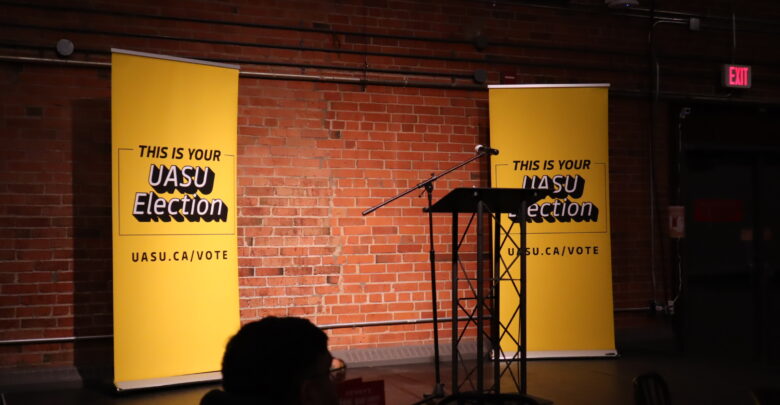
It’s the first week of March. Campus billboards overflow with Election posters and social media feeds fill with polished promises and candidate slogans. This campus-wide burst of energy returns every year, and so does the problem of the same few candidates competing for the attention of an even smaller pool of voters.
At first glance, it may seem like students are just disinterested or too busy. The root of the problem, however, is being disconnected and uninformed. Students are aware of the University of Alberta Students’ Union’s (UASU) name and its existence, yet are unsure of its workings, decisions, and impacts. That is a problem that should have been addressed yesterday.
The increasing decline in participation, both in candidates and voters, in the UASU elections stems from two key issues. A lack of meaningful transparency and awareness about the UASU’s role and its impact and a small but widespread student apathy towards politics. Both contribute to the weakening student democracy on campus. This lack of awareness and understanding contributes to lower rates of engagement and eventually participation, regardless of the form.
Many students recognize the UASU by name and are aware of its existence, but often lack understanding of how its decisions affect them, both directly and indirectly. From fees and services to advocacy and campus initiatives, the UASU plays a role in shaping the student experience, yet this connection is rarely made explicit. This disconnect results in disengagement, and a passive discouragement to take interest in its activities, and especially in its elections.
The UASU, similar to several other governing bodies, operates in a “translucent” way. Information about its structure, decisions, and activities is available, but students are expected to actively seek it out. This often feels more like the UASU is checking a box than making a genuine effort to inform and educate. A shift to true transparency would require a more proactive, “shout-out” approach. This prioritizes clearly communicating not just what the UASU does, but why it matters. This shift makes UASU actively relevant, significantly increasing awareness, which in turn fosters interest, leading to greater participation in elections and student governance.
Increased awareness builds better understanding of the system and its governance. When students understand how the system works, they are more likely to believe they can contribute meaningfully. And perhaps even improve it and produce better results than those currently in charge. This belief fuels their confidence to run, gain support, and eventually the votes. Over the past five years, voter turnout in the general election has remained below 20 per cent. Students’ Council elections and by-elections have seen a turnout less than 10 per cent and five per cent respectively. Low awareness leads to fewer motivated students, and consequently less competitive elections.
Despite the measures taken to educate students and “popularize” the UASU, a small but significant per cent of students consciously avoid elections and politics. This is often due to discomfort, disinterest, or perceived irrelevance. This mindset ignores the reality that the outcome of the elections impacts their lives and others’ regardless of their participation. Disengagement comes with consequences, as it ultimately shapes a system that will continue to operate and impact students with or without their voice.
The impact of the declining participation transcends beyond the elections. It questions accountability, legitimacy, and equal representation. Only a small fraction of the students participating could significantly impact the credibility of the UASU and make one question if it truly represents the larger population. Improving the transparency and increasing the engagement is essential to rebuilding the integrity and ensuring the wider representation.
If left unaddressed, UASU elections risk becoming a popularity contest rather than a democratic one. Voters cast their votes to the person they know best rather than the person with the values and manifestos they resonate with. While it is largely the responsibility of the elected officials to uphold the integrity of the forthcoming elections by being transparent and spreading awareness, the students also have a role to play. The Students’ Union is made of, by, and for students and we are responsible to play a part in the student democracy by, at the very least, taking an initiative and familiarizing ourselves with the council and organization that represents us. Without the collective effort, disengagement will continue and so will its consequences.