 Peris Jones
The vice-president (operations and finance) (VPOF) race for the 2026 University of Alberta Students’ Union (SU) elections has been defined by contrasting understandings of the role of the job itself.
Armaan Singh promises to educate students on their student fees and reallocate funds to make the SU more efficient. Logan West promises to push the SU through constraints, reform student group processes, and implement long-term plans.
Across the Indigenous Students’ Union (ISU), Augustana, Campus Saint-Jean (CSJ), International Students’ Association (ISA), and Myer Horowitz forums, the two candidates have stayed consistent. Singh has leaned into slogans, dollar figures, and educating students on their money. Meanwhile, West has leaned into familiarity with the SU’s internal machinery, speaking of planning, feasibility, and marginal operational fixes rather than bold promises.
Students’ voting will come down to a choice between Singh’s cost savings pitch and West’s process pitch. Do students want a candidate who sells a large structural reform pitch, or one who focuses on advocacy and social proof?
Armaan Singh
Singh’s campaign was built on his opening statement: students pay “$700” in fees, a large portion of which is opt-out, and most students don’t know what they’re paying for. From there, he repeats his four pillars: financial transparency, food insecurity, diversifying non-student revenue, and streamlined sexual assault reporting.
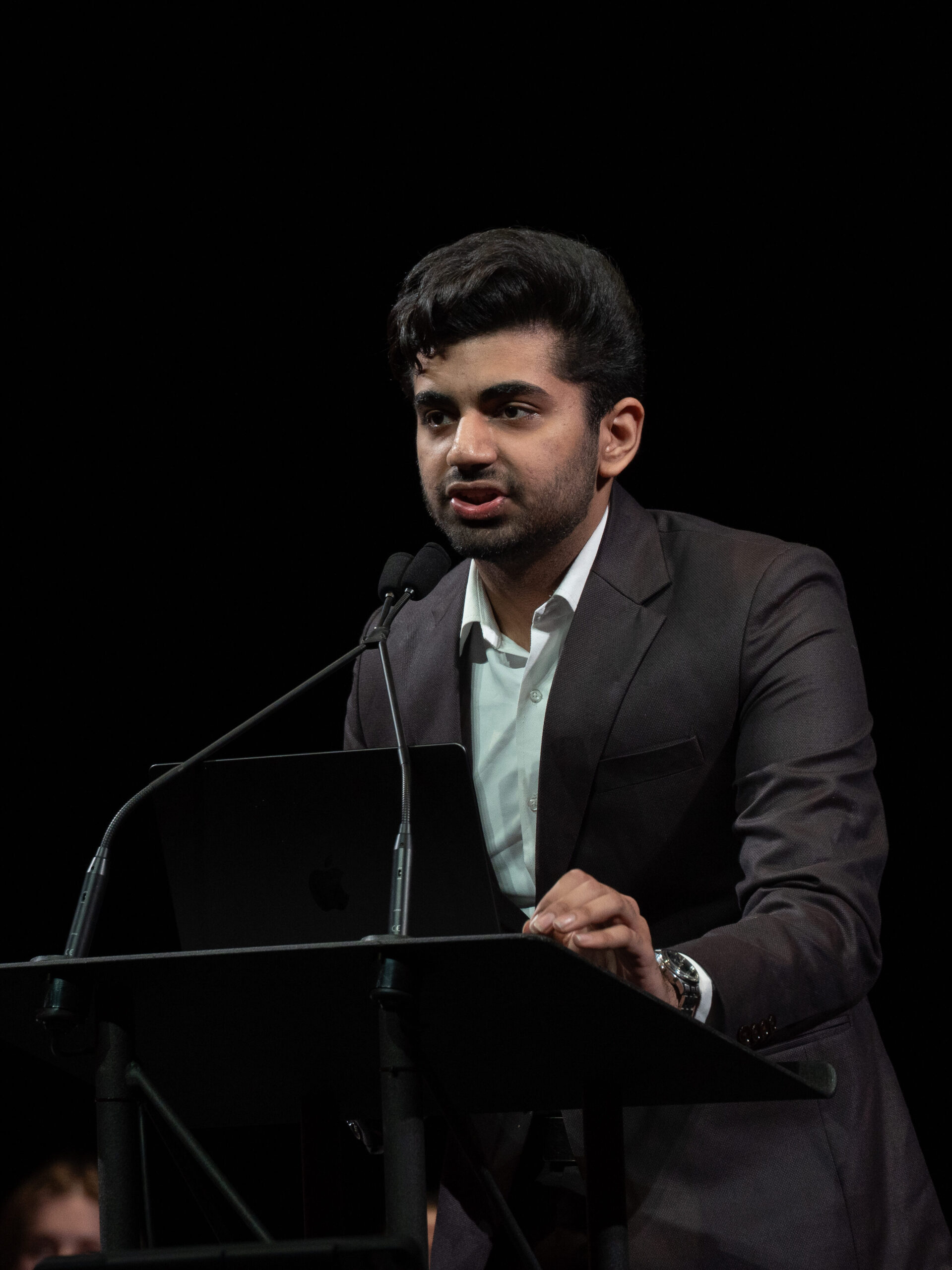
The problem is not that these themes are unimportant. The problem is that Singh often substitutes slogans for specificity. Even when moderators pushed for “specifics, not slogans,” Singh frequently returned to the same framing. It makes his platform seem less of an operational plan and more of a branding campaign.
With that being said, the Myer Horowitz forum showed an attempt to add a new angle. Singh argued that SU businesses are not being managed well, arguing that some of these businesses operate at a net loss. His proposed remedy is to open these businesses up to external revenue sources. This was a big step for his campaign, as he expanded on the how and focused less on the what.
His sharpest moment at the Myer Horowitz also raised the most question marks, and it came on the topic of investments. He argued that the SU’s cash reserves sit in an RBC savings account earning low interest 0.3 per cent. This is irresponsible, as the university has its own investment policies, which generate much higher returns of 11.3 per cent. The instinct is fair; the SU should not accept such low returns by default. However, the feasibility is unclear. The SU requires liquidity for their capital projects and has a very low risk tolerance. A university-style pooled investment approach would take negotiations, clear withdrawal rules, and a risk profile that matches the SU’s tolerance. Even if the university pooled investment is improbable, a higher return is something that should be brought into question. Singh’s prompt to review these policies earned him some extra points in the final hours of his campaigning.
The other recurring concern with Singh is his tone. In one forum exchange, he pushed West personally on her prior responsiveness and responsibilities that crossed into unnecessary hostility. This was something West had already addressed at a public meeting Singh was in attendance at. This prompted the moderator to step in and condemn his remarks. If he wants to campaign on discipline and professionalism, he has to be a model of those virtues.
Logan West
West has made it clear that she possesses extensive institutional experience. Her pitch is that she already understands how the SU moves, who makes decisions, where leverage exists, and where it doesn’t. They have repeatedly referenced committees, administrators, and long-term strategic planning as the backbone of what the SU needs.
Her biggest strength is that she is consistent with what is within the scope of VPOF and what is outside. When asked about issues like visa-related financial shocks for international students, they acknowledged that it doesn’t fall within the jurisdiction of the VPOF, and instead focused on how the SU can advocate and connect students with existing supports.
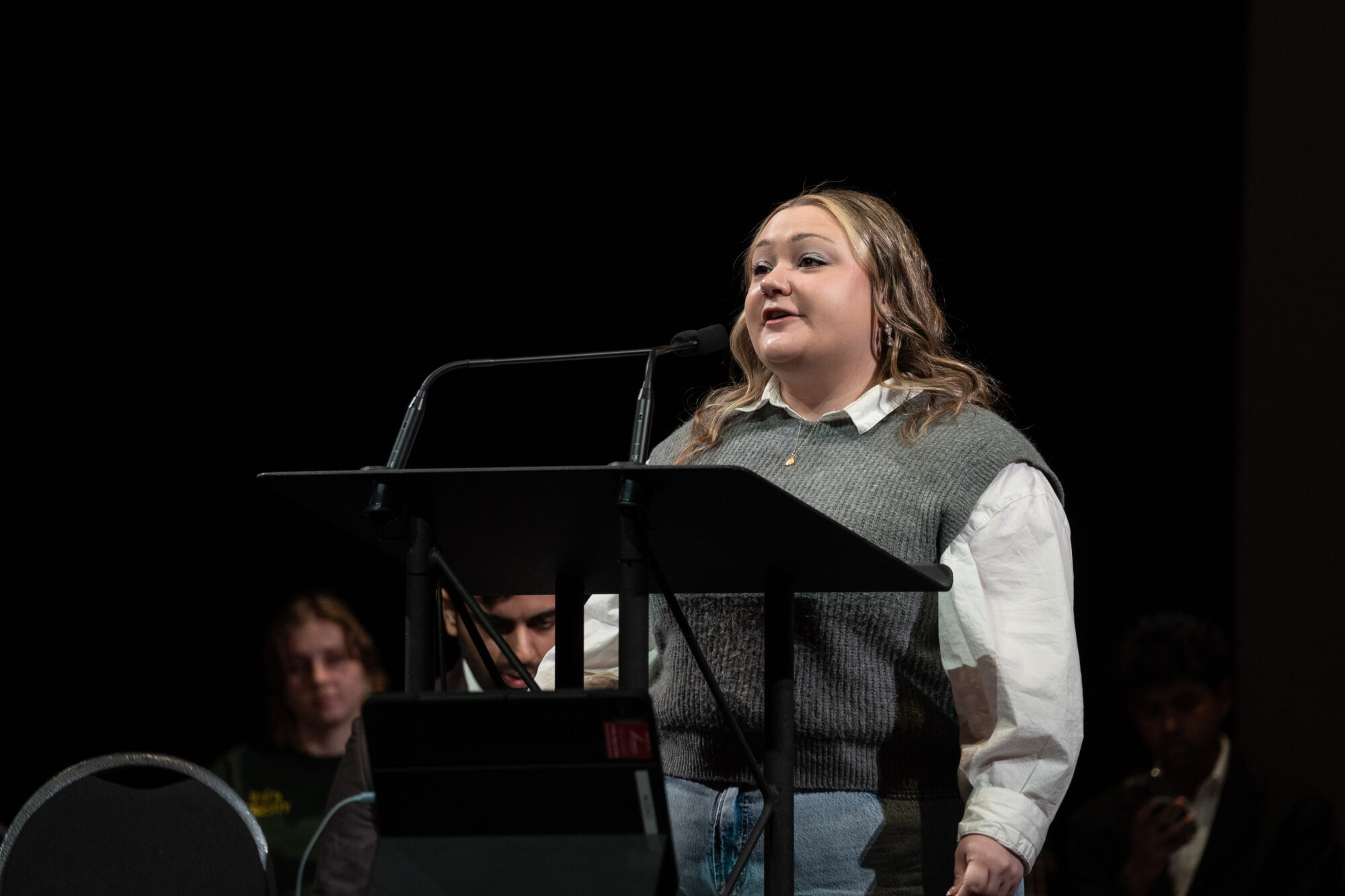
At the Myer Horowitz, West finally made their campaign about operations and finance rather than focusing on how she served as vice-president (student life) (VPSL). She listed tangible internal tasks: student-friendly pricing at SU businesses, more professional marketing that explains SU fee value, a plebiscite on the future of Dewey’s, clearer student group regulations, and modernizing Perks.
The knock on West is that, compared to her opponent, she promises too little. She often speaks in the language of planning and frameworks. Students who want bold changes may hear a cautious or managerial tone. When asked about the ethical investing of SU funds, she committed to “facilitate [a conversation] in any way necessary.” This hesitant answer undermines students’ confidence in her productivity. It is admirable that she wants to consult with administrators and students, but that bureaucratic messaging is what Singh’s campaign positions as the enemy.
Still, West’s strongest argument is that she has delivered on the promises she made as VPSL. Whether or not every student cares about that, it de-risks her campaign in a role where execution and follow-through are paramount.
Who should win?
West has made the more coherent case for the role of VPOF as it stands. Her emphasis on planning, co-ordination, and internal execution leaves her with the right skill-set for the job. Singh’s best ideas: education regarding fees, reviewing financial policy, and maximizing SU business performance could be valuable. But too often, he has treated the SU like a pile of inefficiencies waiting for him to magically solve, without showing respect to the financial restrictions, governance, and operational risk.
If students want a safe bet for competent execution, West has earned the edge. If students want a reform on SU spending habits and a candidate who will keep hammering to find where the money is going, Singh is that candidate. Given West’s institutional experience, she should take this race, but not by a large margin.