Exhibit Review: ‘What I Made When My People Were Dying’ by Aynaz Raoufian and Mona Sahi
Two talented artists explore how to declare their grief rather than silence it.

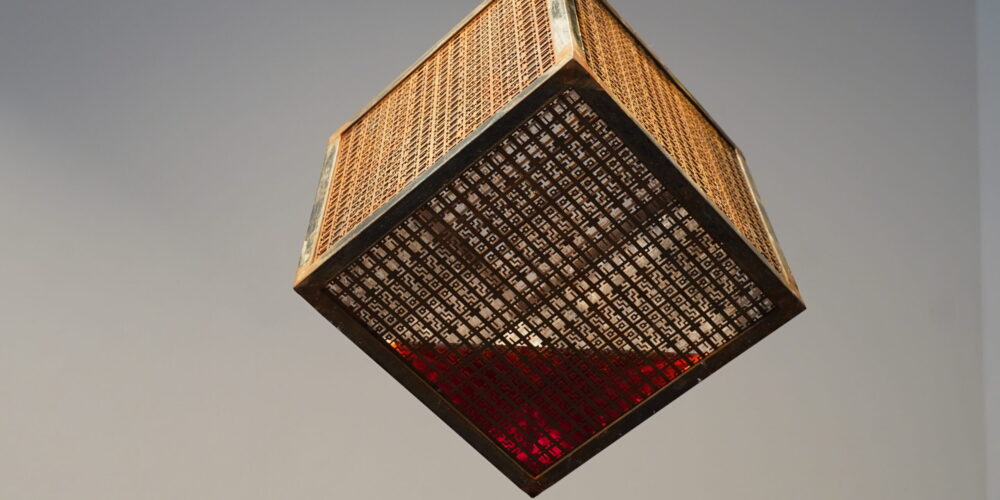 Rana Dusseldorp
What I Made When My People Were Dying. is a captivating title that immediately entices anyone interested in the exploration of mourning. The exhibit is a collaboration between University of Alberta master of fine arts students Aynaz Raoufian and Mona Sahi. They make visible what is so often invisible: the grief we feel in every part of our bodies.
When you walk through the main entrance of the Fine Arts Building (FAB) Gallery, the first pop of colour that draws your eye is a giant screen with a girl carefully painting white eyeliner on her under eyes. Displayed across the side walls, there are multiple screens showing dozens of videos of the same girl, filmed on different days, applying the same makeup over and over.
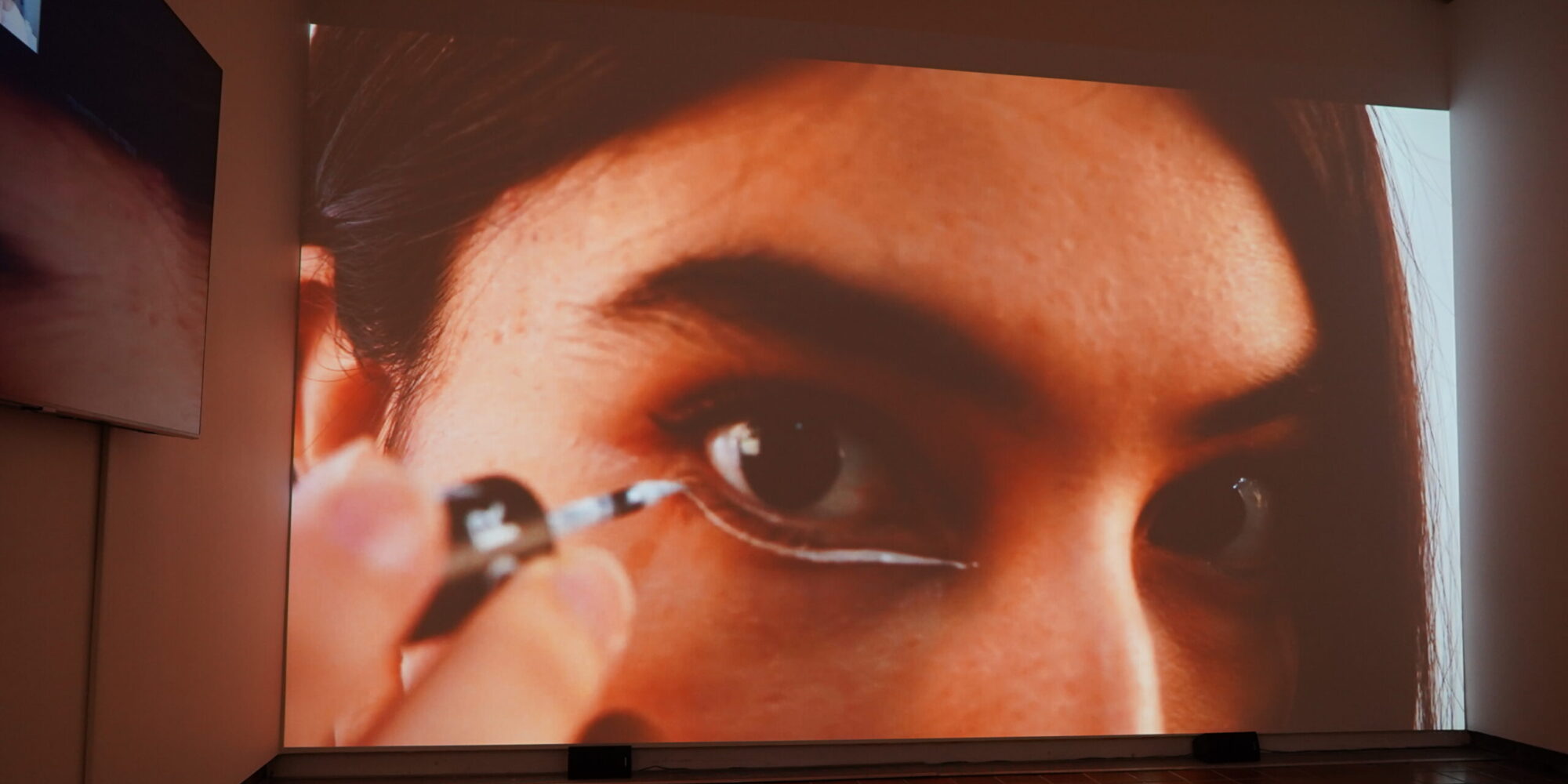
The girl portrayed in this artwork is Aynaz Raoufian. She draws the white eyeliner on herself each day as a way to carry her sister, Aily, with her. Aily Raoufian died at 14 of cancer, when Aynaz was only 17 years old. Although the traditional colour for grieving in Iranian culture is black, Aynaz explains that “[w]hite was her colo[u]r. It felt closer to who she was, and to how we wanted to remember her.” In addition, white eyeliner, by way of its rarity, ensures that the striking symbol of Aynaz’s sister invites immediate attention.
As I visited the artwork a second time, I noticed that there were headsets on the walls that I had missed. Right after I placed them on, I scrambled in my bag to shut off my Spotify, embarrassed to be accidentally blasting music in a public place — only to realize that the song of Sofia Isella in my ears was, in fact, playing from the exhibition’s headsets. This familiar music caused me to ponder grief in its role as constant companion. I can never anticipate my mourning, it always catches me unexpectedly within the most mundane moments. This is something I never hear others discuss.
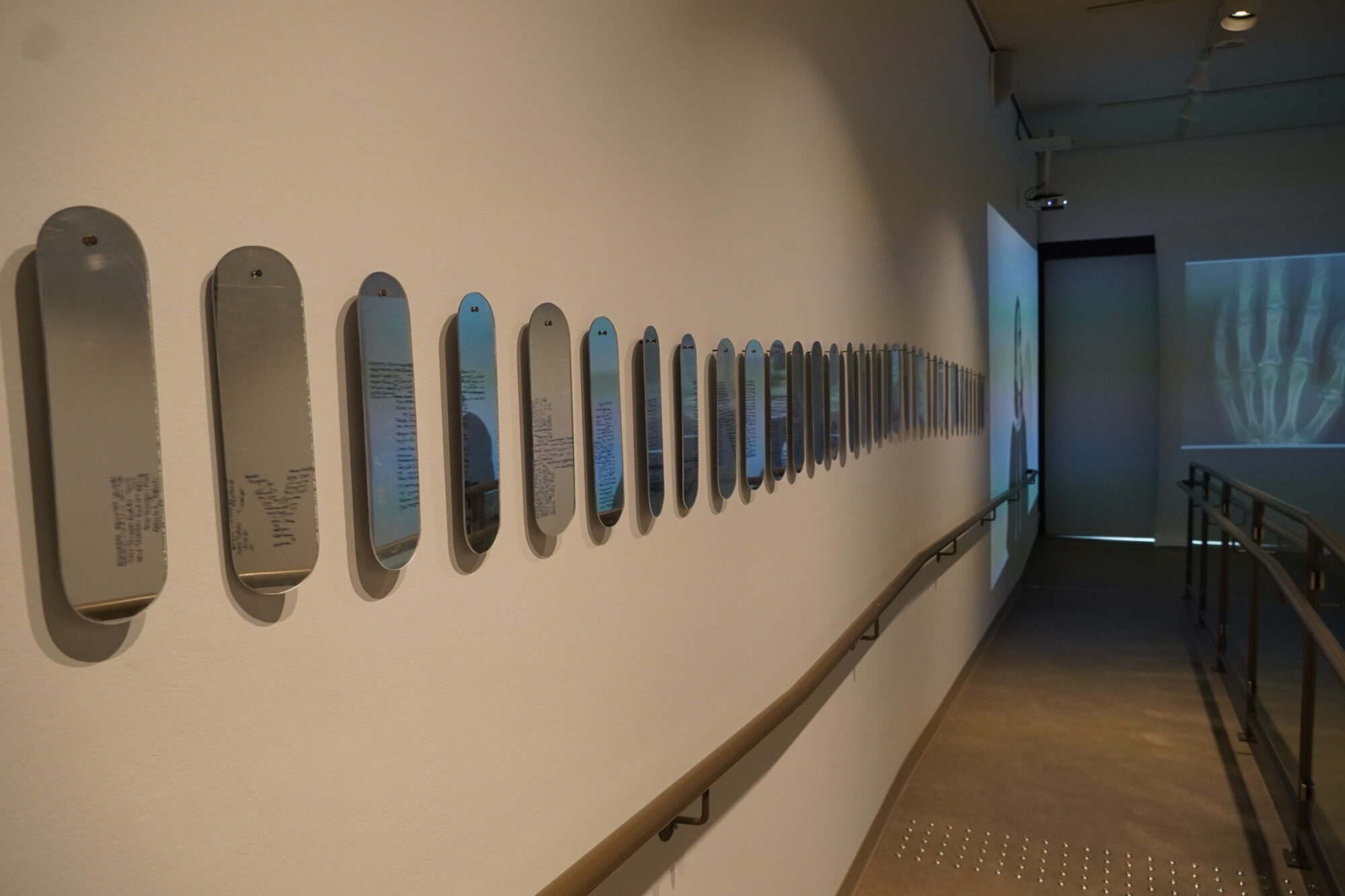
Facing the music is what Mona Sahi’s “Everything Is Under Control” compels its observers to do. If you head into the gallery by the upper-floor entrance, the first attention-grabber is the harrowing sound that echoes through the otherwise quiet hall. Everything is under control, a robotic voice claims. You can read the same exact phrase in the 41 Plexiglas mirrors you pass, until you tear your gaze away and catch sight of the end of the hall.
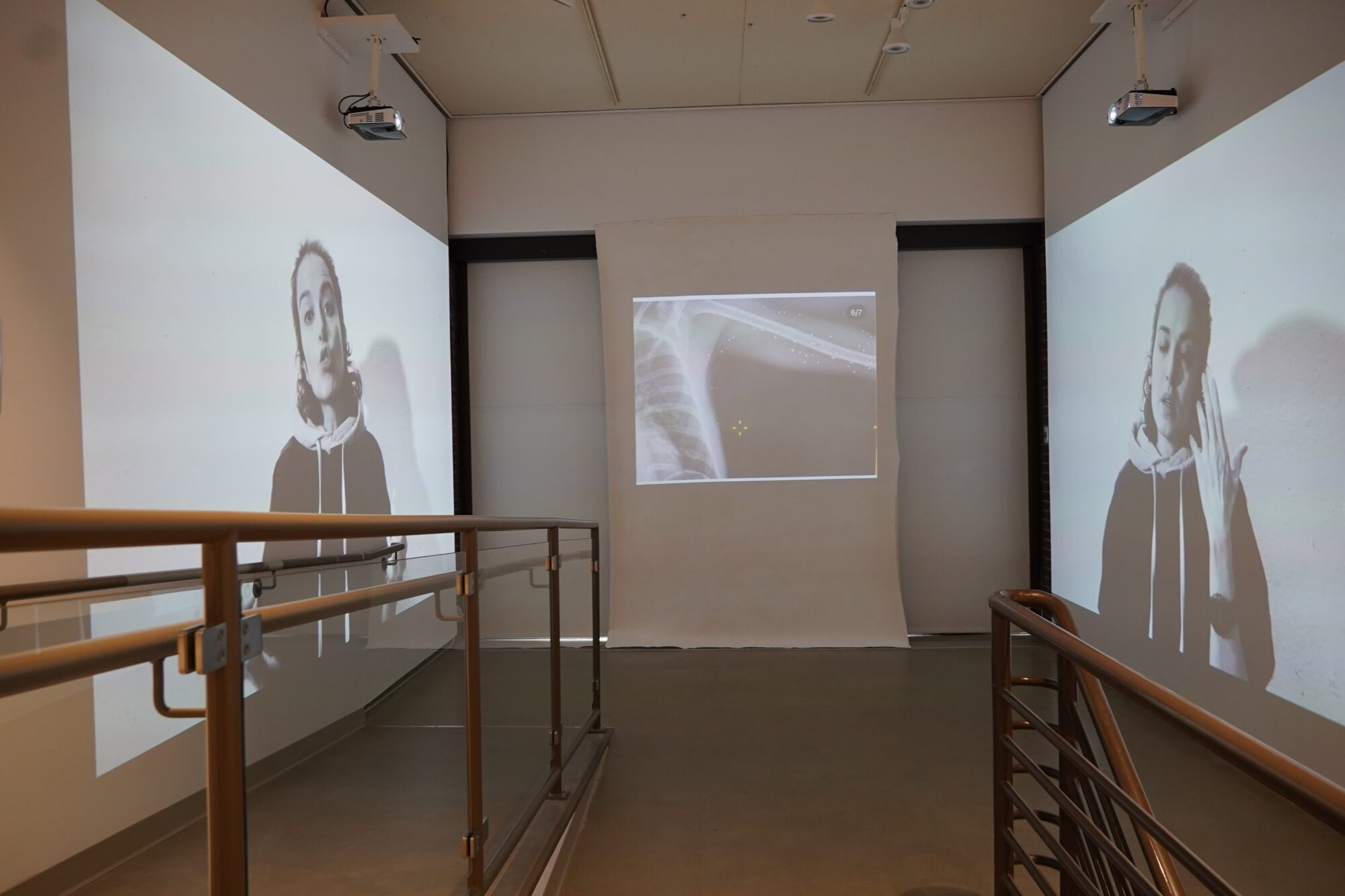
A somewhat familiar scene greets you: one large video screen on the main wall, with two screens on the side. However, rather than the gentle embrace of enduring care that Raoufian’s “This Is the Same Line Under Somebody Else’s Eyes” showcases, Sahi’s “illEven If The World Denies Our Pain” explores the hopelessness and anger that arise from watching the disaster occurring in her country of Iran, a continent away.
The video installation in the centre displays x-rays from the injuries of protesters, while the videos on the right and left side display two versions of Sahi arguing. I watched the two Sahi’s for several minutes. The passionate yet fruitless back-and-forth struck me immensely. As Sahi puts it, “[y]ou speak, you share, you try to make people look, but sometimes the silence around you becomes heavier than the violence.” It is a gripping, poignant demonstration of both determination and despair.
Through these artworks and many others, Raoufian and Sahi manage to give voice to the voiceless. Losing loved ones to cancer or violent conflict is devastating and isolating. The social expectation of avoiding the “unpleasant” talk of death and violence can be suffocating when it is understandably ever-present in your mind. What I Made When My People Were Dying is an excellent step in encouraging conversation about mourning and brutality.