Notes from Council: Post-referendum health care for international students
Councillors discussed international student health care, CMA, multi-factor authentication, and First-Year Council candidates.

 Jonas Smith
At the Students’ Council meeting on October 20, councillors discussed international student health care after the referendum, as well as strategies to address Course Material Access (CMA). Councillors also ratified First-Year Council (FYC) representatives and discussed physical fobs for multi-factor authentication.
Referendum results and impacts on international students
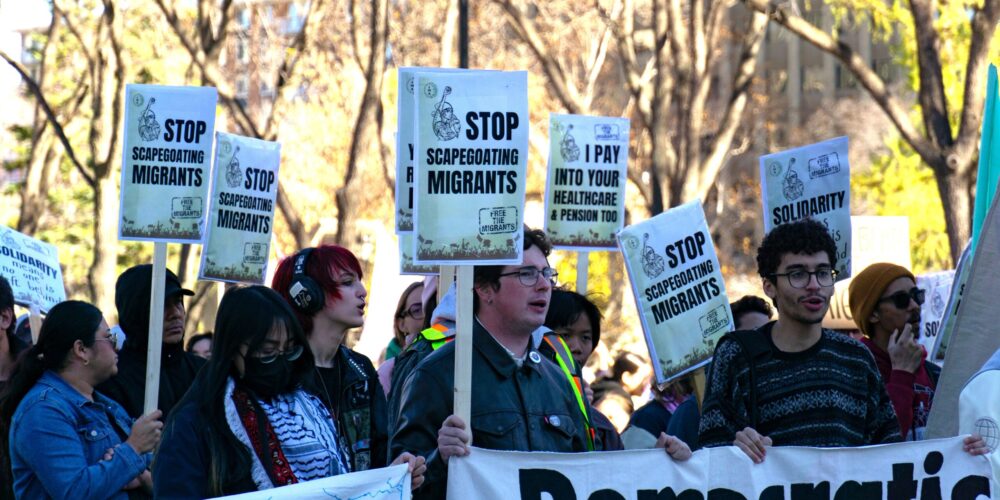
Board of Governors Representative Amaan Khan asked what the university plans to do to support international students after the referendum.
Multiple questions in the October 19 referendum focused on immigration. Three questions asked about support for restricting temporary residents’ access to public services, like health care. The immigrations questions received just over 50 per cent in support.
“As currently, there is no united leadership that is actively advocating for international students in the university for their future, and this is something that makes them scared,” Khan said.
Angel Raina, vice-president (external), brought up the work she has been doing regarding this topic over the past few months. She has been in talks with Joseph Schow, minister of jobs, economy, trade, and immigration of Alberta.
“In any conversation, like email or event-wise, that I’ve been able to meet Minister Schow at, a lot of those conversations were really hinged on the referendum results,” Raina noted.
Now that referendum results are out, proper discussions about international student health care are ensuing.
Raina has been in discussion with Alumo, the insurance provider for the University of Alberta Students’ Union’s (UASU) health and dental plan, to prepare for these referendum outcomes and how health care will look in the future.
Raina hopes to set up a meeting with Minister Schow to discuss referendum impacts on international students. There are also plans to talk further with the university administration to discuss their role in international student health care.
“I’m sure this will also be a much larger conversation that I’ll take on through Alberta Students’ Executive Council (ASEC), which is our provincial organization. And if it’s feasible, to send a letter to the minister arguing for some of these things that have come up,” Raina added.
Ratifying First-Year Council candidates
FYC is a new group of representatives for the first-year student body.
Susan Huseynova, vice-president (academic), reviewed the process of application and acceptance for representative positions. The applications were randomized, with personal information redacted, and then reviewed. The candidates were marked as poor, fair, good, excellent, or top candidates. A top twenty were chosen, who are now the first-year representatives.
In response to a question regarding candidate faculties, Huseynova noted that there was a natural result of a good variation in faculty representation among the representatives.
The first workshop for first-year representatives occured on October 26. Their first council meeting was October 27. Their first social event will happen the Monday after that. Council meetings should go until mid April, and workshops and social events will happen once a month each until the end of February.
The motion to ratify the 20 FYC candidates passed unanimously.
Strategies for addressing CMA
Councillors discussed how to proceed with CMA ahead of the winter 2027 semester.
Students had various complaints regarding the opt-out process. There were two main patterns of complaints. First, that the program design forced students to fix errors themselves, without clear guidance. The second issue was incomplete information being provided.
The UASU seeks to make changes to support student understanding of CMA. They are considering a UASU complaint intake form. The UASU is planning to revise the opt-out guide to offer straightforward guidance. Opt-out confirmation emails are another idea they plan to discuss with the bookstore.
The university will not be transparent about the amount of money it would take to break the CMA contract and end the program, Huseynova said.
Problems with multi-factor authentication
Students in health-care fields that require clinical practice are facing issues with multi-factor authentication, Huseynova noted.
Following a cyberattack on Canvas’ parent company earlier this year, the U of A requires students to use Duo Mobile app on their phones to authenticate their sign-ins to Canvas.
Students in health-care fields cannot have phones during practicums, and therefore cannot verify their identity and sign into their school accounts when needed.
Councillors discussed the alternative: a physical fob. The bookstore supplies them, though one may require a signature from a professor to obtain access.