 Supplied
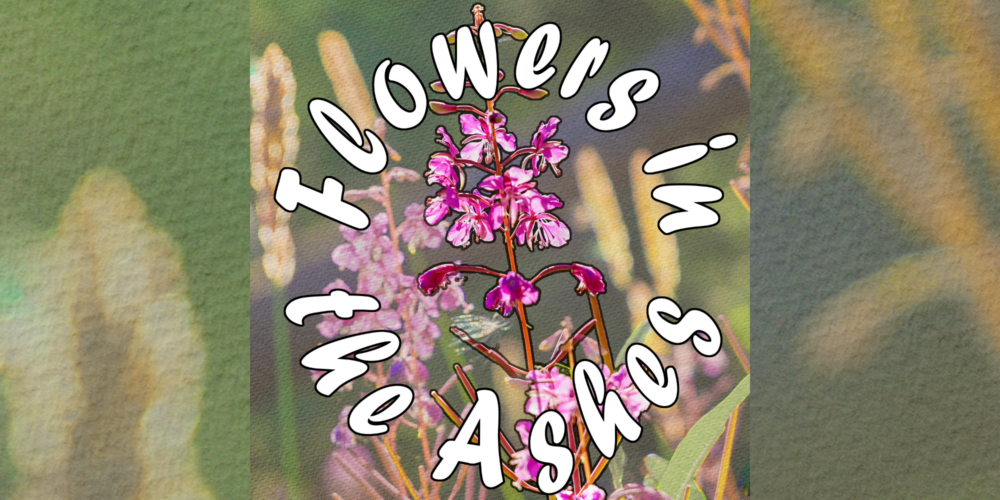
Flowers in the Ashes: Embracing Joy While Navigating Disaster Recoveries is a three-part podcast based on an international research collaboration examining the role of leisure in the psycho-social recovery of older adults following natural disasters. The research focuses on the aftermath of the 2024 Jasper wildfire, while also drawing on similar events in Japan, Taiwan, and South Africa.
Shintaro Kono, an associate professor in the University of Alberta’s faculty of kinesiology, sport, and recreation and the Canadian lead for the research collaboration, helped create and script the podcast.
Kono said the project connects two topics that are not normally associated with each other.
“I think Flowers in the Ashes, in a nutshell, is to kind of bring these two seemingly unrelated topics, a disaster, and specifically wildfire here, and leisure, together,” he said.
The podcast features Kono, graduate research assistant Kole Lundstrom, along with voices from disaster survivors and community supporters. Kono said the team chose the podcast format because traditional academic research only reaches so far.
“We traditionally do research, we publish papers and make conference presentations, but those things only go so far,” he said. “We’re kind of talking to ourselves.”
The podcast, instead, allows the researchers to share findings with the communities involved in the research and with people who may experience disasters in the future.
“We need a pocket of fun stuff in our life to kind of recharge ourselves,” Kono says
Kono said older adults can face additional challenges following disasters, including physical demands and difficulties navigating digital systems for insurance and government assistance.
“These days it’s ironic, a lot of things are digital,” he said. “The problem with that is there’s a digital divide, so some older folks are not familiar with their digital tools.”
For Kono, leisure refers to activities people freely choose because they find them enjoyable. “It’s definitely free time, outside of work and surviving,” he said. “An activity that we personally feel is fun.”
That free time can become particularly important when survivors face prolonged uncertainty around insurance claims, rebuilding, and other responsibilities.
“It’s … months and months, and sometimes years of negotiation and documentations and all that,” Kono said. “When there’s so much stress and chronic uncertainties there … we need a pocket of fun stuff in our life to kind of recharge ourselves.”
Rebuilding community through leisure
Kono said leisure can also help survivors reconnect with their communities after a disaster.
“Having a leisure [activity] is kind of like a neutralizer,” he said. Community events and festivals are opportunities for people to meet without focusing entirely on the disaster.
The research found that disasters can create divisions within communities, including between people who lost their homes and those who did not.
Kono said leisure activities can provide neutral spaces where people can reconnect. “People can meet in fresh ways, and just talk about their fun stuff rather than [about] the elephant in the room … the trauma and disaster,” he said.
The research also found examples of disaster survivors becoming volunteers and contributing to their communities. “Typically volunteers support survivors, right?” Kono said. “But I’m seeing cases where disaster survivors volunteer a lot.”
He said these experiences can lead some survivors to reconsider their priorities and become more focused on helping others.
“A lot of people kind of get thinking about the question of, so what’s the point of life?” Kono said. “So I think a lot of people have that altruistic awakening, if you will.”
A more holistic approach to recovery
Kono said leisure should not replace immediate disaster necessities such as shelter, food, and financial assistance. Instead, he said recovery should gradually transition toward social, mental, community, and spiritual support.
“There’s a different timeline for different disasters … but also even the same wildfire would affect communities differently,” he noted.
He said governments and organizations should work with local communities to determine when and how leisure can become part of the recovery process. Kono also said leisure activities can provide opportunities for social and emotional support without explicitly being presented as mental health services.
These gatherings can allow survivors to share information and experiences naturally, while rebuilding connections within the community.
“Leisure becomes the fabric … in which support is buildable,” Kono said.
“You don’t have to get there today. You don’t have to get there tomorrow,” Kono says
For older adults struggling to move forward after a disaster, Kono encouraged them to find meaningful activities that get them out of the house and around other people.
“Grab a coffee,” he said. “Talk to your friends and go for a nice easy hike.”
These activities do not necessarily have to involve discussing the disaster. “Talk to people about nothing related to the disaster,” Kono said. “And if that makes you feel ready to share, then you can share about what you’re struggling with.”
Kono said recovery does not happen all at once, and people may need time before they are ready to discuss what they have experienced. “You don’t have to get there today. You don’t have to get there tomorrow.”
Instead, he encouraged older adults to continue engaging with meaningful activities and other people rather than isolating themselves.
“To keep doing that engagement with meaningful activity, fun activity, and the people around,” Kono said. “I think that’s very important not to isolate yourself.”