 Supplied
Patrick Hanington, a University of Alberta researcher and professor in the school of public health, is investigating whirling disease, a parasite that continues to threaten the livelihood of numerous vital salmonid species.
Discovered in Colorado in the 1980s, whirling disease depleted the majority of the rainbow trout population. Since then, researchers have found the parasite in Canada.
Hanington had previously worked on water monitoring projects to test for parasites. He began studying whirling disease alongside other researchers after the parasite’s discovery in Alberta in 2016.
In the 10 years since its discovery in Banff’s Johnson Lake, whirling disease has spread throughout Alberta and parts of British Columbia. Initially, researchers assumed it would be difficult for the parasite to move north, Hanington noted. However, the parasite was discovered in Alberta’s Athabasca watershed this May.
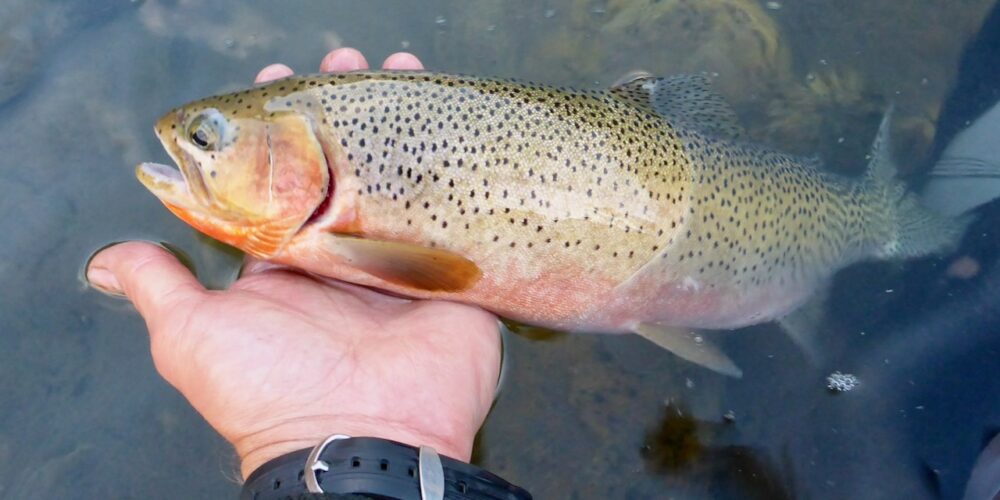
This is a severe issue for the endangered fish populations that thrive in these waters. Included are the Athabasca rainbow trout, the Westslope cutthroat trout, and the bull trout.
Hanington added, “While it’s true that most salmonid species can be infected by the parasite, only certain species, really mostly just rainbow trout and, in some cases, cutthroat trout, will die from the infection.”
Humans and other animals can unknowingly transmit the parasite. Hanington believes that this may be one of the factors that have contributed to the spread of whirling disease. However, it is difficult to pinpoint the exact reason it has arrived in Canada.
Finding genetic resistance to whirling disease (changed subheading)
Previously, Hanington and his team worked with Colorado Parks and Wildlife to test the genetics of impacted fish. To save the remaining population, they bred whirling disease-resistant rainbow trout with those that were susceptible to the parasite.
Alongside Clare Venney, Hanington is working to identify genetic markers that lead to resistance or susceptibility to the disease. They also hope to discover which species die from infection, and which remain alive and spread the parasite.
Hanington explained, “One of the things we’re hoping to learn here as part of this study over the next two years is, do any of our fish that we want to protect possess any of these genetic traits that might confer resistance.”
A major part of this mission is to protect the endangered fish species that whirling disease is harming. This is an important factor in protecting Canada’s biodiversity. Without efforts put into prevention, whirling disease is difficult to eradicate once it exists in bodies of water.
“In a few years, those fish may not exist in the same way they do now, because of the fact that whirling disease has been in that territory,” Hanington said. “They can’t survive if the parasite overlaps with them.”