Djely Tapa on the power of sharing music
The Montréal-based artist talks about her family's influence on her work, and the messages she hopes to convey through song.

 Supplied
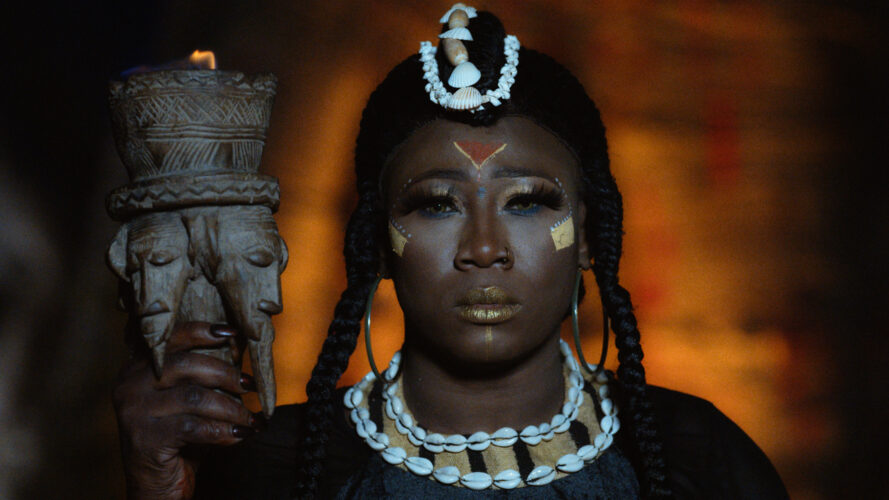
Recently, Malian-Canadian singer Djely Tapa was in Edmonton to perform for the first time at Edmonton Folk Music Fest. At the end of the weekend, she was awarded the Emerging Artist award, which strives to highlight emerging Canadian artists playing at the festival. Despite being a new face at Folk Fest, Tapa has been a fixture in the Canadian music scene for roughly 20 years.
Tapa started her career in the early 2000s by playing in a number of different groups, before striking out on her own as a solo musician. She attributed her solo success to her time playing with others, saying “the public already knew me.” She describes her solo career as “a culmination” of all the other projects she had worked on previously.
“I was born singing,” Tapa says
But Tapa’s connection to music can be traced back even further than her professional career, beginning in her childhood and taking root in her ancestry. “My mother is a singer, my father is a singer, my grandmother is a singer, mother of my grandmother is a singer,” she explained.
Tapa comes from a griot family. The griot are a “special lineage of people that keep oral tradition alive,” passing down history from generation to generation. Music is a huge part of this tradition.
“Music, singing, dance, folk tales, instruments, [these] are all tools of communication,” Tapa explained. “The relaying of history is done through the means of art.” This strong musical tradition has been with Tapa since birth; “I was born singing,” she said, “I could sing before I knew how to talk.”
Tapa has also been influenced by the Canadian music scene. She emphasized that her music “is not just African,” it’s also Québecoise, Malian, and Canadian. “The Canadian public has found itself in my music,” she said.
Tapa noted that she has won three Junos, among many other Canadian awards, which indicates to her that her traditional style of music has been widely accepted in Canadian culture.
“I’m here to stoke the fire within them,” Tapa says
Many of Tapa’s songs cover strong feminist themes. Commenting on her role in the feminist music sphere, Tapa said “women have been fighting the same battles forever … not just Black women or Asian women or Mexican women, all of the women in the world are living under oppression.” She continued, “I’m not here to tell them about their own suffering … I’m here to stoke the fire within them … the fire society is trying to put out.”
Tapa is a strong believer in using her music to inspire others. She said her favourite part of being a musician is being able to highlight other artists. It was important for her to strike out as a solo artist because she wanted to show others that it could be done.
“I like being in the background,” she said, commenting on how she adores using her platform as an artist to lift up others and help put them in the spotlight. Music is meant to be shared, a sentiment that is the guiding light in Djely Tapa’s artistic journey.
This interview was translated from French by Anna Rudge.