 Sandra Fahl
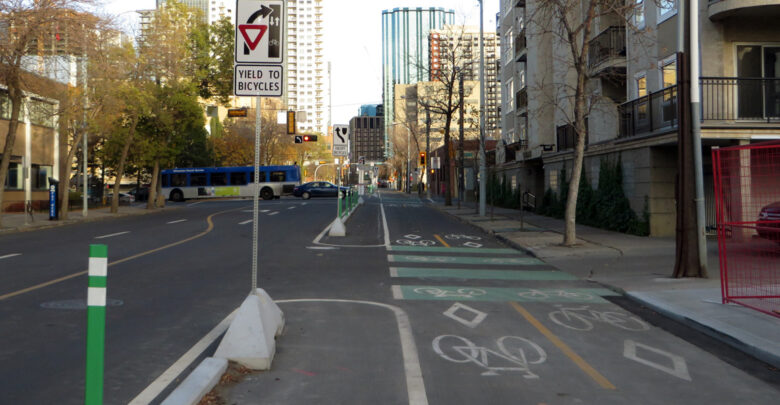
It’s a warm summer afternoon, and as you head out for a quick errand nearby, you spot your bicycle sitting in a corner, forgotten through the long winter months. You decide to ride instead of driving or walking. As you reach the busy streets, you are thankful for the designated bike lanes, keeping you safely away from the traffic and pedestrians. However, it makes you wonder whether a permanent bike lane would be equally rewarding during Edmonton’s long winter months.
Over the past few years, the City of Edmonton has seen a rise in bike lanes, as well as in the use of bicycles and, more recently, e-bikes and e-scooters. This has made the debate around the necessity of bike lanes and the level of implementation they require a frequent topic of conversation. A planned bike lane on 50th Street was expected to open this year, but the city has instead decided to keep the space as parking for now while planning for a bike lane at a later time. This decision has sparked another debate over how Edmonton should use its limited road space and who should get the priority.
Edmonton should continue investing in bike lanes and other forms of active transportation, but their implementation should be more flexible. Bike lanes can encourage the growing use of bicycles, e-bikes, and e-scooters during the summer, while seasonal changes could allow a different use of road space during the winter months. Simply put, bike lanes need to have carefully executed plans. They shouldn’t unnecessarily restrict access to businesses or add pressure to already busy roads.
Over the past few years, the City of Edmonton has seen a rapid increase in e-bike and e-scooter usage, especially in the summer months. Combined with the rise in bicycle riders and pedestrians, it has become important to acknowledge the safety concerns that come with sharing roads. As more Edmontonians turn to alternative means of transportation, dedicated bike lanes represent a safer, designated space for people using different forms of transportation without forcing them to compete with vehicles or pedestrians for space. While the need for safer infrastructure is becoming increasingly clear, that does not necessarily mean bike lanes need to occupy the same road space year-round.
A seasonal approach could allow certain bike lanes to operate during the warmer months, when the demand is the highest, and return the road space to vehicles or parking during the winter. Right now, the City’s Summer Streets program does an okay job at this. It temporarily converts streets meant for cars into walkable and bike-friendly lanes for the summer months. Routes around Saskatchewan Drive and 104 Street in Old Strathcona show that road space does not necessarily have to serve the same purpose throughout the year.
Planning these bike lanes with communities and businesses in mind should be the number one priority. Removing convenient parking or access directly in front of storefronts can make it harder for customers to reach local businesses, especially for those who rely on drivers and delivery agents. The debate surrounding 50th Street and the pushback against the original plan over the removal of on-street parking clearly outlines the concerns around permanent bike lanes. But this way of designating roads to bikes during the summer months doesn’t need to be limiting for everyone. If Edmonton decides which does and doesn’t limit access for people, it should make travelling within the city limits much easier.
Edmonton does not have to choose between making room for cyclists and keeping its roads accessible to drivers. The growing use of bicycles, e-bikes, and e-scooters makes safer infrastructure increasingly important, but that infrastructure can still be flexible. Seasonal bike lanes could encourage more people to choose alternative forms of transportation when demand is highest, while thoughtful placement ensures businesses and drivers are not unnecessarily affected. The debate over 50th Street should therefore not be about whether Edmonton needs bike lanes, but about how the city can build them in a way that works for everyone.