Book review: ‘Son of Nobody’ by Yann Martel
Forgotten or erased? Martel dives into absence and its role within storytelling.

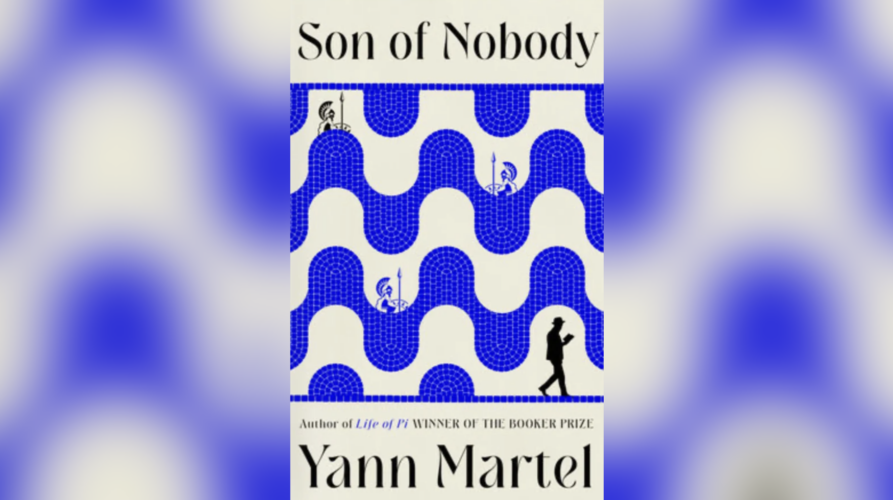 Supplied
Son of Nobody by Yann Martel delivers a visually rich and emotionally charged journey through hidden truths, forgotten myths, and the search for identity. At its core, the story follows two intertwined protagonists: Psoas, the “son of nobody,” and Harlow Donne, a Canadian researcher. Donne’s academic work brings Psoas’ lost story into focus. Both figures grapple with absence. The absence of origin, of certainty, and of narrative authority. As a result, the personal is linked to the mythological in compelling ways.
Psoas’ journey unfolds within a mythic framework. Psoas of Midea emerges as an erased figure from the world surrounding The Iliad, a presence that should exist within that landscape yet is conspicuously absent. This absence becomes a mystery that drives both narratives.
Parallel to this, Harlow Donne reconstructs Psoas’ story through his Ostraka studies at Oxford, blending scholarship with imagination. His research and analyses often read like intimate bedtime stories told to his daughter, Helen, giving the academic material an unexpectedly personal tone. At the same time, he draws comparisons between Homer’s epics and his own strained marriage with his wife, Gail, using myth as a lens through which to interpret his personal life. This dual narrative structure deepens the novel’s exploration of how stories, ancient or modern, are shaped by those who tell them.
What makes the novel particularly compelling is how it treats myth as something unfinished rather than fixed. The investigation into why Psoas is never mentioned in The Iliad becomes symbolic of larger themes. This investigation asks who gets remembered, who is erased, and how history, whether personal or cultural, is shaped by omission.
Martel reinforces these ideas through recurring comparisons to Jesus, using religious history to frame how stories endure. He contrasts belief systems directly through quotes like this one: “If Jesus is about life eternal, then Troy is about death eternal.” Thus sharpening the parallel of: “But there’s something more: we’re still talking about it. In this, the Trojan War is, once again, like Jesus of Nazareth. There were Jewish messiahs aplenty during the Roman occupation of Palestine, each making his wild claims before being killed off by the Roman authorities.” These reflections emphasize how certain narratives do not achieve permanence because they are singular or historically definitive. They achieve it because they continue to resonate across generations and remain embedded in cultural consciousness.
One line that lingers long after reading is: “In the balance of life, what is the weight of a dream, what is the weight of reality? What tips the scales?” This question resonates across both narratives, as Psoas searches for origins and Harlow constructs meaning from fragments. The novel ultimately asks whether truth is something recovered or something created.
The writing style is both accessible and evocative. The mythological elements are handled with subtlety, never overwhelming the emotional core of the story but instead enhancing it. Interestingly, the book’s physical structure mirrors its themes. With only half of the pages containing text, it creates literal spaces of absence that invite reader annotation. This reinforces the idea that meaning lies as much in what is left unsaid as in what is written.
While the pacing remains slow and reflective, this works in the novel’s favour. The gradual uncovering of connections between Psoas and Harlow mirrors the reader’s own process of interpretation. However, those seeking clear answers may find the ambiguity frustrating, as the novel leans more toward exploration than resolution.
Ultimately, Son of Nobody is more than a story about identity. It is a meditation on absence, myth, and the stories that shape our understanding of the world. By centring on what is missing, both in ancient texts and in personal histories, the novel suggests that absence itself can be one of the most powerful forces in storytelling.