Opposition to removing Casavant Organ grows
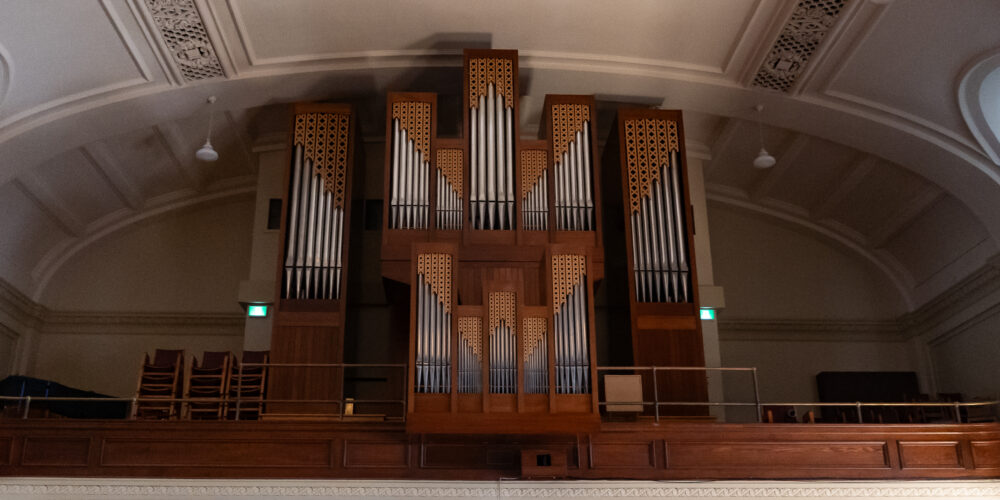
Plans to remove the 1978 Casavant Organ have been strongly opposed by students, staff, alumni, and community members.

 Leah Hennig
Since news of the University of Alberta’s plans to remove the 1978 Casavant Organ from the Convocation Hall, people have been piping up to voice their opposition.
A petition against the removal of the organ has gathered over 37,900 signatures at the time of publication. Marnie Giesbrecht, a professor emerita of the U of A and organist, started the petition. She was also responsible for a petition in 2019 against removing the organ, which gathered over 20,000 signatures.
Those responding to the petition include members of the organ community, students, staff, and alumni.
The petition has also caught the attention of figures like Anna Lapwood, the official organist at the Royal Albert Hall in London, England.
The Music Students’ Association posted on Instagram, expressing their support for the petition. The post’s caption said that the plan to remove the organ was “secretly prepared” and “will desecrate the university’s 1978 Memorial Casavant Organ by removing it permanently.”
The post called on President and Vice-chancellor Bill Flanagan to pause the closure of Convocation Hall planned for April 30. While the hall is closing after April 30, the organ is not being removed immediately.
Removal of organ discussed extensively at General Faculties Council meeting
The topic of the Casavant Organ dominated the question period at the April 27 General Faculties Council (GFC) meeting.
Simone Willmann, a graduate student in the department of music, said that “stakeholders all agree that the administration has bypassed some mandatory governance protocols and failed to consult the community. The depth of the opposition to this plan cannot be ignored.”
She also noted there were campus security and peace officers present at a concert in Convocation Hall on April 24.
“The pre-emptive deployment … has shocked the music community, both here on campus and internationally.”
Willmann asked why the university did not submit the project to GFC for formal recommendation and approval, and what data and consultation the university used to make the decision.
Talk of removing the organ started in 2019
Robert Wood, the dean of the faculty of arts, noted in response that the plan to remove the organ dates back to 2019.
A 2019 statement by then Dean of Arts, Lesley Cormack, noted that the university was fundraising for a renovation of the Convocation Hall. The statement said the renovation would include the removal of the organ “for some time” and they had consulted with architects about “a possible location for a future organ.”
“However, we need to complete the fundraising for the hall renovations before we can consider the organ,” the statement said. It also noted that the expected cost for the work “we need to do with the organ” would be about $1–1.5 million.
“It’s a tough decision,” Wood said. “No one is happy to see the organ go, but it’s not possible to create an accessible solution up there, and it’s not possible to unleash the additional capacity with the organ in place.”
He added that the decision relates to safety, code, legislation, and strategic plans, such as Changing the Story.
He also noted that the organ would not be going to the dump. According to Wood, the university has budgeted for dismantling and storing the organ. He added that they are seeking potential partners for the future of the organ.
Disagreement over accessibility wants and needs
Willmann said that students with accessibility requirements have come to her and expressed that they would prefer to keep the organ and sit in the main area than lose the organ and sit in the balconies.
“Which is a horrible thing, in my perspective, that it has to be an either or,” she said.
Dilini Vethanayagam, a professor in the department of medicine, said she’s heard similar opposition to the decision.
In response, Wood said that that is not how the university approaches accessibility as an institution. Wood added that he wouldn’t be satisfied as dean to leave the organ standing and never have an accessible option for the second floor of the hall.
Vethanayagam asked if it would be possible to extend consultation, specifically to address those who are disabled, in light of the outcry against the removal.
Wood said he doesn’t believe it would be feasible to re-open consultation.
“I do get concerned when people bring forth anecdotal types of, I guess, perspectives and arguments around the merit of keeping it,” Wood said.
Wood added that he is a parent of a child with serious physical disabilities. He said that his child, and others, cannot access the second level of the hall.
The Casavant Organ sits in the back of Convocation Hall on the balcony level. There is currently no wheelchair access to the balcony level.
“We want to protect [the organ], and we will do everything we can and take as much time as it takes to make sure it goes to a new home where it can be played, where it can be enjoyed, and where it can be honoured in the way that deserves,” he said. “But it can’t stay in Convocation Hall and prevent an accessible solution on the second level for the next 50 years.”
Disagreement over consultation and GFC’s jurisdiction
Willmann later asked Wood for clarification on who the U of A consulted. To her knowledge, the university has only consulted external experts.
Wood said he wasn’t sure what she was asking, as the university followed its process for capital projects.
“I feel like with some of these comments and questions, there’s a perspective that there’s a different standard that should be brought to bear because of, I guess, the passion that people feel about the organ,” Wood said.
He added that now that the U of A has determined the budget and scope of the project, there will be close consultation with the music department on aspects of the renovation that relate to the music program. There is no longer an organ stream of the music program.
Lise Gotell, a professor of women and gender studies, noted that GFC has the delegated authority over the repurposing of spaces.
Wood disputed that the Convocation Hall project was a repurposing. He said that it is a renovation and the purpose of the space will not change.
Gotell said that “repurposing and renovation mean the same thing in this context.”
Flanagan, as chair of GFC, said that GFC would move on.
Casavant Organ has no official memorial designation, Wood says
Robert Prybysh asked for clarification around whether the Casavant Organ has a historical or memorial designation.
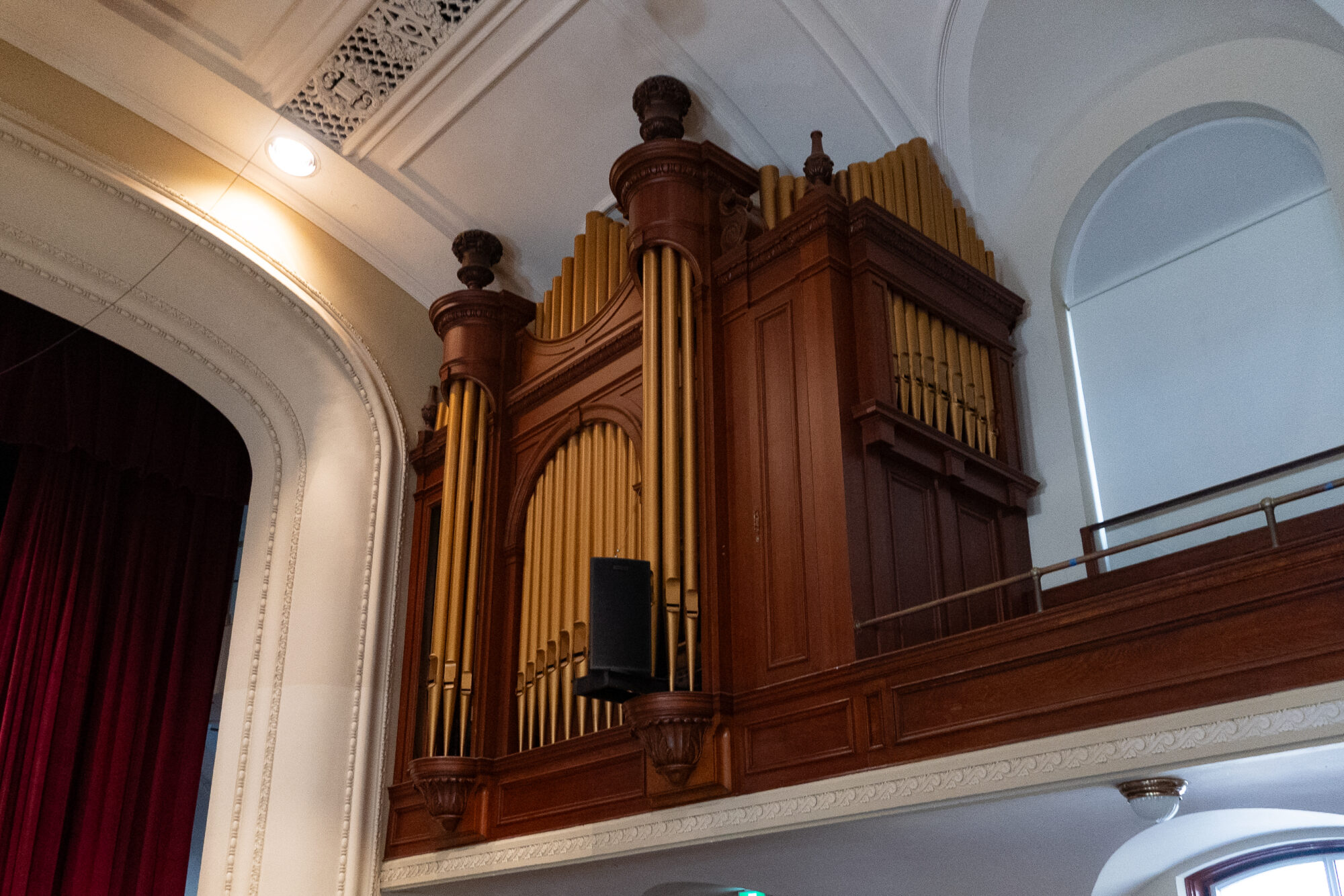
The original organ, installed in 1925, was an official memorial to students, staff, and alumni who lost their lives in the World Wars. The organ was removed in 1976, though some of the facade pipes of the original organ remain.
Wood said that the current organ does not have an official designation as a memorial.
“But we do understand that there’s a strong connection. There’s some continuity there, and it’s the importance of treating it with care,” he added.
Wood also noted that the U of A is working with partners to expand the existing memorial outside of the hall.
“The plan is to, in some way, integrate the existing pipes in the original organ into some sort of expanded memorial, which could also recognize soldiers who fought in conflicts post World War II, Indigenous soldiers, and other members of our armed forces that merit recognition.”
With files from Kathryn Johnson