 Leah Hennig
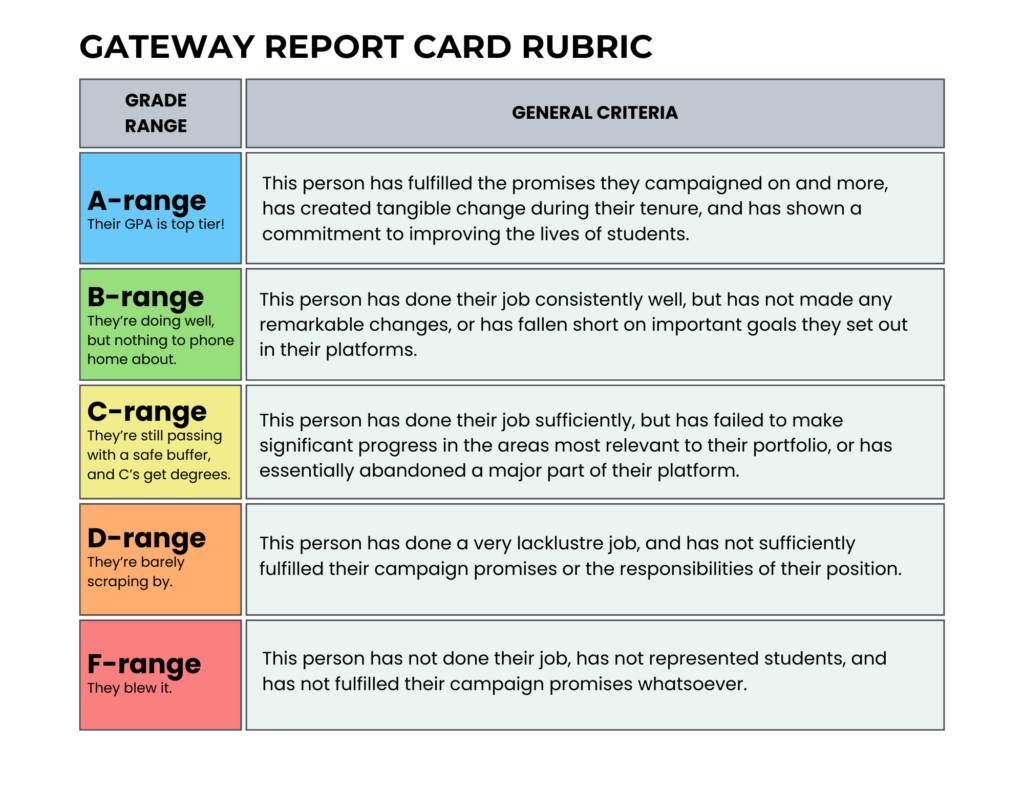
Each year, The Gateway publishes an evaluation of the Students’ Union executive and the Board of Governors representative. It’s impossible to discuss every aspect of their tenures, so these reports are largely based on the major components of the platform each executive campaigned on, and the most significant responsibilities of their respective positions. The grading rubric can be found at the bottom of the article.
And if you’re short for time, check out our TL;DR for a bite-sized breakdown towards the end of the article.
Karina Banerji: A-
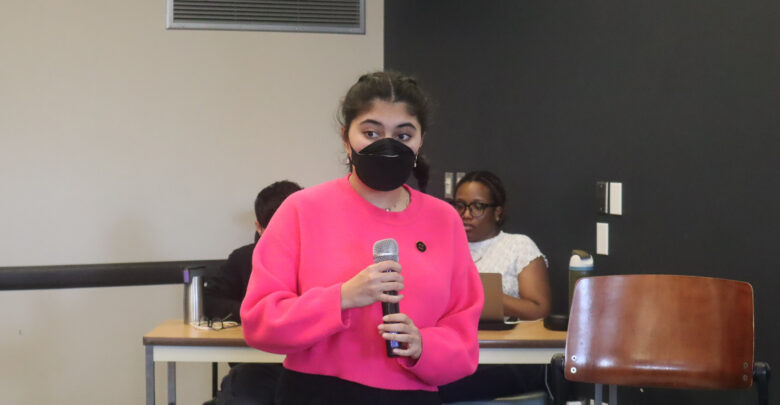
For the University of Alberta Students’ Union (UASU), the Board of Governors (BoG) representative plays a difficult and often under-appreciated role. The position offers limited formal power but significant responsibility: translating student concerns into governance, pushing transparency in opaque spaces, and ensuring student voices don’t disappear once decisions reach the boardroom. In her first term in high-level governance, Karina Banerji approached the role with seriousness, accessibility, and a clear emphasis on engagement — earning her an A-.
A strong emphasis on consultation and engagement
Banerji’s defining strength was her commitment to student consultation. She prioritized gathering input across North Campus, Augustana, and Campus Saint-Jean, working closely with other executives to capture perspectives that often go unheard at the board level. Rather than relying on sporadic feedback, she invested time in structured consultations and is working toward compiling a comprehensive report to present directly to the BoG.
She also made an effort to communicate with students. Regular social media updates and post-meeting summaries helped demystify board activity and made governance feel more accessible to students unfamiliar with institutional processes. In a role with no dedicated budget and limited visibility, that effort mattered.
Banerji’s platform focused on academics, affordability, accessibility, and advocacy — and her work reflected those priorities. She was vocal on tuition and fee issues, pushed for increased transparency around academic expectations, and raised concerns about poorly consulted initiatives like the Course Materials Access program. In governance meetings, she demonstrated a willingness to speak up, even when discussions had already advanced, reinforcing that student representatives belong in those spaces.
Her advocacy also extended to campus safety and emergency preparedness. Drawing from personal experience, Banerji prioritized resource visibility — particularly first-aid kits and automated external defibrillators (AED) — and began co-ordinating a joint letter with student groups to push for clearer signage and mapping in older campus buildings.
Accessibility and inclusion as recurring themes
Banerji consistently highlighted gaps in accessibility, especially for students outside North Campus. She emphasized hybrid access, inter-campus equity, and culturally competent services for international and Indigenous students. Her work with Indigenous student leadership, including supporting the renaming and revitalization of the Truth and Reconciliation Action Committee (TRAC), reflected an understanding that representation must extend beyond formal seats at the table.
She also raised concerns about resource consolidation and language accessibility — often collaborating with other executives when issues crossed portfolio boundaries.
At the same time, Banerji was candid about the limits of the role and her own learning curve. As a first-time governance representative, much of her early term focused on understanding processes, building relationships, and finding where student pressure could realistically land. Several platform goals — such as embedded certificate reform or ONEcard access — fell partially outside her portfolio, requiring co-ordination rather than direct action.
Many of her largest initiatives remain in progress, including the student consultation report and broader advocacy tied to upcoming board decisions. That unfinished nature reflects the structural constraints of the role as much as individual performance, but it does limit how far the grade can rise.
Banerji brought energy, accessibility, and a genuine commitment to student engagement into a challenging governance role. She strengthened consultation, spoke confidently in high-level forums, and laid groundwork that future representatives can build on. While many initiatives are still unfolding, her impact as a first-term BoG representative was real and constructive.
This was a strong foundation year — one defined by presence, preparation, and promise.
TL;DR: Banerji prioritized student engagement, spoke up consistently in governance spaces, and laid solid groundwork for long-term advocacy. With several initiatives still in progress, her term earns a A-.