HUB Mall studio closures left fine arts students in a lurch
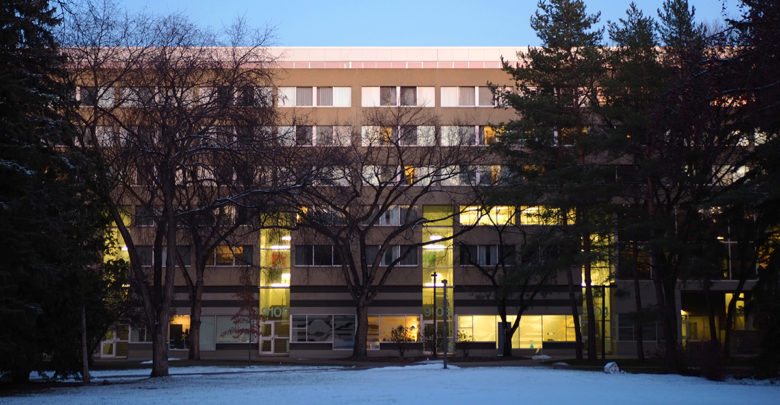
An electrical fault in HUB Mall displaced many arts and design students for most of January, with some losing time and money due to the closures.

 Helen Zhang
An electrical fault in late December caused the closure of several art studios located in the basement of HUB Mall. On January 7, students were informed that several art studios would be closed until further notice.
Lily Barschel, a vice-president of the Visual Arts Student Association (VASA), said the closures have impacted almost everyone in the fine arts. The closures impacted studios used for undergraduate and master’s students, as well as some private studios and offices.
Chloe Wall, a general member of VASA, had brought all of their materials with them to the studios on the first day of the winter semester. Then, the studios closed and they lost access to their materials.
“We were given no notice so we couldn’t collect anything or take anything with us or communicate with each other to try to make plans,” Wall said.
“So I not only had no instruction and no classes for like a quarter of the semester … I didn’t have any of my stuff so I couldn’t even work on stuff remotely,” Wall said. “It’s kind of hard as an art student to do their painting homework when all your brushes are locked in a building that you are not allowed to access.”
She said some friends have lended her some supplies, but she had to buy additional supplies to get through the closure. A single tube of quality paint can sometimes cost up to $70.
“A lot of people also lost a lot of time and money,” Wall said.
Loss of time and money for displaced students
She said the university didn’t provide an alternative space for students to work in. Working from home isn’t always possible for students due to the materials they work with. Fumes are a safety concern for both humans and pets.
Wall was able to work in the North Power Plant after figuring out when the space was free around classes. They said that professors that did have classes were really accommodating and helped them as best they could.
There were also no online classes for students.
“We were hearing from our professors semi-sporadically, but that was also because they were being told stuff sporadically,” she said.
“I know a lot of people wound up dropping out of classes because they just couldn’t deal with how nebulous it was, especially for those people who have more studios or more structured lecture classes where they don’t have time outside of studios to work.”
Isabella Rodriguez, president of VASA, echoed that the communication has been frustrating for folks. But they place the blame with the higher-ups at the university, not their professors, technicians, and the interim chair.
Rodriguez said she’s been in conversations with the faculty to see if students could be reimbursed for having to purchase additional supplies, as well as for the loss of studio space.
“We paid studio fees, aside from our tuition, so we pay for that studio space, and missing about a third of it, obviously, I believe that it is fair for students to receive part of those fees back,” she said.
Rodriguez said that all of the staff have been trying get an agreement for reimbursements with the university, but nothing has been finalized.
Students feel like fine arts is on the back burner, Rodriguez says
Rodriguez also said that some materials and work had to be taken off-site to be cleaned. Some materials and work are now missing or damaged.
“[It] takes a lot of time, a lot of money, a lot of effort, and then a lot of work is missing and misplaced,” Rodriguez said.
“It felt very unfair for a lot of us because at the same time all of this is happening, [the university] is promoting arts and the other buildings are being funded,” Wall said. “So seeing all these initiatives of different ways they’re funneling money on campus, well knowing that our space isn’t being taken care of and that we were being kicked out was really tough for a lot of us.”
Wall was in biological sciences for two years before switching to the fine arts, so they say they’ve seen the differences between the science, technology, engineering, and mathematics (STEM) buildings and the fine arts ones.
Rodriguez said that these closures amplified the way arts and design students often feel like they are on the back burner for the U of A. Students deal with other ongoing issues like plumbing, a lack of washrooms, and pungent smells in their studio spaces.
“We just wish that there was, in general, a bit more care and focus on us being given back,” she said.
She emphasized that their frustrations aren’t with the maintenance workers but with how the U of A has handled the closure.
Some of the instructional studios have re-opened and more are expected to re-open in early February. But students still don’t have access to the woodshop or the critique room where they do professional feedback.
Even with access to some of the studio spaces, Wall said students are still scrambling to play catch up.
The U of A said in an emailed statement that it acknowledges that “this unforeseen closure impacted a number of arts students, and understand that these spaces are important to them.”
“Faculty leadership is looking into supports and solutions for students, and will continue to work with them to mitigate any adverse impacts.”