Film Review: ‘Montreal, My Beautiful’
'Montreal, My Beautiful' brings middle-aged melancholia to the Metro.

 Supplied
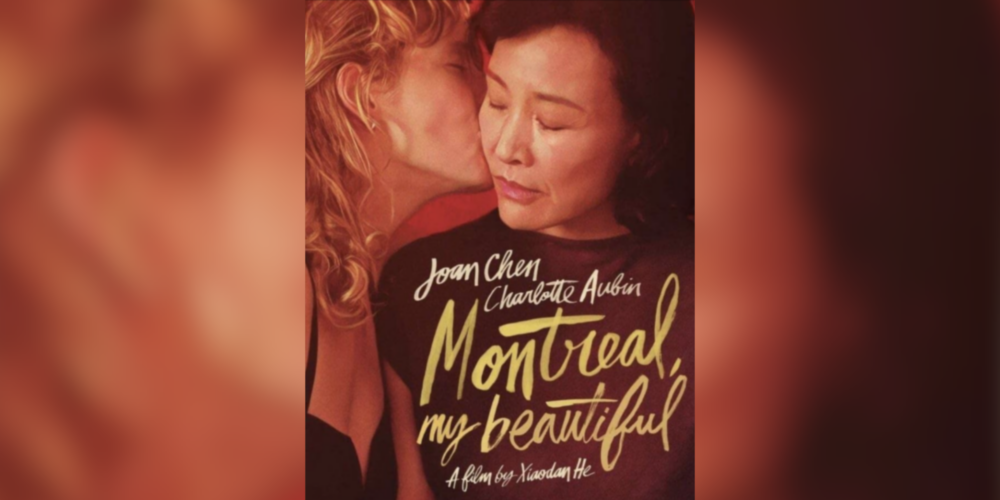
A delicate but determined drama that explores lesbianism, Montreal, My Beautiful, screened on August 27 at Metro Cinema as part of their Showing Pride series, partnered with the Pride Centre of Edmonton. Montreal, My Beautiful unravels into a drama about the exploration of sexuality and the intersectionality of being Chinese and a queer person.
The friends-with-benefits relationship between Feng Xia (Joan Chen) and Camille (Charlotte Aubin) gradually evolves into a wavering romance. It all starts when Feng Xia, a 53-year-old Chinese immigrant, takes the plunge into the lesbian dating world. She uses a Quebecois dating app for lesbians, “Elles,” and matches with Camille, a white Montreal native. Their brief text conversation cements the drama as a realistic depiction of lesbian love.
During the sex scenes, the lighting emphasized and impacted the mood of the movie. It casts delicate, warm tones on Feng Xia’s face when with Camille, and dark blue shades when having intercourse with her husband. Between uncomfortable gasps for air, the starkness of the two scenes jarred the audience.
In Montreal, My Beautiful, when Feng Xia neglected her duty as a mother to her children, Joy (Pei Yao Xu) and Dong Dong (Anzhe Zhang), it left the audience with a difficult question. What is the biggest betrayal? One towards her family, her husband, and children, or to herself?
Western views on the 2SLGBTQIA+ community stake the claim that the individual has a right to express themselves. In Chinese and most Asian communities, family and saving face usually come first. Montreal, My Beautiful, creates space to discuss the intersectionality between being a lesbian and being Chinese in one devastating bar scene.
Several sucker-punches to the gut, as Feng Xia is asked, “Are you Japanese? Or Vietnamese? Or Cambodian? Sorry, I can’t tell the difference.” This moment highlights the ongoing struggles of being a person of colour in Montreal. Considered to be a foreigner in a place she has lived for 15 years, Feng Xia leaves the table in distress, Camille trailing behind her. Instead of Camille apologizing for her friends’ invasive questions, Feng Xia apologizes to Camille, telling her, “I take back the mean things I have said.”
Frustration gnawed at the edges of my mind when witnessing Feng Xia’s lack of a spine. Albeit it might be my westernized nature to want her to pursue what she wanted and to say to hell with the consequences. The film expands the Asian diaspora of queer literature, but also feels like a reality that lacks conviction in one’s own values. What Montreal, My Beautiful, lacks in finality and conviction, it makes up for in strides of realism and dramatic flair.