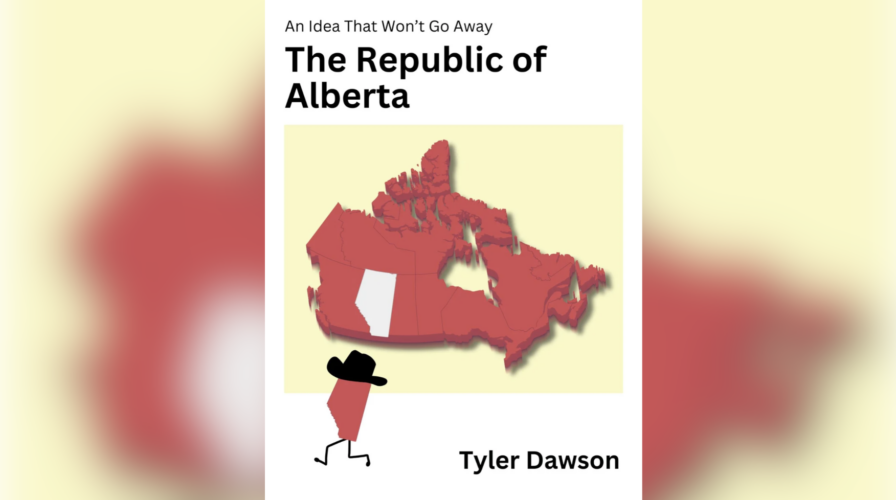
Book Review: ‘An Idea That Won’t Go Away: The Republic of Alberta’ by Tyler Dawson
In his new book, The Globe and Mail and National Post journalist presents a history of the separatist movement and roots of Western alienation.

 Supplied
Some people may think that the separatist movement is a contemporary phenomenon. But in his new book, Tyler Dawson delves into the history of how many times the idea has come up and why it won’t go away. In An Idea That Won’t Go Away: The Republic of Alberta, he goes in-depth on Western alienation through key moments in Alberta’s history. Dawson examines how economic downturns, energy policy disputes, and perceptions of federal indifference have shaped the province’s political identity.
Dawson does a wonderful job of writing a book that helps readers understand the regional political tensions in Alberta and the history behind them. The book appeals to a variety of audiences because it places current events within a historical context, demonstrating that the separatist movement is not something that happened overnight. Dawson explains how feelings of alienation have evolved and became an issue within each generation. The book explains that movements persist over time, even when public support for them is limited.
The book is written in a way that is easy for readers to understand, regardless of their understanding of political and economic systems. The author avoids rhetoric and academic jargon, which makes this book accessible to anyone who wants to understand the history and debate behind an independent Alberta. Many times when we read books that have political and economic content, it feels like reading a research paper, but that is not the style of this book. Reading it feels light and conversational. Rather than moving directly through the narrative, the book first presents readers with information from multiple sources, such as politicians’ statements, the opinions and political perspectives of professors and experts, government actions, and the public’s resentment toward those actions. Each chapter flows into the next one until the readers reach the conclusion, and then it ties and summarizes the entire sentiment together.
The book benefits from Dawson’s expertise as a political reporter, as he can name the key personalities involved and the ideas and political flashpoints that have formed this kind of outrage in Albertans. While explaining this debate, the author maintains a distance from the arguments that are being made. He doesn’t give his own opinion, which makes this book a neutral source of information for the readers. The author approaches this topic as a reporter and not an advocate.
The Republic of Alberta is not propaganda looking for a separatist movement to rise up, nor is it looking to dismiss the movement. Instead, it is a brief history and examination of the grievances that cause Albertans to want an independent Alberta. These are the conversations that are happening among people and are being aired on talk shows. For people to make better decisions, they need to know the history of where it all began. In a time of social media, where everyone is allowed to put their opinion on the internet, it is very important that there is a medium of information that is presented accurately and thoughtfully, especially on complex issues like these.