Students take on the engineering of chocolate
Chocolate offers a practical, everyday application of chemical and materials engineering concepts for students, Sterling Lee says.

 Leah Hennig
For some students, the end of the semester means preparing for a final exam or writing a final paper. For some chemical and materials engineering students, it meant making chocolate.
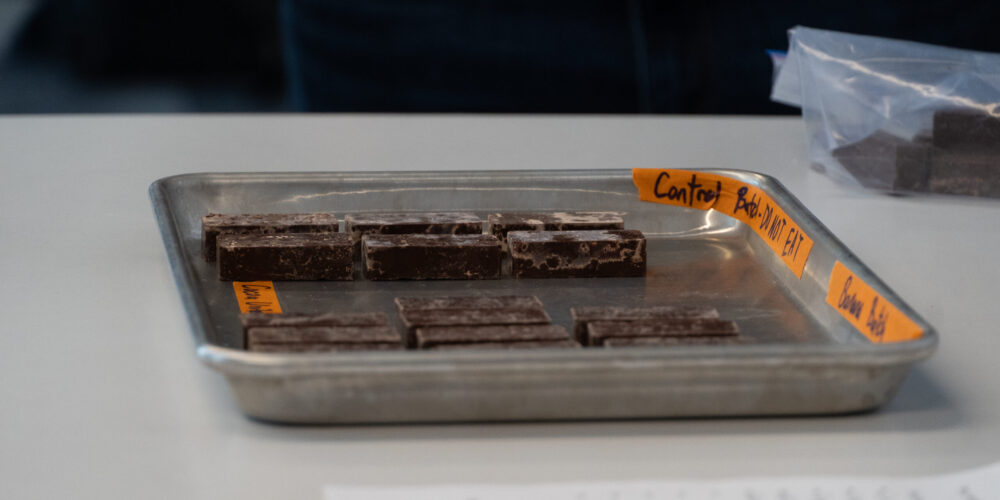
Beth Sterling Lee, a faculty officer at the University of Alberta, taught a special topics in chemical and materials engineering course that focuses on chocolate. As the final project for the class, groups of students had to make chocolate from scratch and present their methods.
“Chocolate is an awesome engineering material in a lot of ways because it’s so accessible,” Sterling Lee said. “It’s something that we eat on, just about, a daily basis for many of us.”
It provides a practical application of engineering characteristics.
“We can look through a microscope to see what’s happening. We characterized our chocolate with taste because that’s a great first sort of way to see how did this behave. But after we’ve finished tasting it, we would go to the [materials lab] and actually test it using real life materials engineering characterization equipment.”
Most students aren’t coming out of the class as expert chocolatiers, but they learned a lot, according to Sterling Lee. They had to explain what the process behind their chocolate was and how it connected to material engineering.
Many of the concepts applied to the chocolate-making process and final tests are transferable to real world engineering materials.
“You take rocks out of the ground, and grind them up, and extract all the metals out of them. Then you go through and you cast them, you roll them, you heat them,” she explained. “We’re going from bean to bar with chocolate, and that’s pretty analogous.”
Chocolate offered an easier material to experiment with than a metal. The melting and breaking points are lower, and it’s easier to get under a microscope.
Not just a sweet treat
Students didn’t just make simple chocolate either — they added ingredients and flavours. Some ingredients included ube, banana, lemon, and, unintentionally, a little plastic in a batch gone wrong.
Katie, Trinity, and Tyler made caramel chocolate for their experiment. It didn’t turn out exactly how they expected it to, but they enjoyed the class regardless.
The process of getting from bean to bar takes a while, Trinity explained. The cocoa beans have to be sorted, measured, roasted, put in a winnower to get to fine cocoa nubs, then a melanger with the other ingredients to get a molten chocolate consistency. Finally, the chocolate has to be tempered.
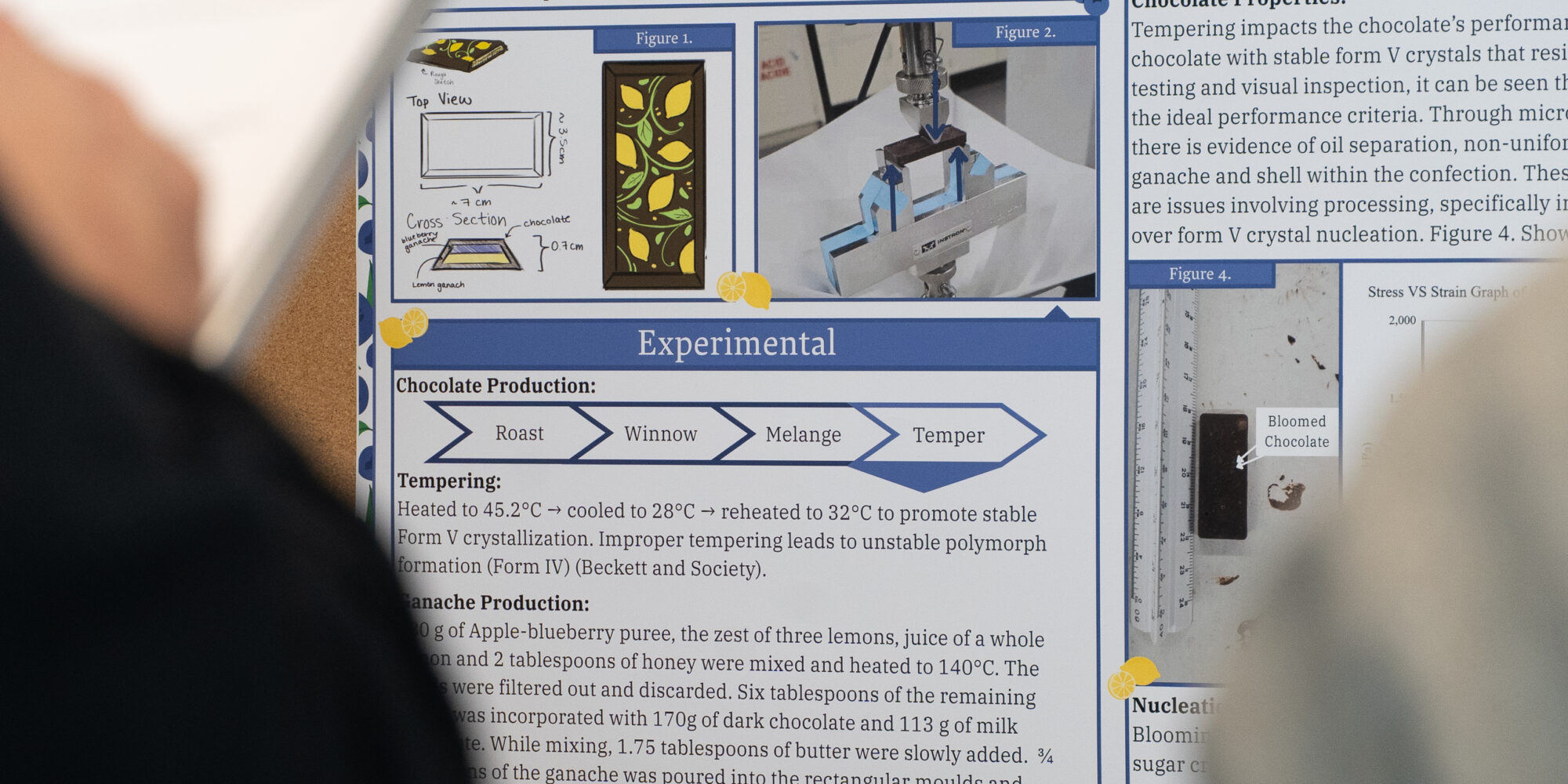
Beyond just the taste, tests like a bend test help determine how good the chocolate is. Unlike with other materials, you want chocolate to snap. Another test is seeing if the cocoa butter separates, which creates blooming, or the white stuff on chocolate.
Tyler warned that the class is more work than you might think.
“You think you’re just making chocolate, but [there’s] a lot of research and it was just like any other lab course, but instead of doing it with steels or metals, it’s just with chocolate,” he said.
“It was a nice twist to a typical engineering course,” Katie added.