 Ash Grover
Every year, The Gateway hosts a panel to discuss the University of Alberta Students’ Union (SU) election. This year’s panellists provided their insights on the candidates running, student politics, and who students should vote for in the 2026 SU election. The Gateway interviewed the panellists on Febraury 28.
Opinions expressed by the panellists do not reflect those of The Gateway.
The Panel
This year’s panel included:
- Angelina Botros: first-year pharmacy doctorate student, former General Faculties Council (GFC) and SU councillor from 2024–25
- Brooklyn Hollinger: The Gateway 2024–25 arts and culture editor, former deputy opinion editor
- Karene Kouadio: fourth-year English and political science student, social science councillor for the Organization for Arts Students and Interdisciplinary Studies (OASIS)
The Candidates
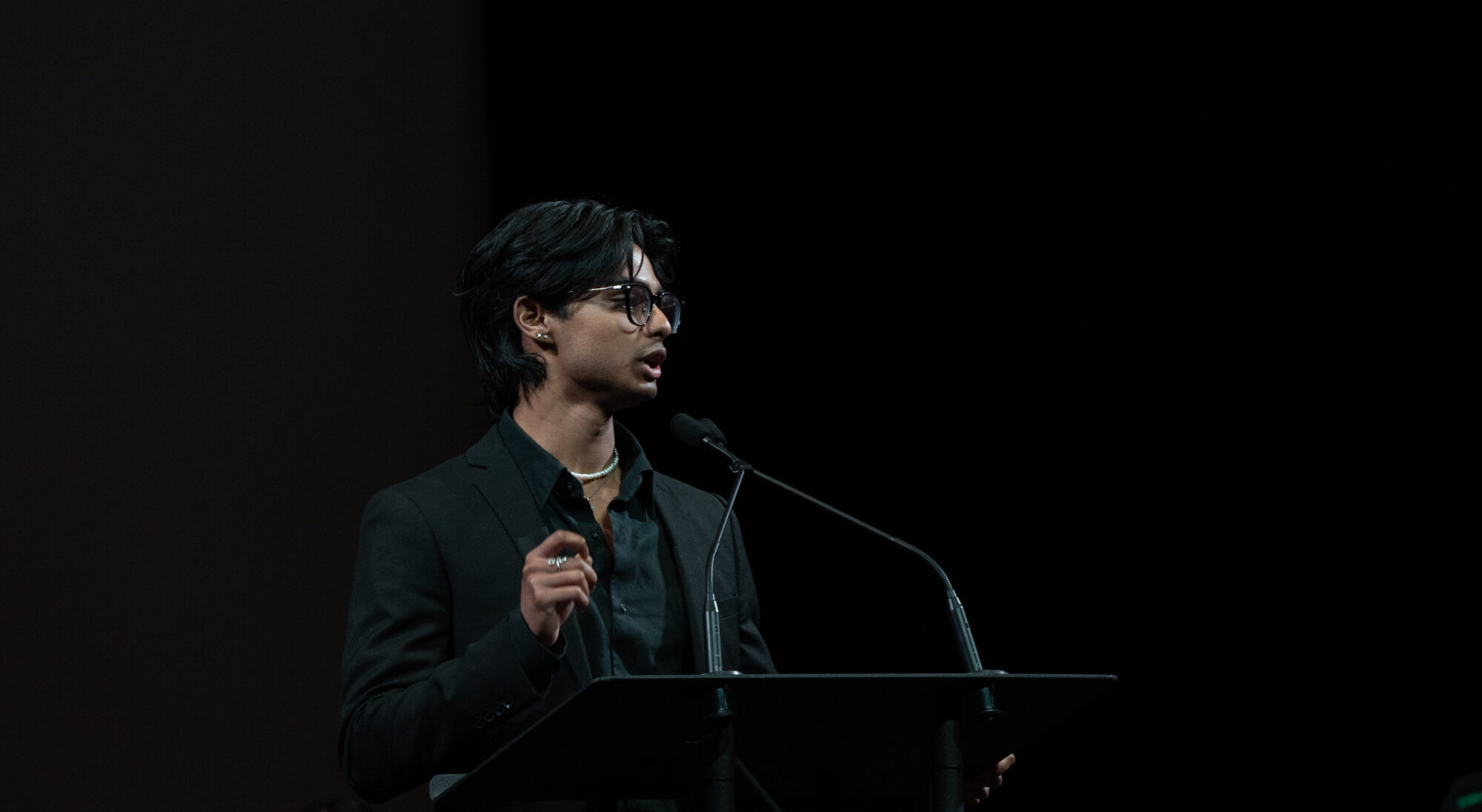
Brish Goorimoorthee, a third-year media studies student.
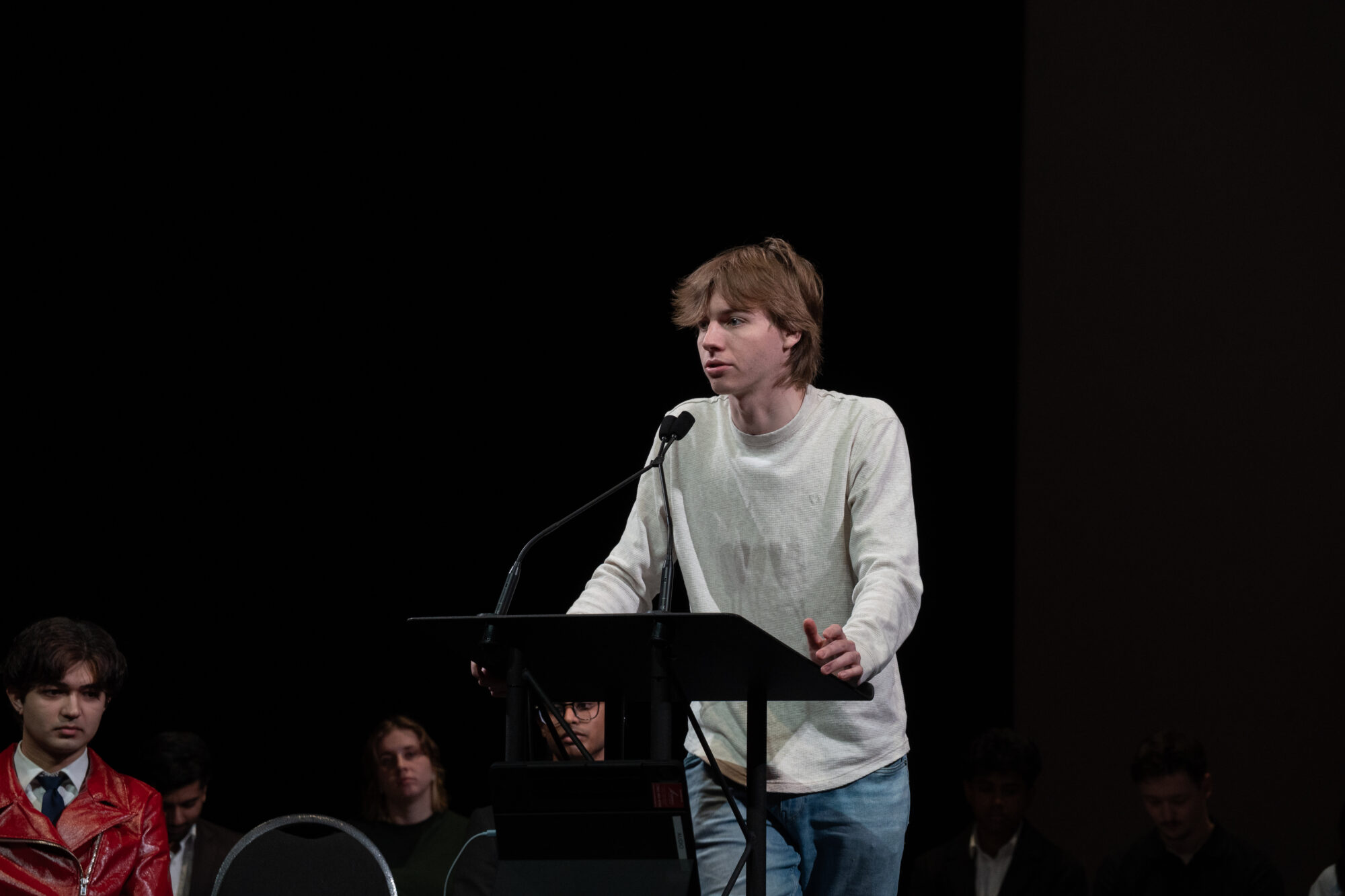
Nolan Greenwood, a fourth-year business economics and law student and 2025–26 president of the Lister Hall Student Association (LHSA).
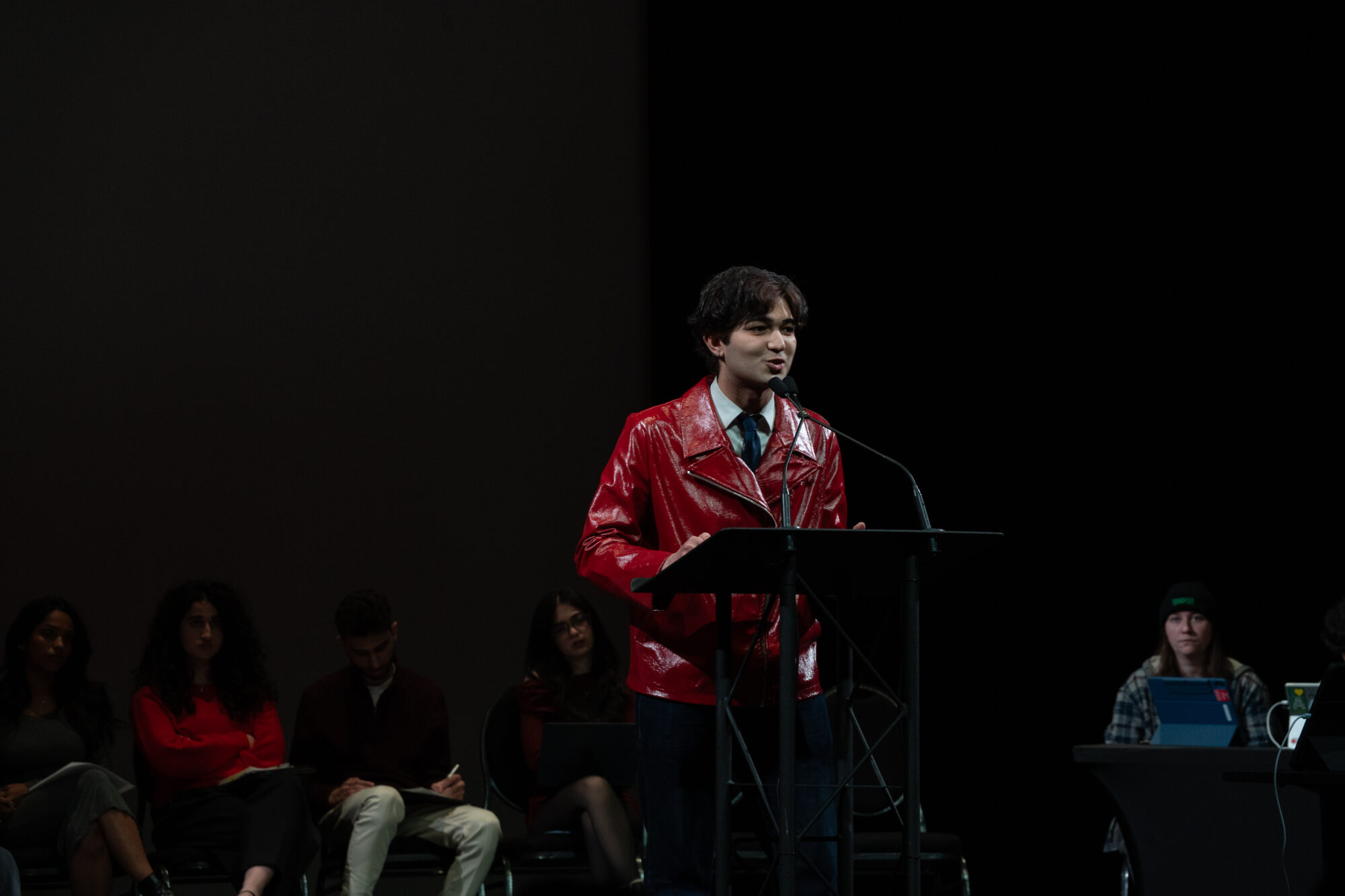
Manyu Rathour, a second-year computing science student and 2025–26 wellness ambassador for Lister Residence.
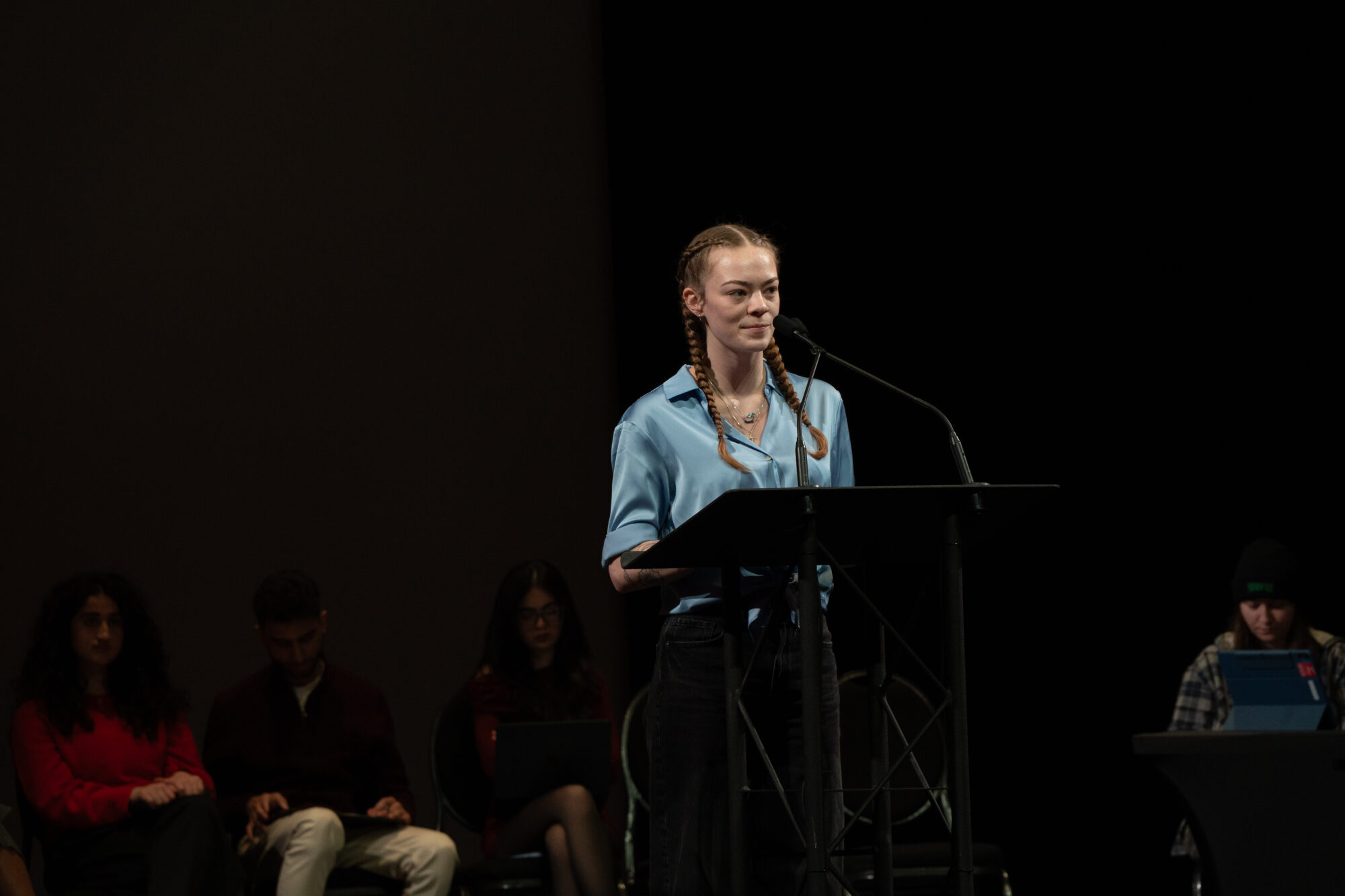
Paige Wall, a third-year kinesiology, sport, and recreation (KSR) student and 2025–26 KSR councillor on the Students’ Union Council. She’s also the president of the East Campus Students’ Assocation (ECSA).
All three panellists agreed that there is a wide range of candidates for the vice-president (student life) (VPSL) race.
Botros said that Greenwood has a good presence, both in and around campus and on social media. “I think that he does have good intention[s] because he does really present himself as an individual who has a lot of experience,” she said.
Hollinger echoed that Greenwood has a stable presence on social media. “He’s in it with the students. He’s at their level,” she said.
According to Kouadio, Greenwood “plays it too safe” with his campaign. “That could be something that could backfire as well, because it plays too safe.”
For Goorimoorthee, Botros said that she hasn’t seen much of him on campus or online. “I haven’t been able to form an opinion of him, simply because he’s been pretty absent,” she said.
Hollinger agreed that Goorimoorthee is an interesting candidate because he doesn’t have much of a social media presence. “In terms of social media presence, I think he kind of falls short, which is unfortunate because the VPSL role, I think, benefits the most from social media and postering presence.”
Kouadio also said that she has not been able to engage with Goorimoorthee as a candidate because she hasn’t seen anything about his campaign. “I haven’t seen any posts, I haven’t seen anything on campus, so it makes it hard for me to connect,” she said.
According to Botros, Wall has a stable campaign with a solid presence on campus and on social media. Her campaign “doesn’t super pop out to me, but she has that calm, reassuring underlying tone in a lot of her campaign materials, and that’s kind of how I’ve been interpreting her as a candidate.”
Hollinger said that Wall’s social media presence is plentiful and she has a lot of posts in comparison to other candidates. “She’s very down to Earth [and] personable … which I think for the VPSL role is important,” she said.
Kouadio mentioned the down to Earth, prairie aesthetic that Wall has brought to her campaign. “The Little House on the Prairie trope, it works to some extent, so I got to give it to [Wall],” she said.
Botros said that Rathour “knows how to campaign” and seems like he’s a lot of fun. “What I’m getting from this impression of the poster is that he is presenting himself as someone fun [and] someone that will be fun in the VPSL role.”
According to Hollinger, Rathour has an “interesting social media presence.”
“He comes at it at a personable, approachable level, [but also has] all of this experience, which I think there needs to be a good balance with that,” she said.
Kouadio said that Rathour definitely has the “most immediate presence.”
“When it comes to engagement, especially with [VPSL], that’s what the position entails [and] he’s got that in the bag,” she said.
“Consultation is not necessarily a linear agenda where you could do it all in a week,” Botros says
In terms of forum performance, Botros said that the VPSL candidates can be placed into two silos — communication and consultation, and transformation and action.
Wall falls into the communication and consultation silo, according to Botros. “She acknowledges the limits of herself and her social location as a student, and by being able to consult with other individuals she will [get] more of something to spearhead in terms of understanding how that change could occur,” she said.
However, Botros also noted that consultation can take time, and there may be a delay in noticeable change for students. “Consultation is not necessarily a linear agenda where you could do it all in a week,” she said.
Hollinger said that she liked that Wall wants to continue the work of Logan West, the current VPSL, but is lacking some new ideas of her own.
“I think she’s leaning a little bit too much on the personal side, less on new ideas,” she said.
Wall, according to Kouadio, discusses issues that she’s going to address, but doesn’t explain her plans to address them.
“Wall mentions more grants for cross-collaboration, and then, again, cross-collaboration [is a] big word, [it’s] very vague, what are we cross-collaborating with?”
According to Botros, Goorimoorthee is also in the communication and consultation silo.
“He mentions that he has a lot of experience within social clubs, and he wants to represent and empower students in a meaningful and tangible way that allows for accessibility, community, and growth. But I find it hard to figure out how that will be actionable … beyond just consultation.”
Goorimoorthee is “a little forgettable,” according to Hollinger.
“I just feel like [Goorimoorthee] is kind of falling short in comparison to his other candidates,” she said.
According to Kouadio, Goorimoorthee briefly mentions problems, but doesn’t explain how he’s going to solve them.
“At Campus Saint-Jean (CSJ), he mentioned how he’s bilingual, and then there’s nothing more. What are you adding to these students’ lives?” she said.
“I feel like he’s a little bit afraid to venture outside of those three pillars,” Botros says
Botros said that Rathour and Greenwood encompass the transformation and action silo.
Rathour “has a lot of commentary, and he feels like bringing campus together would be very well done in terms of surveying and raising awareness,” she said.
Hollinger agreed that Rathour has been very “events-driven” throughout the forums.
“I think he is very events-driven, which in certain circumstances could be something that the students want to hear, but not always. Especially when you have forums like [the] Indigenous Students’ Union (ISU) and International Students’ Association (ISA) that tackle more important student issues, aside from just events,” she said.
Greenwood has been a bit repetitive in terms of the three pillars of his platform, according to Botros.
“Although he has more transformative ideas … I feel like he’s a little bit afraid to venture outside of those three pillars,” she said.
Hollinger appreciated Greenwood’s “concrete plans for overall student well-being.”
“I also appreciate how he wants to continue [West’s] work, … which I think [it] is very important in any of the VP roles to have new ideas, but also continue on what your predecessor has done,” she said.
Kouadio said that Greenwood seems to be the only candidate “really acknowledging sexual and gender-based violence (SGBV) initiatives.”
“I feel like [the other] candidates don’t talk about it really, but he is the only one who seems to be standing on firm ground,” she said.
Botros also voiced disagreement with candidates “taking shots” at one another during various forums. “I think petty politics is not benefiting anyone in terms of any of these forums.”
Hollinger echoed Botros’ concerns. “I think there’s a good level of friendly debate and friendly criticism that can exist in these kinds of forums but it seems like it’s even more intense with this year’s group of candidates in this year’s race.”
Kouadio said that she thinks that the candidates have been targeting each other because they “don’t have the mechanics to actually hold their platforms.”
“What gives rise to these petty politics is that they don’t all have a strong platform,” she said.
“How do you [plan to] make sure that campus is safe?” Kouadio says
Botros said that she likes the platform points that Wall has highlighted in her campaign — advocacy, transparency, and accessibility.
“A big form of criticism in the SU this year was the lack of transparency, and I think by addressing that with her campaign, I think she was able to highlight that very well and make sure that those accountability measures are enabled,” she said.
Wall’s platform falls short in that she’s a little out of touch with what current student groups want to get out of the VPSL, especially in terms of events, Hollinger said.
According to Botros, Greenwood is very residence-focused, which does not encompass all U of A students.
“I would love to see an additional piece [on his platform] about transportation as well, because I feel like it’s still relevant to residence, and I think it’s really relevant to students who aren’t in residence,” she said.
Hollinger echoed this concern as well. “It is important to tackle residence issues, rent control, all of that. But at the same time, you do have a large portion of the student body that are commuters, so including [transit safety] in your platform [would be beneficial],” she said.
Kouadio said that Greenwood’s platform is very feasible, but too focused on residence.
“It’s very residence-focused and there [are] a lot of us who are not in residence. How do you [plan to] make sure that campus is safe?” she said.
“I think if he were to be in this role, if he just found a little bit of focus, he could do well,” Hollinger says
Goorimoorthee is looking to build on the work of previous executives, but it is unclear what else he is bringing to the table, Botros said.
“I still am not 100 per cent sure what [Goorimoorthee] is looking to really do, and I think that’s the problem. I think he’s a little disconnected,” she said.
Hollinger agreed that Goorimoorthee doesn’t present enough of his own ideas. “Absolutely build off of what has currently been done, but what specifically would you like to see? I think that’s where his platform points fell a little short,” she said.
Botros said that Rathour understands student issues, but there’s a bit of a disconnect when it comes to executing more important initiatives, alongside his event-oriented ideas.
“He’s connected, I’m just looking to see how he’s going to coherently put that together into something that will look like a good VP portfolio next year,” she said.
Hollinger said that Rathour knows what students want and is “very connected on the student level,” but he struggles with having concrete plans to tackle student issues.
“I think if he were to be in this role, if he just found a little bit of focus, he could do well,” she said.
According to Kouadio, Rathour has shown good initiative, especially with the work he has already done regarding SGBV.
“He has shown … when it comes to student life, he does care about stuff like this,” she said.
Kouadio also said that the candidates should try to meet each other on common ground, focus less on criticism and more on tangible change.
“It’s hard for me to really highlight something that is super impressive about all platforms because I feel like all of them do fall short on a lot of things,” she said.
Who will win: three votes for Rathour
Who should win: three votes for Rathour