Capitalizing capitalism: Why a pipeline is not urgent because of Venezuela
Trump kidnapped Venezuela's President Nicolas Maduro. Now, conservatives in Canada think a pipeline is urgent, but it's not.

 Kieran Chrysler
Venezuela is a deeply complex and fraudulent country, but only because the United States (U.S.) wants it to be. On January 3, President Donald Trump kidnapped Venezuelan President Nicolas Maduro. With Canada’s huge Alberta oil sector, Prime Minister Mark Carney, opposition leader Pierre Poilievre, and Alberta Premier Danielle Smith all had something to say about the situation. All three politicians commend Trump for taking Maduro out of power, viewing him as a ruthless dictator. A kidnapping, though, could fast-track a pipeline in Poilievre’s and Smith’s view.
When you think about Venezuela, the first thing that should come to mind is the virtually limitless oil supply. This oil is the reason for several coup d’etat attempts, which have been predominantly led by the U.S.. This is mentioned in Joe Emersberger’s and Justin Podur’s book Extraordinary Threat: The U.S. Empire, the Media, and Twenty Years of Coup Attempts in Venezuela. They also demonstrate the abundance of U.S. intervention in Venezuela on top of the coup attempts. Maybe more than others was then President of the U.S., George W. Bush.
The first to push back against U.S. involvement was Hugo Chávez. In 1998, he was voted into office with the Socialist Party of Venezuela (PSUV). As Eva Golinger covers in her book The Chávez Code, this pushback made the U.S. more involved. The filthiest move the U.S. pulled during the Bush administration was the indoctrination of Venezuelans. In 2001, the International Republican Institute (IRI) taught opposition parties in Venezuela how to better connect and relate to others in “political communication.” The very next year, in 2002, $10 million USD was sent to Development Alternatives Inc. (DAI), through the U.S. Agency for International Development (USAID), to supposedly “fix” Venezuela and protect its citizens from Chávez. The issue is that the U.S. caused the problems they’re supposedly trying to fix. Fast forward to when Maduro stepped in, and you’ll find very little has changed because now Trump’s in office.
During Trump’s first term, he had many things to say about Venezuela. It shouldn’t be surprising to learn that Trump has had his eye on Venezuela for a long time. In 2017, Maduro was labelled a dictator following the political prisoners he held, among other crimes. Trump, then, made comments about using military intervention if necessary. But oil is all Trump cared about. He couldn’t care less what Maduro was doing. And now that Trump has come full circle and taken Maduro, Poilievre is invoking unwarranted concern for a pipeline in Alberta.
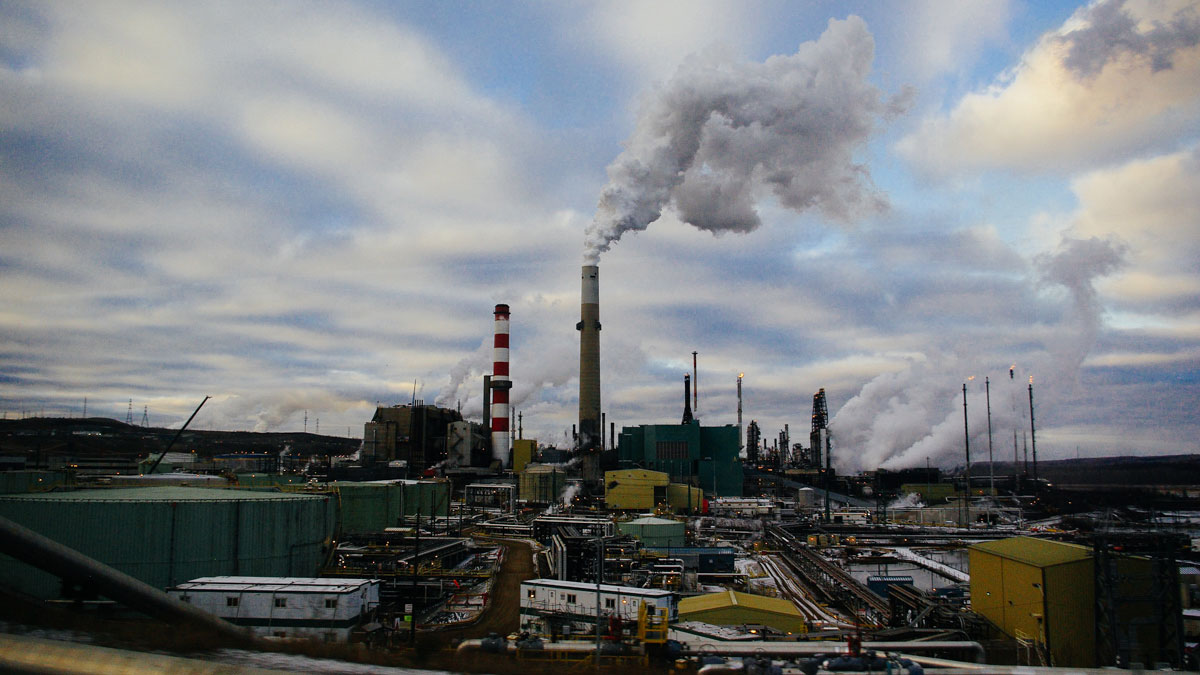
Poilievre’s account for why there is a need for a pipeline so urgently is based on nothing. From social media platforms, Poilievre shared posts showcasing the letter he sent to Carney in hopes of an immediate approval of a new pipeline. One comment he made that stood out in particular was when he said that the U.S. has “altered the global energy landscape.” While this is true, it does not mean a pipeline will fix it. For Trump to disrupt Alberta’s oil market, he needs to jump through dozens of political and legal hoops to get any oil out of Venezuela. So Poilievre’s argument for an urgent pipeline does not hold up in any way.
In many ways, Smith was merely echoing what Poilievre was saying. She spoke about the urgent need for proposals to go through in order for the pipeline to continue, but nothing more. It seems as though she has nothing to say on the situation. Regardless of the reason why, she’s leaving it up to Poilievre to make the big and ridiculous power moves. Thankfully, Carney is more realistic about the situation.
Carney addressed the situation on January 6 since Alberta remains one of the largest crude oil producers in the world. Notably, Carney seemed essentially unworried about the situation. In the medium and long-term, he thinks Alberta oil will be virtually unharmed. He even went so far as to say that bringing Maduro out of office would bring back oil production (which has heavily declined over the years) in Venezuela, leading to a net-positive for the Western Hemisphere.
Nothing about this situation is simple — but maybe the pipeline is. Getting oil out of Venezuela is no easy feat. The possibility that it harms Alberta’s oil sector is so low as to not warrant a pipeline whatsoever. This is not to say it’s impossible that it harms Alberta, but the chances are so low that it might as well be.
Poilievre and Smith, using this situation as a pipeline booster, are incredibly negligent of what has been happening in Venezuela for years. It also goes to show that neither of them truly understands the situation in any respect. This narrative they are pulling at will inevitably harm Venezuela’s U.S.-tarnished reputation alongside Canada’s. Ultimately, Poilievre and Smith are acting on their greed more than anything.