‘Of Floating Isles’ explores video games as emotional spaces
Kawika Guillermo's new book explores video games as emotional, social, and political spaces.

 Supplied
Kawika Guillermo is an author, scholar, and associate professor of social justice at the University of British Columbia (UBC). Their newest book Of Floating Isles is a deeply personal and intellectually rich exploration of what video games mean to us. Not just as entertainment, but as emotional, imaginative, and communal spaces. Guillermo visited the University of Alberta on October 30 and 31 to discuss their work, life in games, and the lessons they hope readers take from their essays and panels.
“Video games were just always there in my life, I guess,” they said. Guillermo described how being an Asian male and socially awkward meant that others assumed they played video games. “And they were right. But it was assumed.”
Games offered a space where they could exert control, excel, and connect, particularly alongside their twin brother.
“When I look back on my life and try to access memories and experiences, the first thing that would usually come to my mind was a game I was playing in those moments, and how those games would affect me. Especially during transformative and challenging, formative moments in my life,” Guillermo explained.
Of Floating Isles was born from a desire to find a book that viewed video games through a lens of memory and autobiography. “I really wanted a book like that. I wanted to teach a book like that. And then at some point, I was like, you know, I’m probably well situated to write a book like this,” they said.
“The goal of the game wasn’t really to win, but to make the other person feel good,” Guillermo says
Guillermo recounted how playing games online expanded their world. “It connected you to people all over the world. Often either trying to shoot them, or using them to help shoot other people. These really amazing, strange relationships would emerge,” they said.
Early experiences in gaming were always tied to connection. “It was always about connecting with my brother. And then we often just used games to make each other laugh. The goal of the game wasn’t really to win, but to make the other person feel good,” Guillermo reflected.
They cited Counter-Strike as a standout example of a title that created global communities while reflecting the political tensions of its time. Guillermo said the game’s “ability to create community space was just unheard of and really unexpected.”
Travel and games are intertwined in Guillermo’s work. They draw parallels between digital exploration and physical travel, noting how both reshape perception and imagination. “Video games also give you these methods of travel. Many games are about just wandering around. Open world games push you to understand nature and cities and just to enjoy the process of walking through spaces.” This philosophy extends to their personal life, where even trips with their son became exercises in curiosity and exploration.
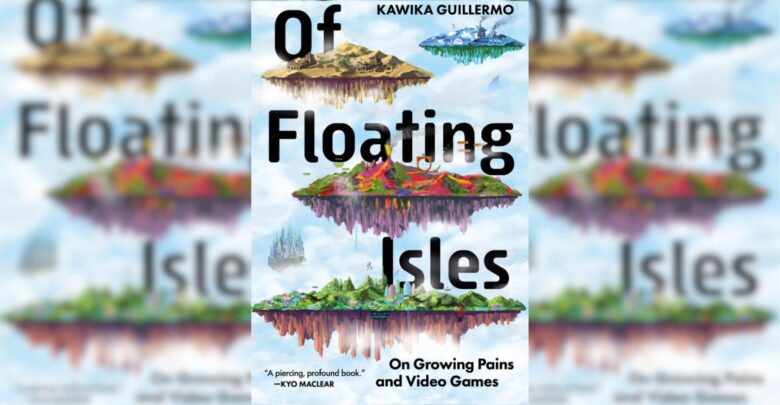
The title, Of Floating Isles, captures this interplay between imagination and real-world reflection. Guillermo explained, “it basically means a way of the imaginary spaces that games create and the community spaces that they allow. [And] allow us to reflect on ourselves differently, to transform ourselves, or to leave certain parts of our lives behind.” These “floating isles” are neither isolated nor escapist. They are spaces where players can experiment, reflect, and connect, bridging the digital and the real.
Writing the essays for this book was also an act of personal excavation. Guillermo revealed how revisiting the games they played became a means to access difficult memories. Which included times of deep personal struggle.
Using the video game Elder Scrolls: Morrowind, Guillermo revisited periods of suicidal ideation and self-isolation. They navigated grief and mourning through gameplay. “Playing the game was one of the main ways I was able to re-access those moments,” they said.
As long as they’re learning, it’s not really about me,” Guillermo says
For Guillermo, games provide a form of social and emotional accompaniment. “If you have no one to reach out to, games can make you feel like social animals. Even when we’re not technically. These experiences open us up to each other, as opposed to closing us off,” they said.
Part of what makes Guillermo’s perspective unique is their approach to vulnerability and ego. As an autistic person who also explored Buddhism in their youth, they cultivated a comfort in examining difficult and embarrassing experiences without shame. “I don’t really feel embarrassed to share things. People can get a lot out of this, even if they think it’s funny. As long as they’re learning, it’s not really about me,” they said.
Guillermo stressed the stakes of understanding games. “I hope that anybody who likes games and has opinions on games and wants to know more about them, even if they don’t play games that much, feels welcome [to] learn a lot about how they work,” they said. “To understand that we’ve been able to track the political and social effects of games and how they impact people in probably the most influential way we can imagine. That has really deep resonances, politically, and socially.”
In Of Floating Isles, games are neither frivolous nor purely escapist. They are mirrors, laboratories, and communities. Guillermo’s work challenges readers to recognize the profound effects of the medium, from fostering personal connection and exploring identity to shaping political awareness.
As they put it, understanding games equips us to navigate not only the digital worlds we inhabit but also the real-world consequences they amplify. In doing so, Guillermo’s essays urge us to take games seriously — to see them as spaces where memory, identity, and even geopolitics intersect, demanding both reflection and responsibility.