Doubling non-U.S. exports over the next decade: Aspirational or practical?
While reducing reliance on the U.S. is sensible, the U.S. market will always remain massive and lucrative; abandoning it could be counterproductive.

 Liberal Party of Canada
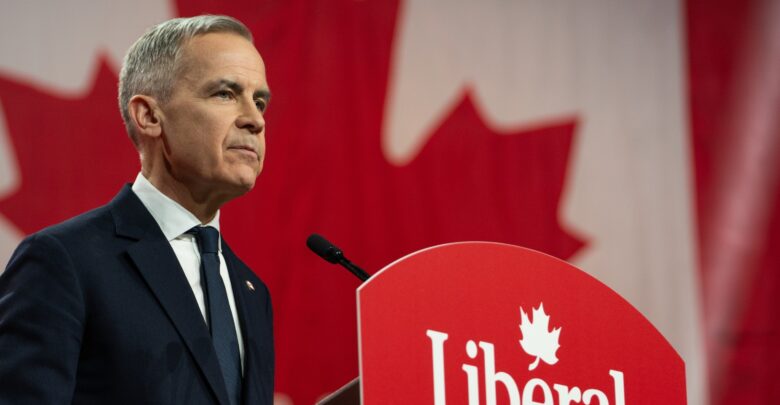
On October 22, 2025, Prime Minister Mark Carney announced that Canada plans to double its non-United States (U.S.) exports over the next decade. Canada’s longstanding trade dependence on the U.S. has become a vulnerability. On top of that, President Donald Trump’s tariffs are “causing a chill in investment.” He pointed out that more than 75 per cent of Canadian exports currently go to the U.S.. Claiming that we, as a country, need to “take care of ourselves because we can’t rely on one foreign partner.”
Having the majority of exports going to one country exposes Canada to many dangers. Some of the risks are policy shifts, tariff escalation, and economic downturns in that partner. As reported by Euronews, Carney is right to note that the U.S. has “fundamentally changed its approach to trade.” Doing so by “raising its tariffs to levels last seen during the Great Depression.” As Carney mentions, if Canada is to truly grow its exports, infrastructure and targeted support will be necessary. The plan signals a more strategic outlook: ports and critical minerals.
This announcement sends a message to businesses and investors. The government is shifting from a safe U.S. dependency trade model to one of broadened horizons. That could spur investment and re-allocation.
Doubling non‐U.S. exports in 10 years is a big ask, though. If today, a modest share of exports goes outside the U.S., doubling would require consistent high growth year after year. Keeping in mind that many of Canada’s largest exports remain commodity‐based (oil, gas, minerals, lumber). Scaling up logistics, supply chains, regulatory alignment, and trade agreements is something that would take patience. Shifting toward higher value chains means investment in innovation, skills, and regulatory frameworks — Carney acknowledges this will require sacrifices and time.
Given the conditions, other countries are pursuing the same goal: diversifying away from the U.S. or connecting to new markets. Canada may face sharper competition for market share, especially in the resource and commodity space. Additionally, moving toward other big markets like China or India brings its own political risks. This includes their own potential tariffs, regulatory retaliation, and geopolitical tensions.
So, all being said, while reducing reliance on the U.S. is sensible, the U.S. market will remain massive and lucrative. Abandoning it or reducing effort there could be counterproductive. The strategy must include both diversification and continued strong U.S. engagement.
I believe Carney’s strategy is commendable. But ambition must be matched by execution. Canada has the resources and talent, but whether it pivots quickly and efficiently — that will determine if this objective to double non-U.S. exports is more than a headline.