Do we need another mission to the moon?
The Artemis II mission just made its rounds, but with everything happening it begs the question of whether we need another trip to the moon.

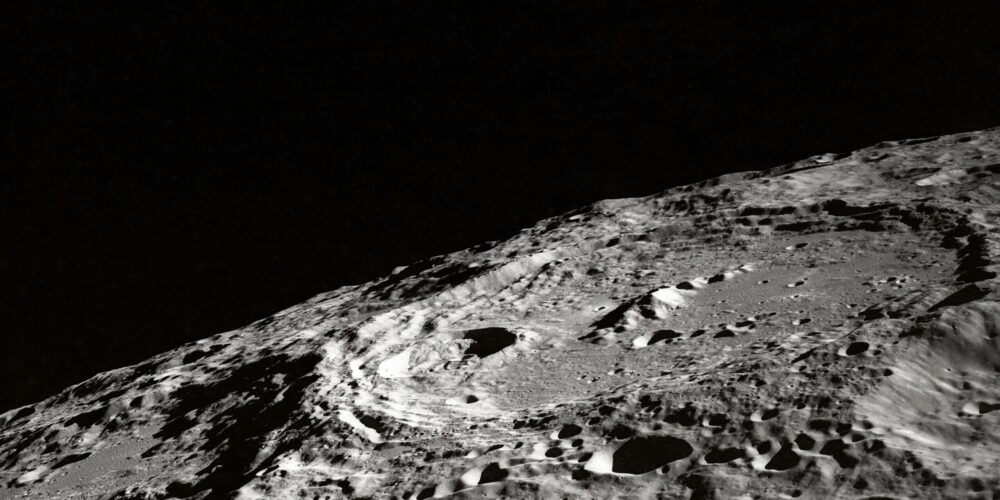 NASA
NASAA couple of weeks ago, a conversation about Artemis II with my sister led me to wonder whether we need another mission to the moon. My sister, who has lived in the United Arab Emirates (UAE) for 15 years, has their seventh-grader twins doing a project to compare Apollo 11 with Artemis II from a technical perspective. The children had asked their mother for help, and then my sister called me, believing that I, as someone who likes to read about culture and science, would find their assignment interesting. The call started with a conversation on the Middle East, and ended with her telling me about the project.
The topic sounded interesting given that we had advanced in technology by leaps and bounds since Apollo 11, which gave the kids have a plethora of materials to draw on. As memory permits, however, the project got me thinking about the cultural aspects of these missions, especially when one of the kids popped into the phone’s screen and informed me that Artemis II’s crew had a Canadian astronaut aboard. This information nugget got my wheels churning.
A diversification of the lunar crew is indeed a milestone in the history of extra-terrestrial expeditions with the National Aeronautics and Space Agency (NASA) including members beyond the hailed figure of the sovereign all-conquering white American man. Besides the “diversity talk,” however, it is important to ask if such monumental steps are respectful of or even necessary to human life.
The best starting point for my inquiry was the horse’s mouth itself — NASA. Its website bears an altruistic, ambitious, and ceremonious description of the Artemis missions as a leap of science that “will allow astronauts to explore the Moon for scientific discovery, economic benefits, and help build momentum for the first crewed missions to Mars.” These goals look promising from the perspective of civilizational progress. Yet, they bear many implicit yet relevant questions on the necessity of such ventures when our world, our Earth, is perhaps the only inhabitable planet within our reach. There is, of course, certainly no end to human’s desire for knowledge, and in our times, for capacities to possess and control. But, as we dream of and hail journeys to the moon, which realities are we actually jeopardizing? It’s too murky to know for sure.
As a student of decolonization, I understand that imperialism happens and proceeds through diverse ways. Some of them may not be violent at all, others may pose for a search of knowledge that would eventually benefit and set mankind free. To the critical eye, however, some questions would glare loud and sharp: Which mankind and whose interests? The last mission to the moon was a trump in the arms race of Cold War, establishing America’s prestige in the extraterrestrial realm as what the nuclear bomb accomplished for the United States (U.S.) on Earth before. Does this mission, then, insinuate another race? Or is it a recurrence of American imperialism in the same way it happened back in the 1960s?
In an X post, NASA administrator Jared Isaacman hailed Artemis II as “America [getting] back in the business of sending astronauts to the Moon.” Lunar expedition is not the only “business” America seems to be getting back in. America is now again in the Middle East, albeit explicitly on Israel’s side, as they face a similar crisis as they did back in the late 1960s. Political commentators signal the crumbling of the old international order pinnacled by the U.S..
Clearly, the U.S.’ latest domestic and global adventurisms have stained its moral authority. Its formidable majesty is affronted as it was in the heyday of the Cold War. With China gaining economic prominence as a power bloc, Brazil, Russia, India, China, South Africa (BRICS) precipitating a strong international alliance largely independent of the U.S. hegemony, and rapidly growing beliefs of conservatism worldwide, history seems to be rendering the script of the late 20th century in a more trepid performance. Given these geo-political re-shuffles, one only begins to wonder about the deeper implications of the latest lunar mission: is this going to be another existential escapism, a gimmicking diversion, an imperial manifestation, or a simple, scientific progress?
For those of us who feel beat down by these sinister thoughts, let us at least celebrate the progress that we have made from an all-white male crew to a diverse one with male and female, Black and white, American and Canadian astronauts. A major feat, indeed, for a neoliberal society. For nature and for life? One can only speculate with hope.