 Leah Hennig
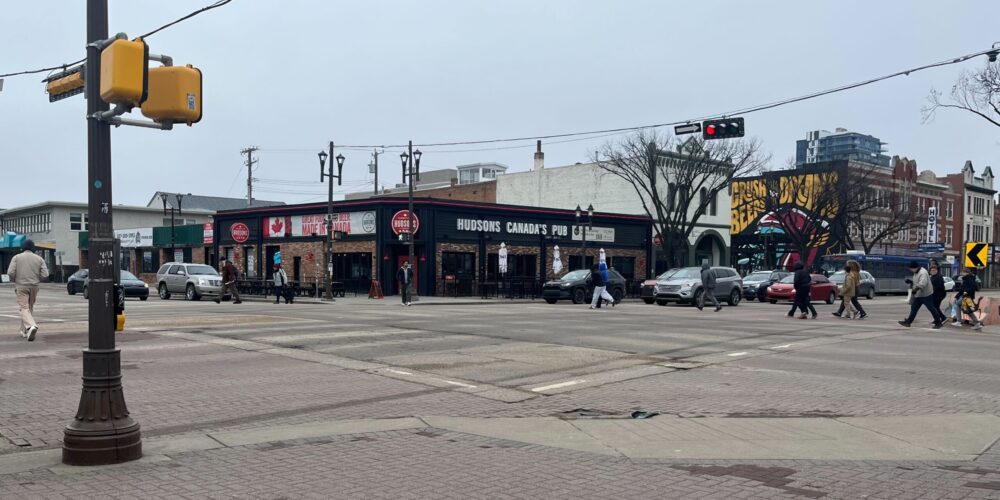
As someone who relies on the Edmonton Transit Service (ETS) daily, I know the all-too-familiar frustration of watching the “minutes until arrival” on my transit app slowly tick upwards. At the same time, my bus sits idle somewhere along its route. For those of us trying to get to work or school, transit reliability isn’t just a luxury; it’s a necessity. This is why I fully support the City of Edmonton’s recent decision to remove the three pedestrian scramble intersections on Whyte Avenue.
The numbers speak for themselves. According to the ETS route report card, Route 8 is on time only 67 per cent of the time, and Route 4 is 79 per cent of the time. A major culprit for those delays is the scrambled sidewalks. These intersections require a “third traffic-signal phase” where all vehicles, including buses carrying dozens of passengers, must remain completely stationary while pedestrians cross in every direction. This design inherently increases wait times and degrades transit reliability.
By reverting these intersections to traditional crosswalks, the city is implementing vital Transit Priority Measures (TPM). City officials estimate that the full suite of changes could halve delays at these intersections, saving approximately a minute and a half on a relatively short stretch of Whyte Ave. While 90 seconds might sound small to a casual driver, for a transit system struggling with on-time performance, it is a substantial and necessary improvement needed for both transit operators and the riders. 90 seconds is the difference between making your connection and spending 40 minutes contemplating your life choices at a windy bus stop with no food or water at hand. I’ve been there.
The new design introduces curb bulbs (or extensions) that are supposed to be game-changing for bus efficiency. Currently, buses often have to pull out of the flow of traffic into a parking bay to pick up passengers. Then they have to struggle to merge back into busy Whyte Ave traffic. The new curb bulbs allow buses to stop directly in the through lane without having to merge into heavy traffic.
Critics often argue that removing scrambles compromises safety, but the city’s plan is a balanced approach. The new configuration will include restricted turning movements, such as prohibiting right turns on red lights and ensuring left turns only occur during dedicated signals. Combined with the shorter crossing distances provided by the curb bulbs, the city maintains that these traditional crosswalks will remain safe and accessible while prioritizing mass transit. Whyte Ave is more than just a destination, but it’s also a critical commuting corridor. For too long, the efficiency of our transit system has been sidelined by signal cycles that favour a single mode of movement at the expense of all others. Prioritizing buses is an investment in a more reliable, desirable, and functional city for the thousands of us who don’t move by private car. It is time to stop the scramble and get our transit system back on schedule!