 Alysa McCall
Research on polar bears, grizzly bears, and black bears has a long history at the University of Alberta, dating back to 1970.
Andrew Derocher, a professor in the department of biological sciences at the U of A, has been involved in polar bear research for more than 40 years and would continue this work for another 40 if possible, he said.
For Derocher, polar bears are a “fascinating species.”
“The more we look, the more questions we have,” he said.
One aspect of polar bear behaviour that has consistently intrigued Derocher is the large amount of food polar bears left behind after feeding. These remains are often scavenged by other species, such as Arctic foxes and ivory gulls.
This observation led him to ask a broader ecological question: what role did polar bears play within the Arctic ecosystem beyond being top predators? Along with a team of four U of A PhD graduates, Derocher investigated how polar bears supported other species through scavenging relationships.
Polar bears play a key role in the Arctic food web
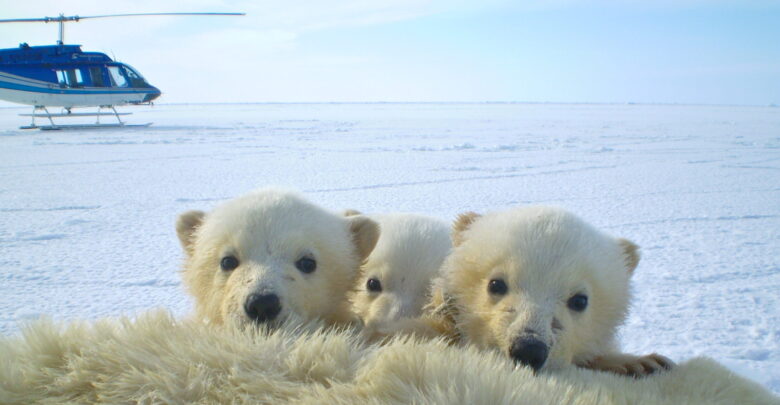
The project began in 2017, and Derocher explained that conducting field research in the Arctic was extremely challenging. Much of the work was carried out from helicopters on sea ice and involved significant trial and error.
Once the team refined their methodology, they were able to successfully collect data. As Derocher noted, the Arctic “gave up its information very slowly,” making long-term studies essential.
While polar bears are widely recognized as apex predators, their ecological role extends far beyond direct predation. Derocher and his team highlighted the importance of polar bears in supporting Arctic food webs through their connections with scavenger species.
Much of this research was based in the Hudson Bay ecosystem and was conducted in collaboration with Environment and Climate Change Canada. The program is co-located on the U of A campus, allowing for close collaboration and the involvement of graduate students.
Through their research, the team quantified how much food polar bears leave behind for other species. Derocher noted that, although polar bears evolved from grizzly bears, their feeding behaviour is distinct. Unlike grizzlies, which often cache their kills, polar bears frequently abandon a seal carcass after feeding.
This behaviour is likely shaped by the extreme Arctic temperatures, which cause the remains to freeze quickly and become difficult to consume. He also observed that scavenging birds, such as seagulls or ravens, often circle above a polar bear kill, providing researchers with a useful cue to locate the bears in the field.
Derocher on the impact of climate change on polar bears
In addition to documenting scavenger activity, the team recorded an unexpected observation when a grizzly bear appeared at one of the camera sites. Grizzly bears are uncommon in that region, and most bears were typically still hibernating at that time of year.
Its presence suggested that changing Arctic conditions might have been altering species distributions and interactions, reinforcing the importance of studying polar bears not in isolation, but as part of a shifting and interconnected ecosystem.
Derocher also raised broader ecological questions, including what would happen if polar bears were removed from the ecosystem entirely. Ongoing research examines how quickly scavengers locate polar bear kills and how rapidly those remains are consumed.
Additionally, Derocher emphasized that polar bears were increasingly threatened by climate change. He argued that reducing greenhouse gas emissions was the only effective way to address this threat, noting that “we weren’t doing a very good job at that moving forward.”
He also identified Arctic shipping as an important area for future research, including questions about how potential oil spills and increased ship traffic could affect polar bears.