 Supplied
A University of Alberta study found that seismic lines combined with wildfires in Canadian forests can improve the survival of native forest plant species over non-native species. This is thought to be due to antagonistic interaction between seismic lines and fire.
The study was led by Leonardo Viliani, a PhD student studying conservation biology in the faculty of agricultural, life and environmental sciences. His PhD focuses on the interactions between various forest disturbances with a focus on the oil sands region. This study was completed under professor and co-author Scott Nielsen.
“My research looks at the effect of oil sand disturbances and how these disturbances interact with other factors, such as fires and forest harvesting,” Viliani noted. Viliani’s research aims to understand how these interactions affect forest regeneration and forest responses.
Seismic lines and fire create unexpected effects
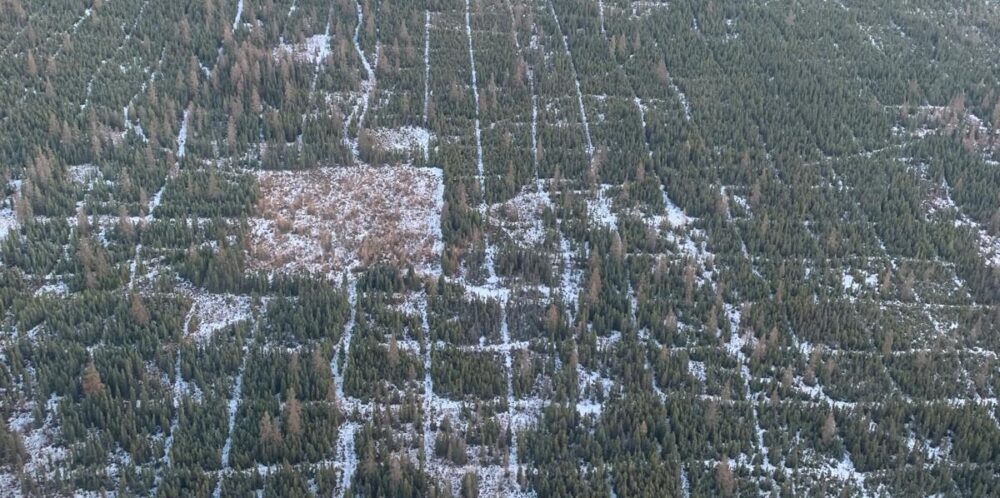
Seismic lines are “linear footprints used for oil and gas exploration,” Viliani said. They are corridors within the forest that have been cut to find oil. In some areas, seismic lines can be very dense, reaching up to 40 kilometers of lines per square kilometer, according to Viliani.
Seismic lines have previously been shown to promote the growth of non-native species as they allow wind-dispersed seeds to travel further into the forest. However, Viliani’s study shows the opposite effect when seismic lines have been exposed to forest fires.
“It’s surprising that fire can have this positive effect, protecting boreal forests from non-native species, reducing the negative effect of seismic points,” Viliani said.
These results come as a surprise, as forest fires alone have been linked to greater non-native plant invasion. A 2024 publication analyzed the abundance of non-native plant species on 26,279 plots in the western United States.
They found higher non-native plant cover in areas that had experienced wildfires. A different study in British Columbia examined a 46,000-hectare wildfire site and found faster growth of invasive grass at the location.
Although the study did not focus on explaining why fires combined with seismic lines reduce the spread of invasive species, Viliani has a hypothesis.
“Native species from the boreal forest are more adapted to fire because they come from thousands of years of evolution in the boreal forest,” Viliani stated. He believes this potential adaptation might be driving their ability to regenerate better in areas where seismic lines have been burned.
Findings could shape forest restoration strategies
The importance of the findings from this study is highlighted by the negative effects invasive species have on forests. According to Viliani, invasive species are able to outcompete the native species and subsequently change the composition of the area.
Viliani noted that invasive species “fall into the same ecological niche, so they use all the resources that the native species would use.”
The findings from this study could be utilized in the oil and gas sector by exploration companies. The time and resources spent on restoring the native species in areas with seismic lines can be focused on sites that have not experienced forest fires.
“We can basically target seismic lines that haven’t been burned for active restoration activities,” Viliani said.
Forest harvesting is another sector where these findings could be relevant due to its link to the spread of invasive species in forests. Given the thousands of forest hectares harvested yearly in Canada, restoration efforts can be concentrated in areas that have not been burned.