Lights out in Havana, fallout in Ottawa: What next?
As Cuba’s energy crisis deepens under U.S. pressure, Canadian firms face a precarious choice: double down or scale back.

 JF Martin
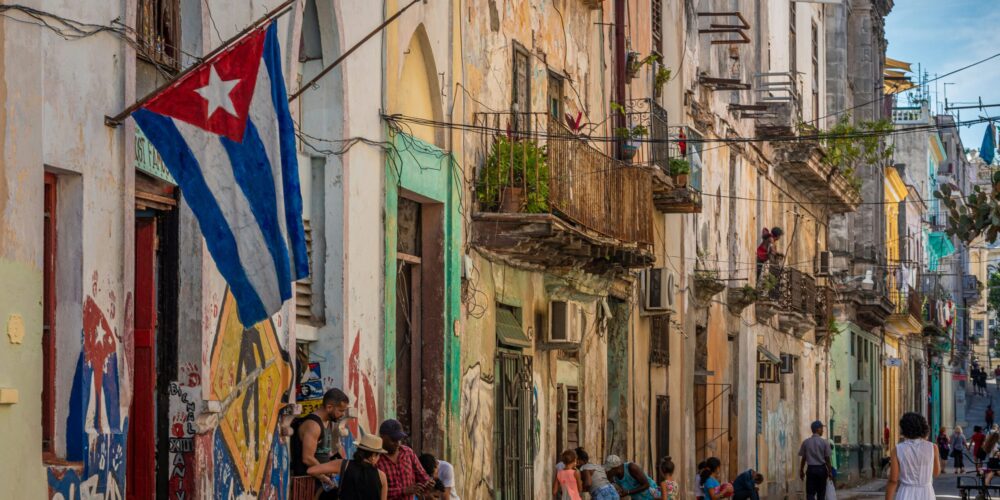
Canada’s economic ties to Cuba are once again being tested — not by domestic policy shifts in Havana, but by decisions made in the United States (U.S.). Recent U.S. fuel sanctions have deepened Cuba’s energy crisis, triggering widespread blackouts and economic instability. For Canada, the consequences are no longer distant or abstract. They are financial, immediate, and increasingly unavoidable.
Canadian companies have maintained a steady presence in the Cuban economy for decades, particularly in mining, tourism, and energy. That presence has always come with risk, but also with a degree of predictability. The current situation disrupts that balance. Without reliable fuel imports, Cuba’s infrastructure is faltering — hotels cannot operate at full capacity, transportation networks are strained, and industrial output is slowing. Canadian firms operating on the island now face declining revenues, rising costs, and difficult decisions about whether to scale back or stay the course.
This is not a traditional market downturn. It is the ripple effect of geopolitical pressure. U.S. sanctions, while aimed at influencing the Cuban government, rarely remain contained within political boundaries. Instead, they extend outward, affecting third-party countries like Canada that maintain independent diplomatic and economic relationships with Cuba.
The question, then, is what Canada can realistically do.
Ottawa has long opposed broad U.S. sanctions on Cuba, viewing them as ineffective and harmful to ordinary citizens. Canada’s policy has emphasized engagement rather than isolation. However, opposition alone does little to shield Canadian businesses from the secondary effects of U.S. actions. Unlike larger global powers, Canada has limited leverage to counteract American policy directly.
Still, there are options — none perfect, but none insignificant.
Canada could expand diplomatic efforts, working with European and Latin American partners who also maintain ties with Cuba. A co-ordinated approach would still not overturn U.S. sanctions, but it could increase pressure for targeted exemptions, particularly in critical sectors like energy. Humanitarian arguments — emphasizing the impact of blackouts on hospitals, food systems, and daily life — may carry more weight than purely economic appeals.
Another path lies in domestic policy adjustments. The federal government could offer temporary financial support or risk mitigation tools for Canadian companies operating in Cuba. Export Development Canada, for example, could play a larger role in cushioning losses or facilitating alternative arrangements. This would not solve the root problem, but it would acknowledge that Canadian businesses are being affected by policies beyond their control.
There is also the question of energy co-operation. While Canada cannot simply replace U.S. fuel supplies to Cuba, it could explore limited, targeted partnerships — particularly in renewable energy. Investing in solar or wind infrastructure would not provide immediate relief, but it could help reduce Cuba’s vulnerability to external fuel shocks over time. Such a strategy aligns with both humanitarian goals and Canada’s broader climate commitments.
Yet, it is equally important to recognize the limits of Canadian influence. The U.S.-Cuba relationship has been defined by decades of political tension, and the recent sanction is deeply tied to domestic American considerations. Canada is not in a position to “fix” this situation outright. Any response will be perceived as partial, indirect, and constrained.
And that reality raises a harder question: should Canada do more, even if the impact is limited?
There is a strong argument that it should. Canada’s economic relationship with Cuba is not just transactional — it reflects a broader commitment to engagement, stability, and international co-operation. Allowing that relationship to erode without response risks not only financial loss, but also a weakening of Canada’s independent foreign policy stance.
At the same time, however, policymakers must be careful not to overestimate what they can achieve. Symbolic gestures without practical effect may offer political clarity, but little economic relief. The challenge is to find measures that are both principled and pragmatic.
In the end, Canada’s response will likely fall somewhere in between action and restraint. It cannot undo U.S. sanctions, nor can it fully insulate its businesses from their effects. But it can choose how to navigate the consequences — whether by supporting its companies, advocating for humanitarian considerations, or investing in long-term resilience.
The blackouts in Cuba are a stark reminder that in an interconnected world, no country’s policies exist in isolation. For Canada, the task now is not to control the situation, but to respond to it — carefully, strategically, and with a clear sense of what is both possible and worth doing.