Campus Food Bank continues to deal with increased demand
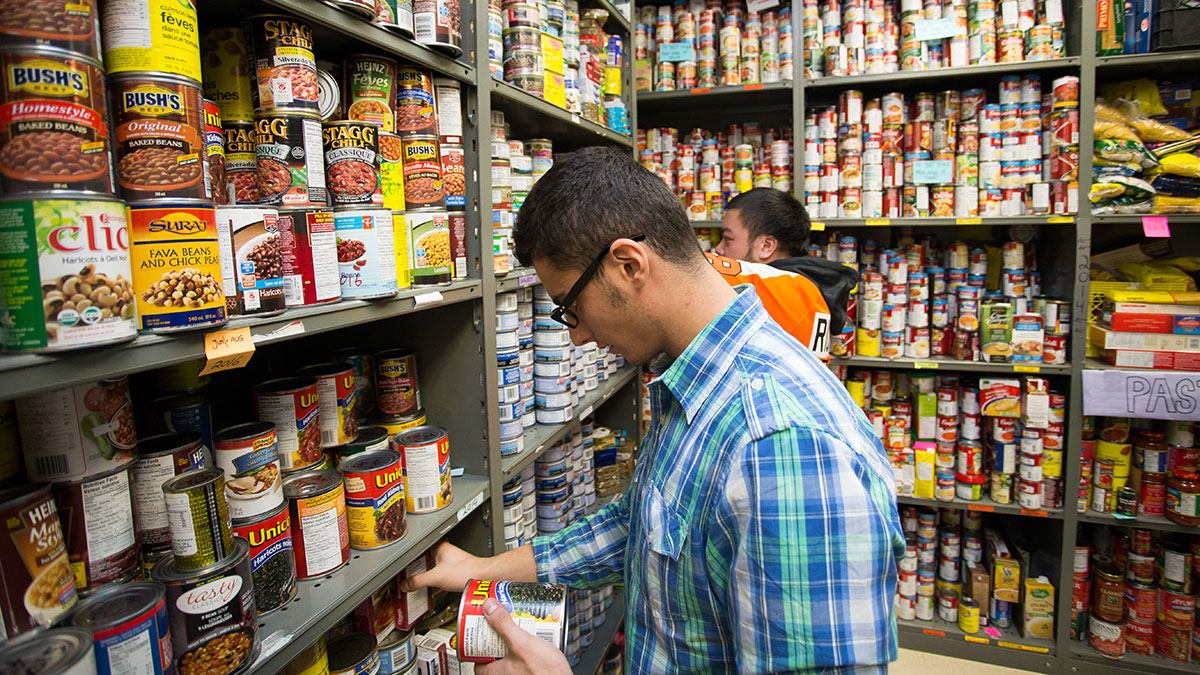
The U of A Campus Food Bank (CFB) has seen a significant increase in demand over the last few years. The organization is balancing emergency food provision with long-term advocacy and systems change.

 Sean Trayner
The University of Alberta Campus Food Bank (CFB) has seen a significant increase in demand over the last few years. The organization is balancing emergency food provision with long-term advocacy and systems change.
The Gateway interviewed Yetayale Tekle, the executive director of the CFB, to learn more.
Dealing with demand increase
Tekle explained that the most significant change in response to increased demand was the transition from a traditional food hamper model to a supplementary grocery model. He stated that “the primary reason was to give community members more agency and sovereignty over their food choices and selection.”
Tekle went on to say that the grocery model is a lot more efficient.
“By shifting to this model, we’re also able to provide more food and more appointment slots with the same amount of labour,” Tekle said.
The largest challenge the CFB faced with the increase in demand was capacity. Although the grocery model allowed for more appointment slots, the growing volume continued to strain staff and resources. Although the CFB has emergency preparedness plans in place, long-term stability was difficult, Tekle said.
Tekle emphasized that food banks are meant to be a short-term emergency response for people who don’t have access to food, and not a long-term answer to food insecurity. He went on to say that the CFB focuses on two main priorities: to meet immediate needs and to advocate for systemic change to the food system and the affordability crisis.
When asked about whether there is a limit to how many students the food bank can serve, Tekle acknowledged that capacity is constrained. The CFB served approximately 1,900 students per month last year.
“Despite increased demand, we’ve been able to maintain the same level of support per visit over the last five years,” Tekle said.
Community consultation and funding
One of the main points that Tekle highlighted was consultation with the campus community. The CFB does regular community consultations through surveys and feedback, the goal of which is to inform and implement program changes.
Tekle also underscored the importance of working with the campus community. He explained that the university’s relatively contained environment allows the food bank to collaborate with campus groups and departments. They can explore changes in food distribution systems more easily than would be possible at a city-wide level, Tekle said.
One of the main partnerships with the CFB is the Change Health Community Program (CHCP). They run collective kitchen programs on campus, as the CFB isn’t currently able to directly run the programs.
“Our current funding model is a double-edged sword,” Tekle said.
The CFB is a non-profit and a registered charity. This means the CFB has access to some streams of funding that other campus groups may not. However, Tekle explained that being a separate entity can also limit its integration and relationship with the broader university. According to Tekle, this can affect long-term support and collaboration with the campus.
Tekle went on to say that student affordability has not improved and is unlikely to do so without systemic change. Another major focus of the CFB is advocacy, specifically advocating for change in how food distribution works.
“We see the consumer price index constantly increasing … these are byproducts of our current food models,” Tekle said.
Tekle also emphasized the importance of community engagement in forms that are meaningful to individuals.