 Supplied
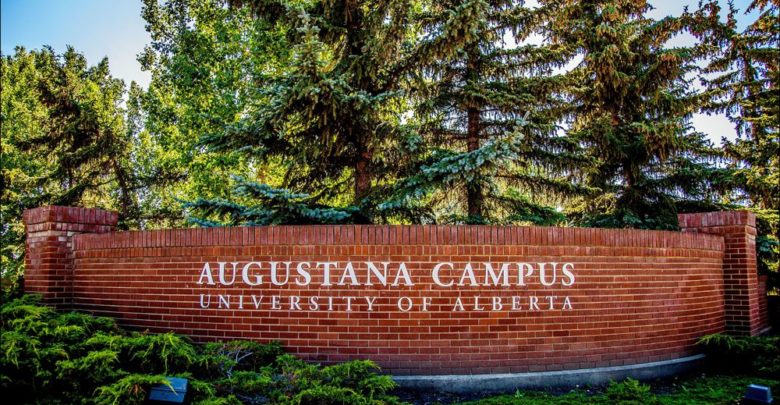
While most Canadian research on urban forests focuses on large cities, a new study out of the University of Alberta’s Augustana Campus is turning attention to a much smaller place, Camrose.
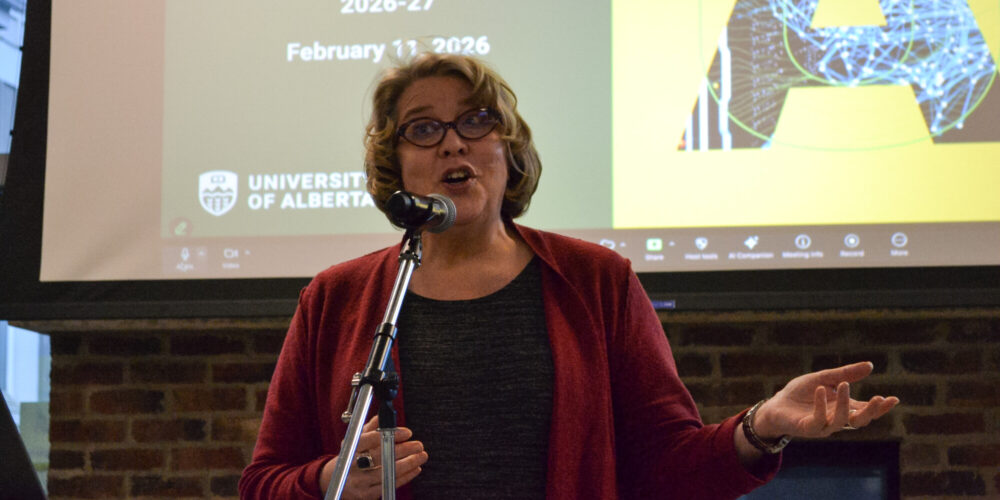
The Gateway sat down with Luke Beattie, an undergraduate researcher who now has an undergraduate degree in sustainability studies. The Gateway also sat down with Greg King, associate professor of environmental science at Augustana Campus.
Turning attention to Camrose’s urban forest
Their research examined urban forest dynamics in Camrose, Alberta, a small city of approximately 20,000 people south of Edmonton. Specifically, they wanted to research what motivates residents to plant trees.
“A lot of the research on urban forests, at least in Canada, looks at larger cities … we were really trying to address that small-city bias in the literature,” Beattie said.
Camrose is a unique setting due to its proximity to agricultural land. It also houses the U of A’s Augustana Campus, which provided local research capacity.
King explained that while urban forestry research typically focuses on public land, private yards make up roughly 50 per cent of Camrose’s tree canopy. He noticed a gap between ecological knowledge and the decisions homeowners make about trees on their property.
The researchers used mail-in and online surveys to collect data. The surveys asked about attitudes and perceptions of trees, knowledge of tree species, and whether or not homeowners have planted trees before.
They found that the two main factors that influence tree planting are aesthetics and value. If the tree provides aesthetic benefit, as well as increasing the property value, homeowners are more likely to plant trees.
“Predominantly what people are really interested in is how does it look aesthetically, and will it influence my property value,” King said.
Another factor that showed a strong correlation was length of residence. Owners that were on the property for longer were more likely to plant trees than new homeowners.
Looking to the future
Although Camrose is smaller and less diverse than larger cities like Edmonton, the research found that residents’ attitudes toward trees largely mirrored those in larger cities. King believes that the rural location may influence residents, specifically providing a practical purpose as a wind break.
King also spoke about his motivation to get people to plant more trees; specifically, trees that benefit the community ecologically and socially.
“What we want is the right trees planted in the right place so they can actually reach maturity,” King said.
Beattie emphasized that municipalities, especially smaller ones, should tailor urban forest messaging to what resonates with residents. While environmental benefits like carbon sequestration and cooling are important, you can’t ignore beauty, enjoyment, and economic value, as these are more influential in motivating private tree planting.
King recommended structured tree giveaways or sales paired with guidance tailored to homeowners’ goals.
Moving forward, the researchers would like to look into how homeowners assign monetary value to trees and how those perceptions can inform policy. Additionally, they’re interested in public attitudes toward municipal tree policies, such as private tree bylaws, tax incentives, or public recognition programs.