Rebecca Foon on the inspiration behind ‘Black Butterflies’
Rebecca Foon, veteran of the Montreal music scene, is contemplating loss, metamorphosis and hope on her new album.

 Supplied
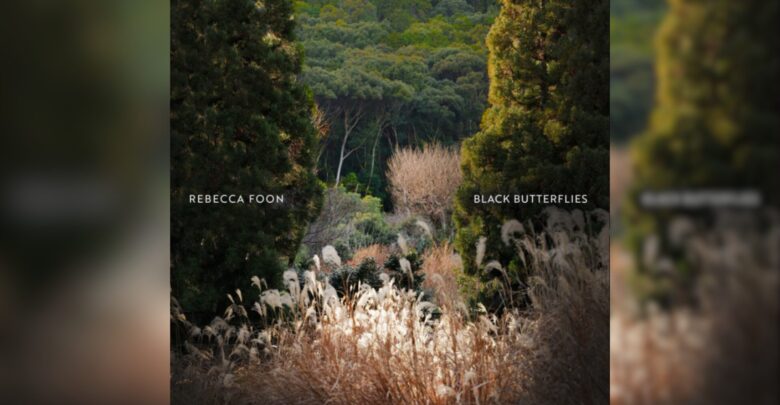
Rebecca Foon, Montreal-based cellist, composer, singer, and songwriter released her new solo album Black Butterflies on October 24, 2025. Foon, having been working on the record since before COVID-19, explores grief and change.
Foon was born in Vancouver, and not to a musical family. It was her “elementary school [with] a string program,” that allowed Foon to “[fall] in love with the cello.”
In her early days, she was a member of Set Fire to Flames, a group that shared members of God Speed! You Black Emperor. Foon was also a member of Thee Silver Mt. Zion, another offshoot of the Godspeed! universe. In more recent years, Foon has recorded as a solo artist under her own name and the name Saltland.
In tandem with her creative ventures, Foon is also an activist. Notably, she co-founded Pathway to Paris, an environmental activist group she runs with Jesse Paris Smith.
Foon said 20 years ago, “Montreal was a very affordable city to live in … being famous or making money didn’t even cross my mind.” Expanding on her first bands, Foon said “the punk rock world really shaped my ethos and my ideas around life and music and ideology about who we are on this planet.”
“[I was] interested in challenging myself to kind of get out of the incredible melancholia that I’m really good at making,” Foon says
As a solo artist, her records under Saltland and her own name, came from “looping cello and then singing on top,” she said. From there, she evolved to begin playing piano on Waxing Moon. And with the piano, she combined “vocals and cello … in a really intimate way,” she explained.
On Black Butterflies, Foon wanted to experiment. “[I was] interested in challenging myself to kind of get out of the incredible melancholia that I’m really good at making,” she said. Foon wanted to incorporate elements of trip pop and dream pop, but without sacrificing the depth that she wanted to bring lyrically.
Black Butterflies was also recorded in a barn, which is nothing new for Foon. She’s has been recording in them since Set Fire to Flames. Her current barn is in the Laurentian mountains outside of Montreal, which she finds helpful on a deeper level. Foon said that this kind of recording “fits the cello really well.”
Recording in the barn and in nature gives space for her work. “Being in nature, in that kind of world, helps navigate that subconscious space in ourselves that we’re trying to draw out when we make music or art,” she said.
“The veil gets lifted when you touch death … when you lose someone you love, like a mother,” Foon says
Foon’s inspiration for the album came from her personal life and her activism. She said loss and grief inform the album, but also give way to evolution.
In 2022, Foon lost her mother, and she explained how it left her reflecting and questioning. And, how that affected the record. “The veil gets lifted when you touch death … when you lose someone you love, like a mother … it brought up a lot of ‘what is being alive’ and ‘what is birth?’” she said.
Foon uses the black butterfly, the title of the record, to explain the concept. “Butterflies [undergo] metamorphosis. They grow from a caterpillar into this beautiful, flying, angelic being. And it’s kind of dark and morbid, but they symbolize this idea of spirituality,” she explained.
Like a butterfly emerging from a cocoon, Foon said that hardships in her life have made her “much more compassionate, much more awakened, [and] much more alive.”
Despite the album’s exploration of themes such as loss, confusion, and despair, for Foon, it’s also about hope. She said that ultimately, the album is an “acknowledgement of uncertainty, climate anxiety, conflict, conflict to come, war, genocide, you name it.”
As a whole, Foon is looking to send out “a positive message of love and hope within the chaos.”