Cultural Commentary: ‘Spotify Wrapped’ unwrapped
Spotify Wrapped’s cultural grip raises a fair question: is it actually meaningful, or have we been trained to treat data packaging as personality?

 Ash Grover
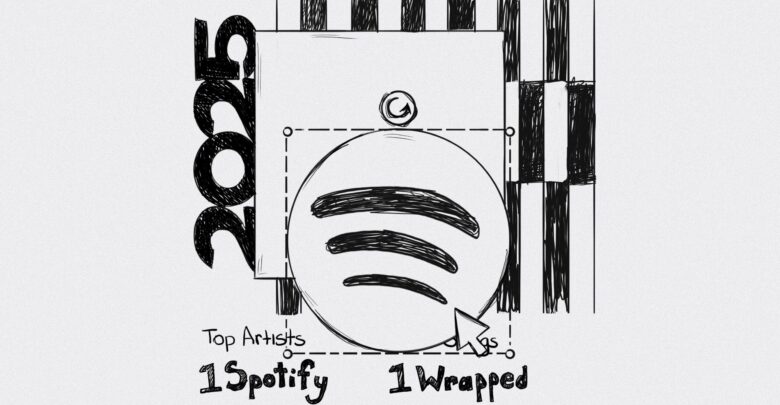
Every December, Spotify Wrapped descends on our timelines with the subtlety of a fire alarm. All with bright graphics, forced humour, and an avalanche of stats no one asked to see. What was once a mildly charming recap of a year in music has morphed into a cultural obligation. One that says more about online performance than about anyone’s listening habits.
Spotify Wrapped’s biggest issue isn’t the content itself; it’s the annual pressure to participate. The moment the feature drops, timelines flood with carefully curated screenshots, as though sharing your top five artists is now a form of personal branding. The posts often feel less like genuine glimpses into someone’s taste and more like a public-relations effort. And who can blame people for editing or selectively posting when Wrapped has become so tied to identity? It’s hard to shake the suspicion that the results we see aren’t entirely “authentic” — that maybe the embarrassing bops or comfort-listening loops got quietly cropped out.
But the bigger question is what Spotify Wrapped actually represents: a corporate product disguised as self-expression. Beneath the neon graphics and cutesy captions lies a simple reality. Wrapped is an elaborate data report generated by an algorithm that tracks every skip, replay, and background stream. It’s a reminder, delivered with confetti, that the platform is always watching. And as it becomes more stylized each year, the influence of AI-driven packaging becomes impossible to ignore. The narratives, new listening “personality types” and “ages,” and the oddly specific descriptors feel machine-generated because they are. But they also serve a purpose: to make users forget that they’re engaging with a product built on behavioural data.
There’s also a fatigue that comes with the sameness of it all. For a feature meant to celebrate individuality, Wrapped posts tend to blend together — a handful of repeat artists dominating feeds across the country, the same genre labels popping up, the same ironic captions pasted over and over. It’s hard to feel inspired by a ritual that now feels as obligatory and predictable as holiday shopping.
None of this is to shame people who genuinely enjoy seeing their musical year summarized. But Spotify Wrapped’s cultural grip raises a fair question: is this actually meaningful, or have we been trained to treat data packaging as personality? At what point do we call it what it really is — corporate gamification dressed up as self-expression?
For an app built on the idea of listening, Spotify seems to have forgotten one thing: not everyone wants to hear it.